
Sino-Pakistani Security Cooperation and the Basima Raid
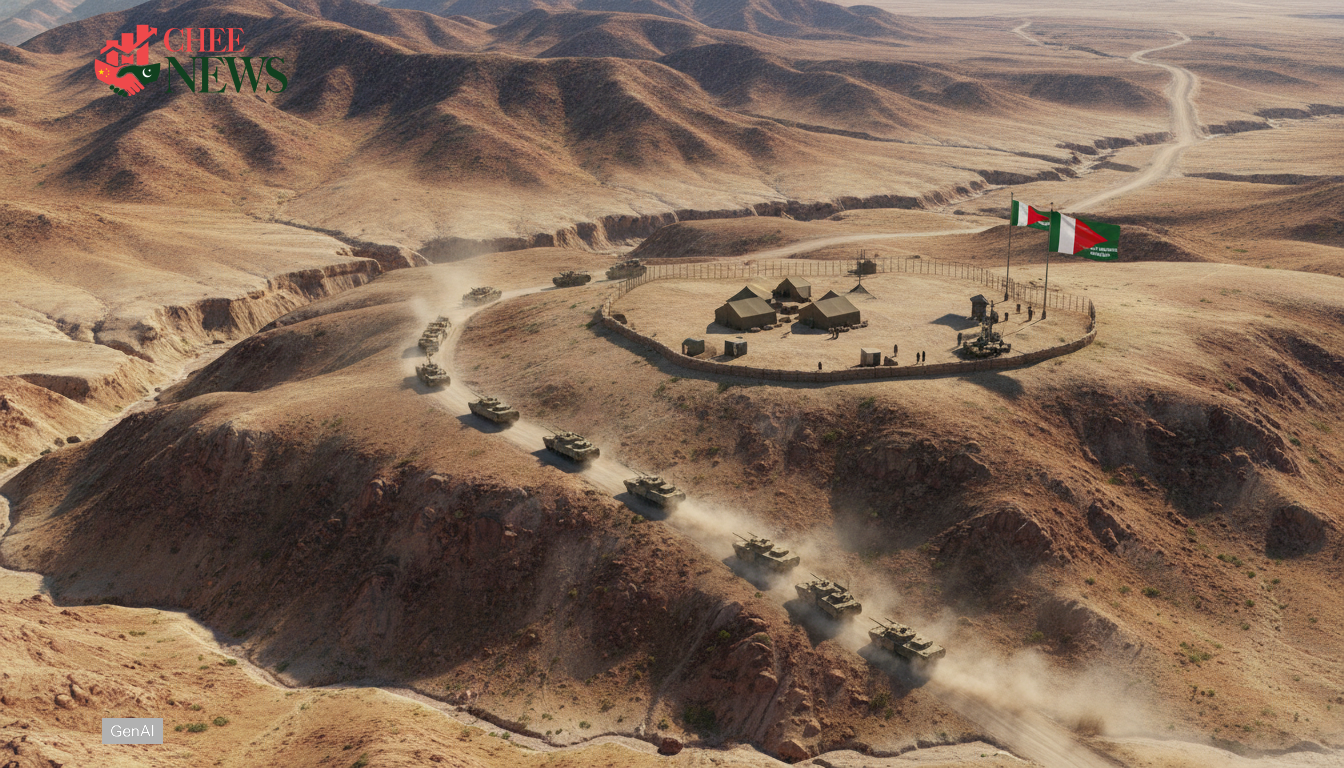
Sino-Pakistani security cooperation moved back to the center of policy debate after ISPR reportedly said a security operation in Basima, Balochistan killed 14 terrorists and martyred one soldier. The statement said the Pakistan military acted on intelligence and carried out a sanitization effort in the area, and Sino-Pakistani security cooperation is now being cited in Quetta as officials argue Balochistan security is a prerequisite for investment continuity and safer mobility across key corridors. The incident has renewed scrutiny of how militant violence affects protection for strategic routes, work sites, and personnel linked to major projects. In districts where terrain, long distances, and sparse policing slow response times, officials face pressure to show credible deterrence and rapid follow up. In Quetta, authorities have repeatedly framed Balochistan security as a prerequisite for investment continuity and safer mobility across key corridors.
Operational Details and Immediate Security Signaling
According to available reports, ISPR said forces recovered weapons, ammunition, and explosives from the site and described follow on clearance intended to eliminate remaining threats. Security planners view raids like Basima as both tactical disruption and messaging aimed at armed groups that seek to target infrastructure or project linked travel. Wider regional dynamics can also sharpen sensitivities around supply chains and overseas projects, a theme explored in US-China detente tested by tariffs and rare earths, and the immediate question is whether kinetic actions can reduce attack planning without triggering longer cycles of retaliation and deployments. Commanders have emphasized disciplined targeting and post operation verification to limit civilian harm and reduce backlash.
How Sino-Pakistani Security Cooperation Shapes Protection Plans
Within planning circles, Sino-Pakistani security cooperation is treated as a practical mechanism for risk reduction, with officials weighing perimeter hardening, convoy procedures, and intelligence fusion where permitted by law. For projects and related commerce, protection planning is often tied to corridor continuity and contractor confidence, linking security outcomes to timelines and costs discussed in China Pakistan Economic Corridor: projects and trade. Policymakers also track how security commitments interact with broader CPEC messaging, including the strategic framing in CPEC outlook as China restates nuclear recognition stance, and Sino-Pakistani security cooperation remains a reference point as officials focus on incident prevention, secure mobility, and rapid crisis response rather than symbolic statements. The focus remains on incident prevention, secure mobility, and rapid crisis response rather than symbolic statements.
Coordination Challenges Across Agencies and Provinces
Operational success does not remove structural issues that complicate coordination across agencies and provinces, especially when threats shift between rural hideouts and urban support nodes. The Pakistan military must balance force protection, intelligence development, and legal constraints, while civilian administrators keep transport, markets, and public services functioning. Pakistan terrorism cases can generate competing incentives, including rapid public reassurance, longer investigations, and the need to avoid measures that alienate communities whose cooperation can be decisive, including in Quetta and along the Basima approach roads. Financing, insurance, and contractor risk assessments can also change even when attacks are localized, affecting schedule discipline and procurement choices. Effective coordination depends on clear command lines, accountable after action review, and consistent standards for protecting personnel on key routes.
Outlook for Bilateral Confidence and Project Continuity
Near term policymaking is likely to focus on sustaining pressure on militant networks while reducing exposure for transport links and work sites targeted for propaganda value. Officials will measure whether raids like Basima disrupt recruitment and logistics, and whether intelligence driven operations can be scaled without exhausting units. According to reports, Sino-Pakistani security cooperation will remain a core reference point in bilateral talks, but credibility will be judged on measurable outcomes such as fewer incidents, safer movement, and faster emergency response. Diplomats are expected to align public messaging so counterterror actions and economic engagement are presented as mutually reinforcing. For investors and communities, the key test is whether security improvements translate into predictable operating conditions across multiple districts in Balochistan.

