
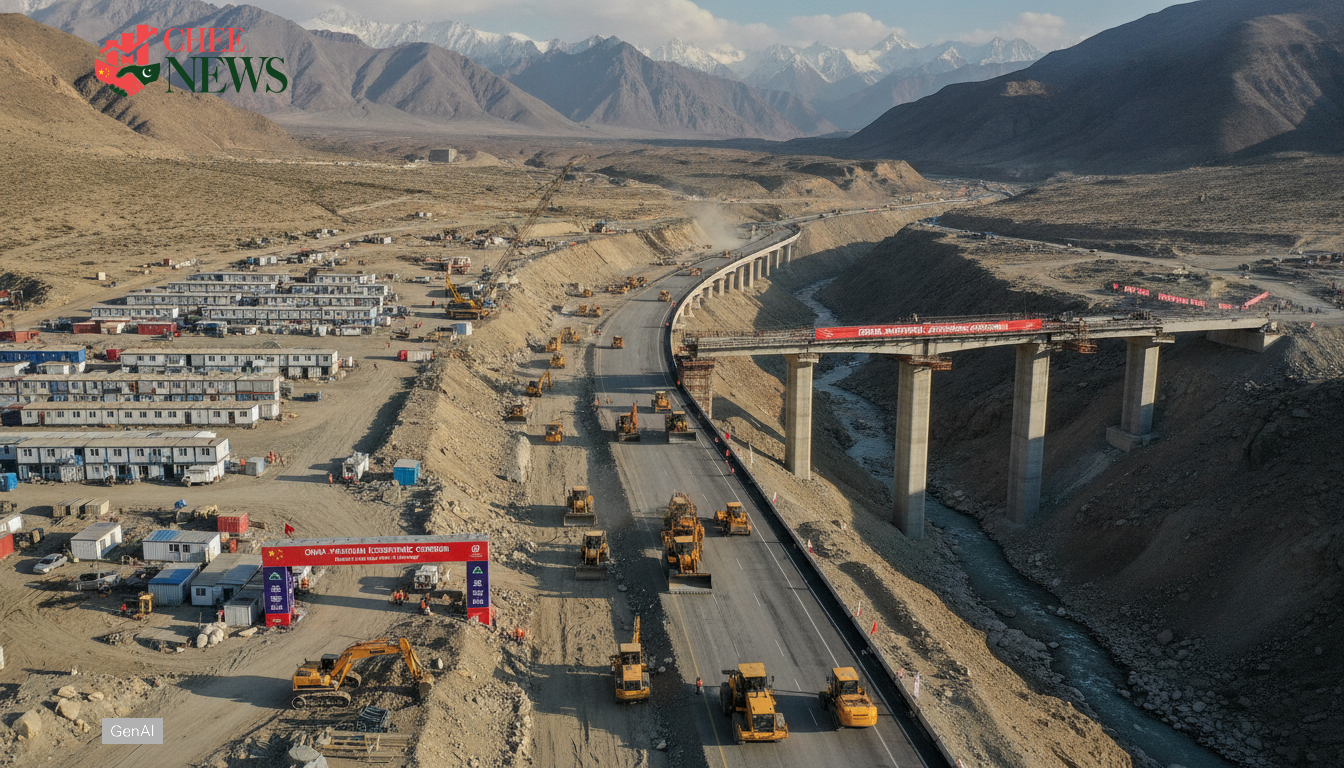
How Chinese investment in Pakistan is shaping energy
Chinese investment in Pakistan is being discussed in Islamabad as a practical lever to improve power availability, strengthen transmission, and reduce losses, as reported by officials familiar with the talks. Those officials reportedly say discussions with Chinese counterparts have focused on financing terms, plant performance and grid reliability rather than new headline announcements. The stated aim, according to these officials, is to keep capacity available during peak demand while improving collections and compliance. In the CPEC energy portfolio, Chinese investment in Pakistan is part of how policymakers and power-sector planners indicate the emphasis is shifting toward operational readiness, contractual discipline and dispatchable output. They also mention that lower technical losses and fewer forced outages would help industry plan production with fewer interruptions. The policy test, these officials add, is whether reliability improves without worsening payment backlogs.
Priority projects: grid upgrades, refinancing and delivery
Current discussions on Pakistan energy projects have centered on grid evacuation, substation modernization and targeted line reinforcement where transmission constraints can strand generation, according to officials involved in the review process. Implementation reviews, as described by those officials, typically track milestones, plant availability and refinancing options intended to ease near-term fiscal stress. In 2024 and 2025, officials have framed upgrades as urgent because, in their view, reliability gains can arrive faster than building new plants. Pakistani officials say this external compliance environment is one reason documentation and screening requirements are being tightened for new financing and equipment procurement, and for a window into how Chinese capital is being scrutinized across sectors, see Chinese tech investment curbs widen via Pentagon blacklist. In parallel, the South China Morning Post has tracked related frictions in How will the Pentagon’s expanded blacklist of Chinese firms affect Xi’s US visit?.
Economic impact: industry uptime, jobs and circular debt
The economic case, as presented by planners and business groups, is that steadier electricity supports manufacturing schedules, export fulfillment and investor confidence, particularly in energy-intensive sectors. In this framing, Chinese investment in Pakistan can affect local supply chains through operations spending, maintenance contracts and logistics once plants and lines enter service, though the scale varies by project and contract structure. Planners also argue that payment delays can ripple through banks and contractors, so clearing mechanisms matter alongside capex. Reliability gains are typically assessed by utilities and industrial users through indicators such as fewer stoppages when voltage and frequency remain stable, and reduced forced outages on key feeders, according to sector participants. For broader corridor context, see China Pakistan Economic Corridor: projects and trade, and for a forward view on the investment climate, see China-Pakistan economic opportunities for investors in 2026.
What comes next: reform-linked finance and digital grids
From 2025 into 2026, officials say discussions increasingly cover the generation mix, fuel security and the cost of capacity payments, alongside reforms intended to improve collections and reduce losses. They add that China-Pakistan relations in the power sector are likely to hinge on restructuring legacy terms and aligning any new finance with measurable performance. Separate from new generation, Chinese investment in Pakistan is also being discussed by sector officials in connection with grid digitalization, metering and targeted distribution upgrades aimed at raising efficiency without adding large new plants. Officials have also signaled interest in technical training and localization so operations depend less on external contractors over time. A benchmark frequently cited by these officials is whether steps taken can slow circular debt accumulation while keeping power available for industry and households.
Risks and opportunities: security, FX constraints and deliverability
Negotiators and sector officials acknowledge that financial risks remain central, especially arrears management, tariff politics and foreign-exchange constraints that can delay payments and equipment imports. They also note that Pakistan energy projects face scrutiny around procurement transparency, governance and security for critical infrastructure where lines and facilities cross sensitive districts. For security context tied to corridor routes, see Sino-Pakistani security cooperation tested in Balochistan, while officials and engineers argue that practical fixes in transmission and distribution can yield faster reliability gains than long construction cycles if execution stays on track. They add that if both sides can establish credible payment pathways and enforce performance standards, projects may remain more bankable and easier to sequence over the next cycle.

