
China has unveiled a major technological advancement that could significantly reshape the pace of hypersonic weapon development. Researchers have introduced new software capable of simulating the complex physics of supersonic fuel combustion in just one week, a process that previously required years of computation on high performance supercomputers. The breakthrough highlights growing momentum in China’s defense technology sector and reflects broader efforts to accelerate innovation in next generation military systems where speed, precision and efficiency are critical factors.
The software was developed by a team of scientists led by Yao Wei at the Institute of Mechanics under the Chinese Academy of Sciences. It has already been used to conduct an ultra high fidelity simulation of a scramjet engine, a key component in hypersonic flight systems. Scramjets operate by allowing combustion to occur in supersonic airflow, making them extremely challenging to model due to the intense temperatures, pressures and fluid dynamics involved. The ability to replicate these conditions accurately in a short time frame represents a significant technical achievement.
Experts say that reducing simulation time from years to days could dramatically change how hypersonic systems are designed and tested. Traditionally, engineers relied on limited simulations combined with expensive and time consuming physical experiments. With this new capability, researchers can iterate designs more quickly, identify performance improvements and reduce development costs. This shift is expected to enhance both research efficiency and the speed at which new technologies can move from concept to deployment within advanced aerospace and defense programs.
Scientists involved in the project emphasized that the software integrates multiple layers of physical modeling, allowing it to capture the intricate behavior of fuel combustion at extreme speeds. According to the research team, the system can handle complex interactions between airflow, chemical reactions and thermal dynamics with a level of detail previously difficult to achieve. While official statements have focused on scientific progress, analysts note that such capabilities are closely linked to strategic advancements in hypersonic missile and aerospace technologies.
The development comes amid increasing global competition in hypersonic systems, where several major powers are investing heavily in research and deployment. Hypersonic weapons, which can travel at speeds exceeding five times the speed of sound, are considered difficult to detect and intercept, making them a key focus in modern military strategy. Advances in simulation technology are particularly important in this field, as they enable faster innovation cycles and improved system reliability without relying solely on physical testing.
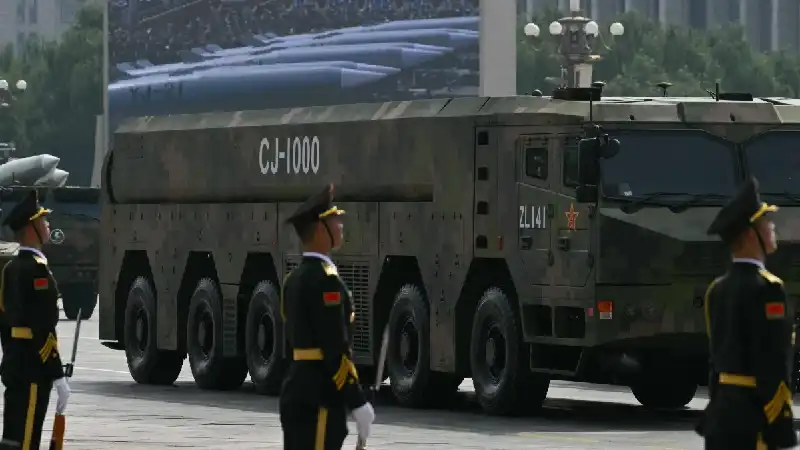
China has positioned itself as a leading player in hypersonic research over recent years, conducting multiple tests and showcasing advanced systems in military displays. The latest software breakthrough aligns with ongoing efforts to strengthen its capabilities across aerospace engineering, propulsion systems and advanced materials science. Observers say that improvements in computational modeling will likely play a central role in future developments, supporting both military and civilian applications such as high speed transport and space exploration.
Recent reports suggest that the software will continue to be refined and applied to a broader range of engineering challenges. While specific deployment plans have not been disclosed, the technology is expected to contribute to ongoing research programs within China’s scientific and defense institutions. Analysts are closely watching how such innovations will influence the global balance of technological capabilities in high speed flight and advanced weapon systems.

