
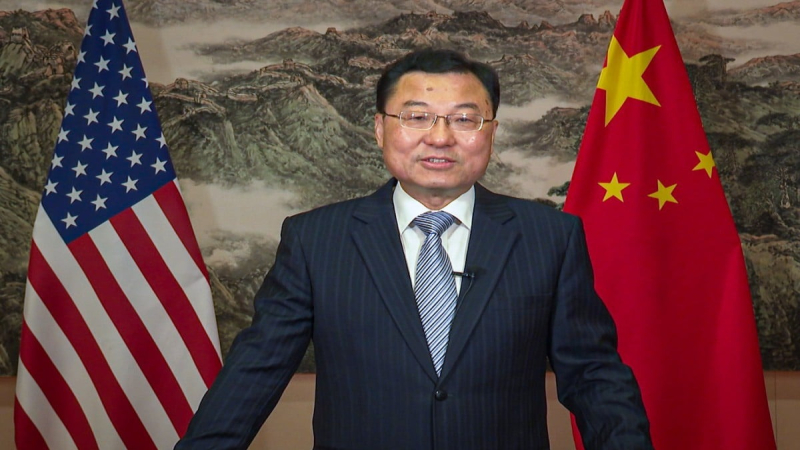
Xie Feng has warned that the world is entering a period of heightened uncertainty, urging the international community to reflect on the direction global affairs are taking at the beginning of 2026. Speaking in New York to business leaders and members of the China General Chamber of Commerce, the Chinese envoy said the opening weeks of the year have already been marked by turbulence and unpredictability. He described the international environment as increasingly fragile, shaped by rapid political shifts, security tensions, and economic disruption. According to Xie, the accumulation of unexpected events has raised concerns about global stability, prompting fundamental questions about whether cooperation or confrontation will define relations among major powers. His remarks highlighted Beijing’s view that the current moment represents a critical juncture for the global system.
Xie contrasted China’s approach to international relations with what he characterized as growing instability linked to recent policy moves by the United States. Without directly naming US President Donald Trump, he drew attention to developments that he said have contributed to global unease, including diplomatic tensions, security threats, and the weakening of multilateral frameworks. He argued that such actions risk deepening divisions and undermining trust at a time when global cooperation is needed to address shared challenges. Xie framed the situation as a choice facing humanity, between peace or conflict, openness or isolation, and dialogue or confrontation. His comments echoed broader Chinese messaging that positions Beijing as a proponent of stability, dialogue, and multilateral engagement.
The ambassador also referred to a series of disruptive events he described as black swans and grey rhinos, terms used to describe unexpected or underestimated risks with far reaching consequences. He said these developments have emerged in quick succession, reinforcing a sense of instability across regions. Xie stressed that uncertainty is no longer confined to specific areas but is spreading across political, economic, and security domains. He warned that failure to manage these risks through cooperation could further destabilize the global order. The remarks were delivered amid ongoing debate over the future of global governance, as competition between major powers increasingly shapes international institutions and norms.
Xie’s address came against the backdrop of rising friction in China US relations, including disagreements over trade, technology, and regional security. Earlier the same day, the Chinese embassy criticized a proposed US arrangement involving large scale relocation of Taiwanese technology manufacturing to American soil, calling it harmful to regional stability. Beijing views such moves as undermining economic balance and escalating tensions. The envoy’s speech underscored China’s broader diplomatic narrative that emphasizes dialogue and mutual respect while warning against unilateral actions. As 2026 unfolds, his message reflected Beijing’s effort to frame global debates around stability, cooperation, and the long term consequences of strategic rivalry.

