
CPEC updates: what has changed and why it may be significant
CPEC updates are increasingly assessed through delivery, security and governance rather than contract fine print, as reflected in public statements and media-covered coordination meetings. In recent coordination cycles, Islamabad and Beijing have signalled that timelines, operational performance and dispute resolution will be treated as the real credibility tests, as indicated by available reports. Pakistani officials have described protection of Chinese personnel as a core state responsibility in repeated statements, while planners have also stressed that predictable execution helps keep lenders, contractors and exporters aligned, according to briefings cited by local reporting. This shift might be important as corridor outcomes are increasingly judged by measurable reliability, not announcements. The central question is whether institutions can turn political intent into predictable implementation across federal and provincial layers, while keeping oversight and security coordination stable.
Economic implications: growth, exports and fiscal constraints
Pakistan’s immediate economic question is whether the China-Pakistan Economic Corridor can help reduce import dependence and expand export capacity within tight fiscal space, as analysts and government briefings often frame it. Recent official briefings have linked growth recovery to stable energy supply and logistics efficiency, both tied to delivery discipline, according to statements carried by Pakistani media. Wider market signals also shape expectations, including the policy backdrop in EU China trade talks in Paris amid tariff risks. In that context, CPEC updates are increasingly discussed alongside manufacturing relocation and Special Economic Zones, as firms look for reliable power, land access and customs facilitation, according to business commentary and policy reporting. The payoff ultimately depends on coordination that reduces delays and cost overruns, as project stakeholders regularly note.
Delivery status: infrastructure operations and maintenance
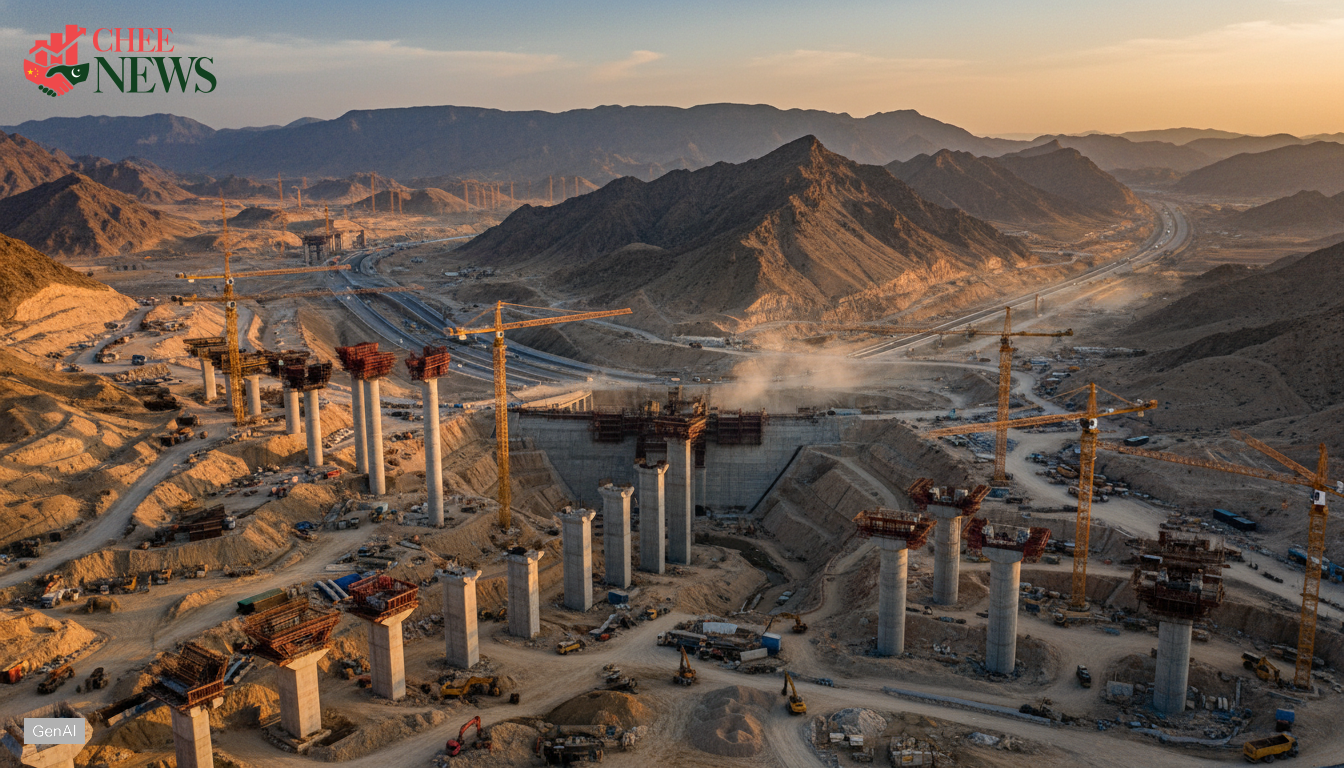
Project managers say they are increasingly focused on keeping existing assets productive rather than announcing fresh groundbreakings, according to meeting summaries and sector reporting. The National Highway Authority and provincial works departments have been urged toward routine maintenance, axle load enforcement and traffic management so freight corridors can cut time and cost, according to Pakistani press reports and official communications. For related reporting on bilateral coordination, see China-Pakistan relations: Pakistan, China reach consensus. For energy and ports, commonly cited operational bottlenecks include circular-debt-related payment delays, grid discipline and maintenance planning, according to coverage by Pakistani business media and government briefings. This is why administrative meetings often emphasise reliability metrics such as plant availability and logistics performance, as described in official presentations and reporting, which can affect investor planning for industrial zones.
Security and diplomacy: regional perceptions and financing risk
Diplomacy around the corridor is often described as more transactional as partners weigh connectivity against security and sanctions risk, according to analyst commentary and regional media reporting. Pakistani officials have tied regional development to trade corridors that can serve Central Asia and the Gulf, while also acknowledging that external perceptions of risk can raise financing costs, according to public remarks and interviews carried by the press. These developments are discussed in parallel with broader engagement narratives such as Sino-Pakistani diplomacy and regional stability outlook. International investors often benchmark Pakistan’s regulatory clarity against other Asian hubs, a comparison commonly reflected in market commentary and policy reporting such as Hong Kong ideal platform for Uzbek firms to spread wings globally, John Lee says. The diplomatic test is whether connectivity is viewed as dependable and rules-based, as investors frequently emphasise.
Next 12 to 24 months: governance benchmarks and risks
The next phase will be judged on whether Pakistan can institutionalise decision-making across federal and provincial layers over the next 12 to 24 months, as officials and analysts commonly frame the timeline. Officials involved in corridor coordination have described interagency alignment, procurement transparency and security planning as hard constraints, because delays can cascade into cost escalation and investor fatigue, according to reported comments from coordination meetings. Credibility will also depend on whether industrial zones attract tenants through stable rules rather than ad hoc incentives that can distort competition, as economists and business groups often argue. The practical focus is therefore likely to remain on implementation benchmarks such as monitoring, dispute handling and predictable tariff frameworks, based on themes repeatedly raised in official briefings. For Pakistan, the durable argument for expansion is productivity gains if delivery translates into competitiveness.

