
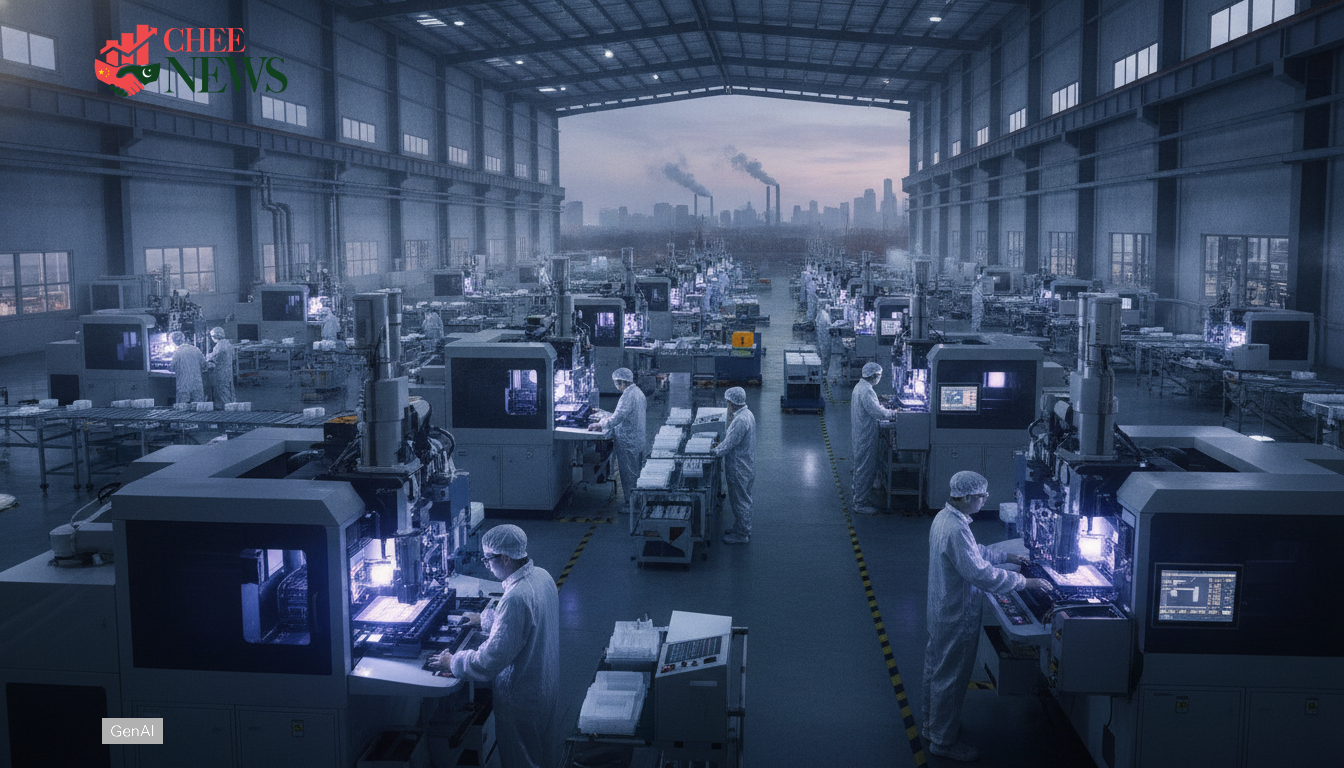
Domestic DUV production and China’s tech self-sufficiency push
China’s push for local deep ultraviolet (DUV) lithography has moved from prototype talk to limited, controlled output of immersion tools, according to available reports from TechPowerUp. The milestone matters because lithography governs how fast chipmakers can iterate process nodes, stabilize yields, and qualify new lines. In this early phase, the emphasis is less about volume and more about repeatability, uptime, and service readiness once tools enter fab environments. Foundry procurement teams typically judge equipment by sustained performance on production wafers, not a single demonstration run, so qualification cycles and support coverage will shape adoption.
What limited output means for fab adoption
Limited output shifts the conversation from capability to reliability, field service coverage, and supply continuity for parts such as optics modules, stages, and control electronics. In that environment, domestic DUV production could reduce exposure to licensing limits and shipping bottlenecks, but only if tool uptime and process consistency hold during customer trials. A parallel picture is visible in how capital is being deployed across the broader stack, with Shanghai tech funds target choke points to close gaps highlighting targeted financing strategies rather than broad subsidies. TechPowerUp’s framing implies this may not indicate full-volume readiness but represents an incremental industrial step tied to near-term integration priorities.
Global reactions and supply chain constraints
Internationally, attention is less about a single tool and more about whether an ecosystem can keep pace on subsystems such as light sources, photoresists, metrology, and precision components. The South China Morning Post has tracked how major firms are channeling money into domestic champions, including Tencent’s role in backing advanced computing suppliers in Tencent betting big on China AI champions. Against that backdrop, locally made immersion lithography sits at a sensitive junction where export controls, customer qualification, and spare-part availability all shape outcomes. For chipmakers, sustained evaluation across multiple fabs and months of use is typically the point where performance claims become operational truth.
Economic impact for chipmakers
For the domestic semiconductor economy, onshore tool output can redirect some spending from imports to local manufacturing, but the immediate benefit is often operational rather than purely financial. That dynamic is discussed in sector reporting such as DUV chipmaking tools: China moves toward mass production, which frames tooling as a constraint that can cap wafer starts even when demand is strong. When fabs can source support teams, spares, and calibration locally, recovery times may shorten and production planning can improve. Domestic DUV production may also influence bargaining power in procurement, yet the decisive test is whether multiple tool units can maintain stable overlays and critical dimension control across extended runs.
Next steps to scale beyond limited output
The next phase hinges on scaling beyond limited output while proving manufacturing tolerances, software control, and field engineering can meet fab-grade expectations. TechPowerUp’s description suggests a cautious ramp aligned with how advanced equipment is normally introduced: small batches followed by iterative fixes driven by customer feedback. In this setting, the program will be measured by how quickly defects are diagnosed, how consistently replacement modules match calibrated performance, and whether the roadmap keeps pace with process integration needs. Broader momentum, including investment into compute and memory supply chains in 2024, may help create pull-through demand, but the equipment effort will still stand or fall on reproducibility, service capability, and verified results on production wafers.

