
How a retreat became the cornerstone of a new political order.
A Retreat That Defined a Generation
In 1934, surrounded by Nationalist forces in Jiangxi, the Chinese Communist Red Army broke out of encirclement and began a trek that would cover thousands of kilometers over the next two years. Known as the Long March, this strategic retreat was marked by hunger, exhaustion, and constant battles. Of the nearly 80,000 who began, only a fraction survived to reach Shaanxi. Yet the ordeal became more than military history. It transformed into a founding myth of resilience and revolutionary destiny.
Hardship as Identity
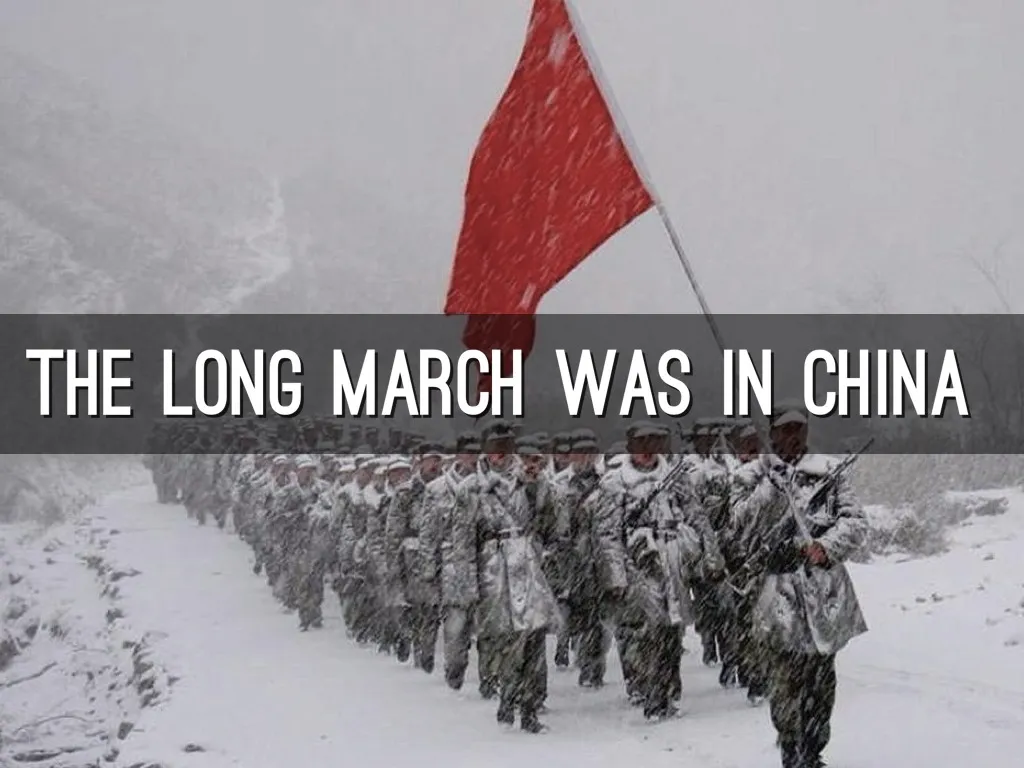
Marchers crossed snow capped mountains, forded icy rivers, and trudged through marshes where disease claimed lives. Food was scarce, shoes disintegrated, and nights brought frostbite. Survivors remembered eating tree bark or boiling leather for sustenance. These stories, repeated in memoirs and museums, cemented the idea that the revolution was forged in suffering endured for a higher cause.
This hardship narrative gave the Communist Party enduring legitimacy. Leaders could claim they had shared the people’s hunger and hardship, unlike elites who lived in comfort.
Leadership Tested
The Long March was also a crucible for leadership. Mao Zedong emerged as the central figure, consolidating his authority at the Zunyi Conference in 1935. Strategic debates during the trek shifted command away from Soviet trained leaders to those who emphasized flexibility and guerrilla tactics suited to Chinese realities. Mao’s ascent owed much to his ability to turn retreat into vision, framing survival itself as victory.
Encounters Along the Way
The march crossed diverse regions, from Tibetan highlands to ethnic minority villages in Sichuan and Guizhou. Along the route, Red Army units forged alliances, spread propaganda, and recruited new supporters. These encounters sowed the seeds of broader revolutionary networks, though they also produced tensions as armies commandeered supplies in desperate circumstances.
The crossing of the Luding Bridge, where troops reportedly charged across chains under heavy fire, became one of the most celebrated episodes. Whether embellished or not, it symbolized courage and unity against impossible odds.
From Military Defeat to Political Triumph
Militarily, the Long March was a retreat and a series of losses. Politically, it was reframed as triumph. By reaching Shaanxi, the Communists secured a base far from Nationalist centers of power, where they could regroup and expand. More importantly, the narrative of survival turned defeat into inspiration. The march became proof that the Communist Party could endure any hardship and therefore deserved to lead.
Memory and Mythmaking
After 1949, the Long March was woven into state mythology. Films, novels, and school lessons portrayed it as epic pilgrimage. Veterans toured schools to share stories, and museums along the route preserve relics. Even critics acknowledged that the myth had power, binding generations to a narrative of sacrifice and perseverance.
In recent decades, the march has also become a tourist trail. Visitors hike symbolic stretches, retracing footsteps to connect with national history. The blending of memory, myth, and heritage tourism reflects how the Long March remains a living symbol.
Global Comparisons
Historians compare the Long March to other foundational journeys, such as the American pioneers’ westward migration or the retreat of Russian armies in wartime. Each became mythic not because of immediate victory but because survival embodied values larger than battles. For China, the Long March fused endurance with political vision, offering a story of legitimacy that still echoes in official rhetoric.
Conclusion: Marching Through Memory
The Long March is a reminder that history is not only about outcomes but about narratives. A desperate retreat became the origin myth of a new order, demonstrating how suffering can be transformed into political capital. To this day, the phrase “Long March” signifies determination in the face of impossible odds, proof that endurance can sometimes be the most decisive weapon of all.

