
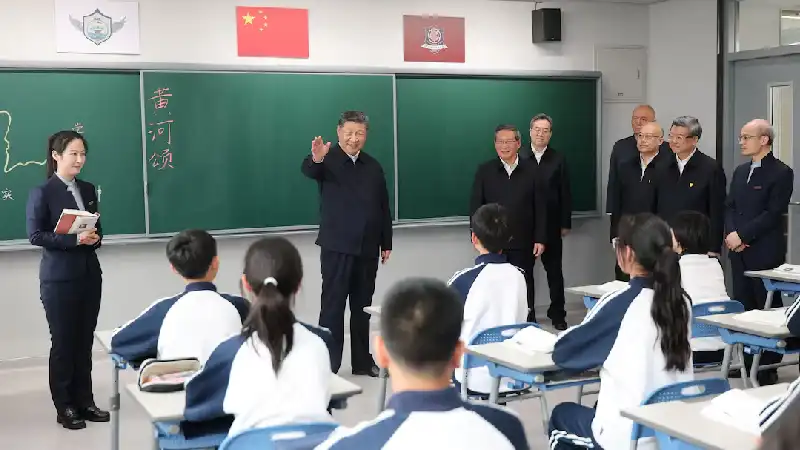
Chinese President Xi Jinping has called for renewed momentum in the development of Xiongan New Area, a flagship urban project positioned as a future economic and technological hub near Beijing. During a recent inspection visit, Xi urged officials to accelerate progress and fully commit to a project that has become closely linked to his long term vision for China’s modernization. Located about 100 kilometers southwest of the capital in Hebei province, Xiongan is designed to ease pressure on Beijing while creating a new center for innovation, finance, and advanced industries. The visit signals continued political priority for the initiative as construction moves into its next phase.
Xi emphasized that reform and innovation should drive the city’s development, highlighting the importance of integrating technological advancement with industrial growth. Authorities are working to relocate major state owned enterprises, universities, and research institutions to the new area, aiming to build a balanced economic ecosystem. Several large corporations have already begun shifting operations, while others are still in development stages. The scale of the project is significant, with Xiongan planned to match the size of major global metropolitan regions, reflecting China’s ambition to create a model city for future urban planning.
The project, first announced in 2017, is considered one of China’s most important long term infrastructure initiatives, alongside major development zones in Shenzhen and Shanghai Pudong. Despite nearly a decade of progress, parts of the city remain underpopulated as construction continues. Officials have set a target for basic completion by 2035, with phased expansion expected to follow. Analysts note that building a city of this scale requires sustained investment, policy support, and careful coordination across multiple sectors to ensure long term viability and economic impact.
Xi’s direct involvement in the project underscores its strategic importance within China’s broader development agenda. Unlike many large scale initiatives, Xiongan has been closely associated with the country’s top leadership, with state media highlighting its significance for future generations. During his visit, Xi encouraged local authorities to take responsibility and ensure timely implementation of key plans. The push includes advancing policies in science, technology, and finance to attract high value industries and support innovation driven growth in the region.
Historically, China has relied on large infrastructure projects to drive economic expansion and urban transformation. Xiongan represents the next stage of that approach, focusing not only on construction but also on creating a sustainable and technologically advanced urban environment. The initiative aims to reduce congestion in Beijing while redistributing economic activity more evenly across the region. For countries observing China’s development model, the project offers insight into how large scale planning is being used to shape future growth patterns.
The broader context includes China’s efforts to strengthen its position in emerging technologies and modern industries. By concentrating resources and institutions in Xiongan, policymakers hope to create a cluster effect that accelerates innovation. This aligns with national priorities around technological self reliance and industrial upgrading. The development also has implications for regional trade and investment, as new infrastructure and business opportunities could attract both domestic and international participation over time.
Recent updates indicate that while progress has been steady, significant work remains before the city reaches its intended scale and functionality. Construction of major facilities continues, and policy frameworks are being refined to support long term settlement and economic activity. Xi’s latest visit reinforces the message that Xiongan remains a central pillar of China’s future planning, with expectations that the coming years will see faster development and increased activity across the new urban zone.

