
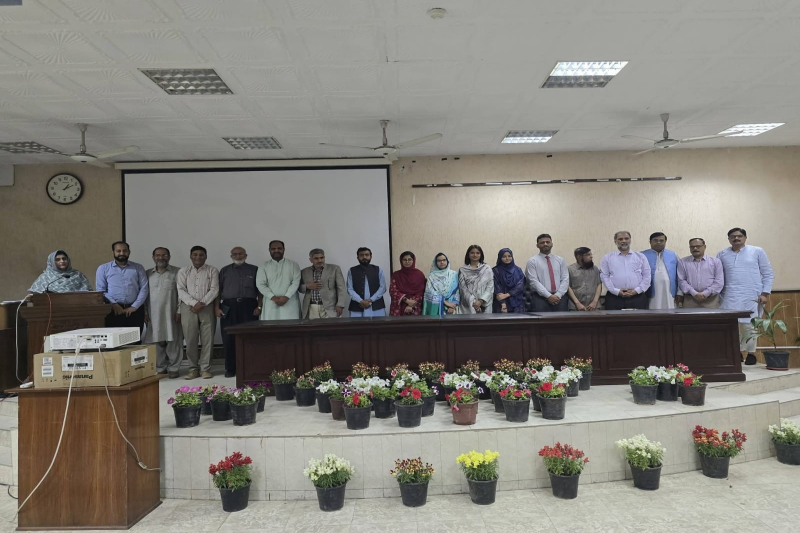
Pakistan and China are strengthening agricultural cooperation through a new initiative focused on advanced research in genomics, genome editing and speed breeding to enhance crop productivity. The announcement was made during a seminar held at the Ayub Agricultural Research Institute where Director General Agricultural Research Dr Sajid Rehman outlined plans for joint scientific collaboration between the two countries. The initiative aims to accelerate the development of high yielding and climate resilient crop varieties that can support Pakistan’s agricultural sector while addressing challenges such as changing climate conditions, water shortages and rising demand for food.
Officials said the collaborative research would explore several advanced technologies including high throughput phenotyping, hybrid crop development and regenerative agriculture. Scientists will also focus on improving soil and plant health while studying crop stress tolerance to heat and drought conditions that increasingly affect agricultural output. According to Dr Sajid Rehman these efforts are part of a broader strategy to modernize agricultural research systems in Punjab. The goal is to equip research institutions with modern tools and scientific expertise so that farmers can gain access to improved crop varieties capable of delivering higher yields under difficult environmental conditions.
The seminar was organized for agricultural scientists who recently returned from specialized training programs in China under the Prime Minister’s one thousand internship initiative. Around thirty researchers completed advanced training programs lasting three to six months where they studied Chinese farming practices, research techniques and modern agricultural technologies. The training was designed to help Pakistani scientists learn from China’s experience in increasing agricultural productivity through sustained investment in research, technology and improved crop breeding methods.
During the event scientists delivered several presentations highlighting modern research strategies and innovations in crop development. The discussions covered lessons learned from Chinese agricultural models and explored opportunities for deeper collaboration between the two countries. Participants also examined the potential for joint projects, exchange of germ plasm and further capacity building in fields such as genomics and genome editing. More than two hundred researchers and senior scientists from different agricultural institutes attended the seminar and took part in technical discussions and question sessions.
The initiative forms part of a major development project titled Revamping of Agricultural Research in Punjab which aims to strengthen research capacity across the province. The program carries an estimated cost of five billion rupees and will support the establishment of advanced laboratories equipped with modern scientific technology. Officials say the project will enable researchers to conduct more sophisticated experiments and accelerate the development of crop varieties that can withstand climate stress while maintaining high productivity levels.
Agricultural experts believe Pakistan can benefit significantly from China’s experience in modern farming practices. Over the past two decades China has managed to increase per acre agricultural productivity through continuous research and adoption of new technologies. Dr Sajid Rehman noted that adopting similar approaches in Pakistan could help improve national food security while strengthening the agricultural economy. The collaboration will also allow Pakistani researchers to maintain direct engagement with Chinese supervisors and experts as joint projects move forward.
Authorities say the knowledge gained by scientists trained in China will now be applied within research institutions across Punjab to support the implementation of the new program. Officials expect that the development of improved crop varieties and hybrid seeds will help farmers increase production in a shorter period of time. If successful the initiative could contribute to stronger agricultural growth, improved resilience to climate change and better long term sustainability for Pakistan’s farming sector.

