
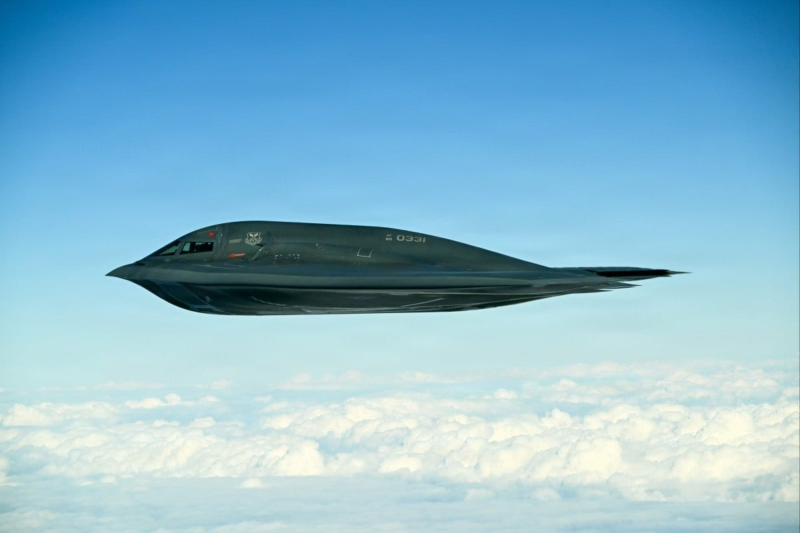
A Chinese defence technology company has claimed that it intercepted radio signals from United States B-2 stealth bombers involved in air strikes against Iran earlier this month. The company said the signals were captured during the March 1 military operation carried out by US and Israeli forces targeting Iranian positions. According to the firm the intercepted communications were detected by an advanced monitoring platform that analyses military signals and flight activity. The claim has attracted attention among security analysts as it suggests that modern intelligence systems may be capable of tracking even highly secretive military operations.
The company behind the claim is Jingan Technology, a defence technology firm based in Hangzhou in eastern China. It provides intelligence analysis services linked to the People’s Liberation Army and focuses on monitoring global military developments using digital tools and data analysis. The firm said its monitoring platform known as the Jingqi war monitoring system was able to identify signals associated with the stealth bombers during the operation. The system reportedly reconstructed the sequence of military activities surrounding the strike and tracked the return of a B-2 bomber after the mission over Iranian territory.
According to the company the monitoring system uses artificial intelligence to analyse multiple streams of open source intelligence. These include satellite imagery, aviation flight paths, public military records and patterns of aircraft movements at strategic bases. By combining these sources the system attempts to identify signs of military build ups before major operations occur. The firm claimed that the technology had already detected indicators of increasing American military activity in the region weeks before the strike took place, allowing analysts to reconstruct the broader timeline leading up to the operation.
The system reportedly began identifying signs of heightened military deployment around Iran earlier in the year. Analysts working with the monitoring platform concluded that the United States had been gradually increasing its military presence in the Middle East in the weeks preceding the operation. According to the company the buildup involved increased aircraft movements and logistical activity across several bases linked to American operations. The system suggested that the scale of the deployment was among the largest US military concentrations in the region in nearly two decades.
Defence experts note that modern monitoring platforms increasingly rely on artificial intelligence and open source intelligence to track global military activity. Commercial satellite imagery and publicly available flight tracking data have made it easier for analysts to identify large scale deployments or unusual aircraft movements. Even when aircraft such as stealth bombers are designed to evade radar detection, analysts can sometimes infer their presence by analysing surrounding logistics operations, refuelling patterns and support aircraft activity.
The claims made by the Chinese firm have not been independently verified and officials from the United States have not publicly responded to the report. Military analysts caution that intelligence assessments based on open source data can sometimes misinterpret signals or activity. However the growing use of artificial intelligence in defence analysis highlights how technology is transforming the way governments and private companies monitor global conflicts and military operations.
The developments come as tensions in the Middle East continue to draw international attention following the strikes against Iran and subsequent regional reactions. Analysts say that advanced monitoring tools will likely play an increasing role in analysing military movements during global crises. As governments and private intelligence firms continue to expand the use of artificial intelligence and satellite data, the ability to track and interpret military operations is becoming more accessible to both state and commercial actors.

