
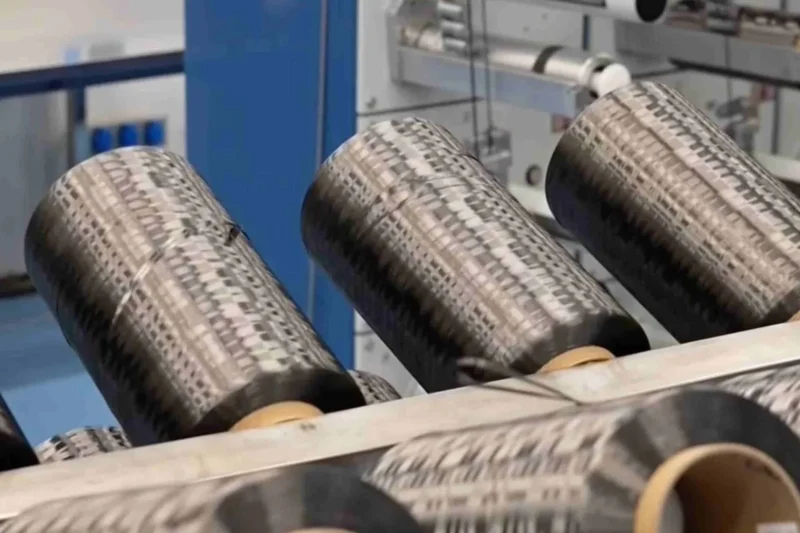
China has announced that it has become the first country to mass produce T1200 grade carbon fibre, a breakthrough material widely considered one of the strongest and most advanced industrial fibres available today. The development marks a significant milestone in the global competition to produce high performance materials used in aerospace, defence, energy and advanced manufacturing. Chinese state media reported that the new fibre is capable of delivering strength levels far beyond traditional materials while remaining extremely lightweight. The achievement could strengthen China’s position in strategic industries where advanced materials play a critical role in innovation and supply chain security.
The newly developed T1200 carbon fibre has a tensile strength that is reportedly ten times stronger than conventional steel while maintaining an extremely thin structure measuring less than one tenth the diameter of a human hair. The fibre is produced using bundles of approximately one hundred twenty thousand carbon filaments twisted together to form ultra strong strands. Demonstrations have shown that ropes made from the material can tow heavy vehicles, highlighting the extraordinary durability of the fibre. With planned annual production capacity estimated at around one hundred tonnes, the project represents the first large scale manufacturing effort for this grade of carbon fibre anywhere in the world.
The material was developed by the state owned China National Building Material Group after more than two decades of research and engineering work. The company unveiled the technology at a major international composite materials exhibition in Paris, drawing attention from industries involved in aerospace, energy technology and advanced manufacturing. According to company leadership, the fibre reaches engineering tensile strengths exceeding eight gigapascals, placing it among the strongest commercially produced carbon fibres available today. This achievement positions China ahead of competitors that have announced similar materials but have not yet revealed large scale production capacity.
High performance carbon fibre is often described as black gold because of its critical role in modern technology industries. The material is essential for manufacturing lightweight aircraft components, advanced drones, wind turbine blades, robotics equipment and electric vehicle structures. Its strength to weight ratio allows engineers to design products that are both stronger and lighter than traditional metal based alternatives. These properties are also valuable in medical devices, precision machinery and emerging industries such as low altitude aerial transportation where strong but lightweight structures are required.
The breakthrough highlights growing global competition in advanced materials manufacturing. Japanese companies have historically dominated the carbon fibre industry, with firms such as Toray producing widely used grades including T1100 and T800 fibres for aerospace and high performance industrial applications. The United States also remains an important player in the sector with several companies supplying advanced materials for aviation and defence projects. China’s new production capability suggests that the global balance of manufacturing power in high performance materials could gradually shift as research investments and industrial capacity expand.
Experts say the strategic importance of carbon fibre extends beyond individual industries because the material supports a wide range of supply chains linked to modern technology development. Aircraft production, renewable energy infrastructure and advanced robotics all depend heavily on strong composite materials. As governments and companies compete to secure access to these materials, domestic production capacity has become increasingly important for ensuring long term industrial stability and technological independence.
China’s push into ultra high strength carbon fibre also reflects broader national efforts to strengthen advanced manufacturing capabilities. The government has prioritized research in new materials as part of its wider industrial modernization strategy. By expanding local production of critical technologies such as carbon fibre, China aims to reduce reliance on imported materials and strengthen its ability to support emerging sectors including electric vehicles, aerospace engineering and advanced robotics.
Industry analysts expect that the successful mass production of T1200 carbon fibre will accelerate research and development in composite materials around the world. As new applications emerge across transportation, energy and defence sectors, demand for stronger and lighter materials is likely to continue growing. With production now underway, China’s new facility could play a major role in shaping the future supply of one of the most valuable advanced materials used in modern technology.

