
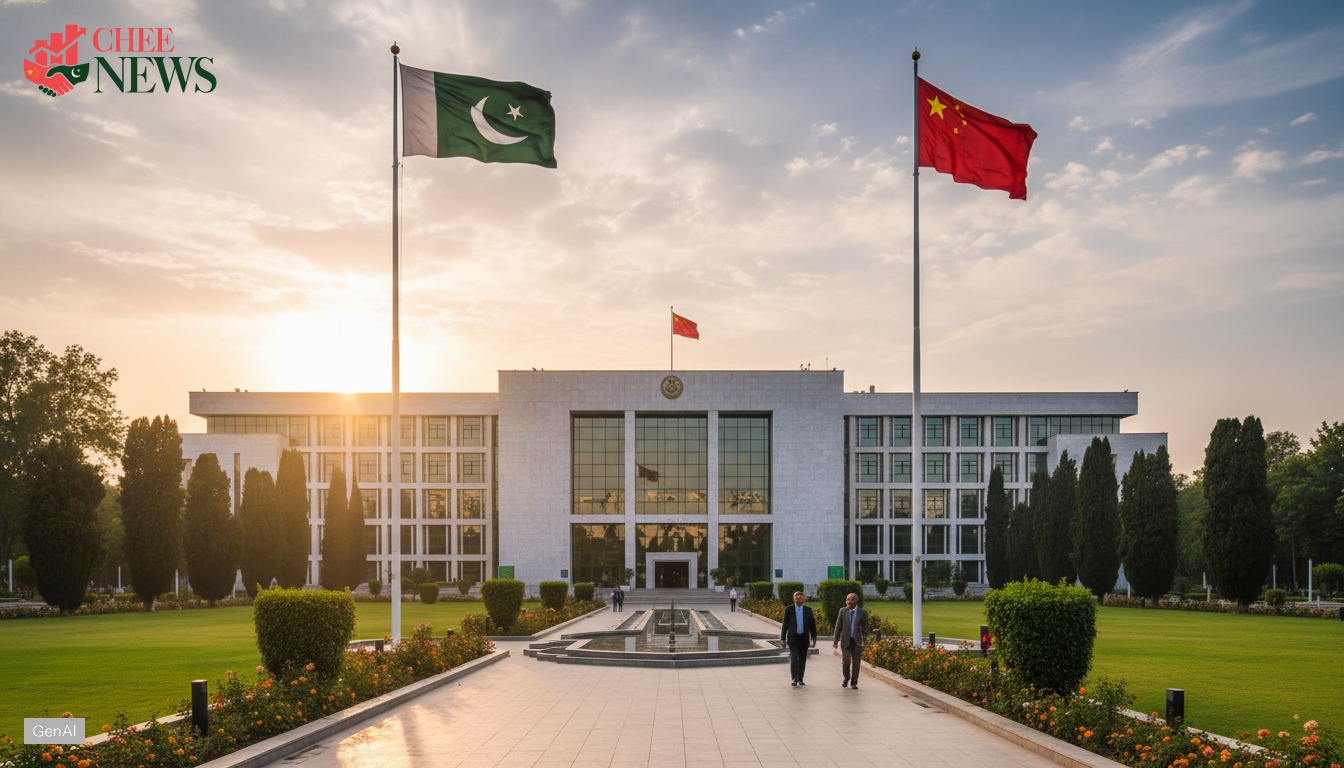
Shehbaz calls ties with Beijing steadfast
Prime Minister Shehbaz Sharif, speaking in a public address referenced by Dawn, framed Pakistan’s engagement with Beijing as a core plank of foreign policy. He indicated that China has backed Pakistan in an “unwavering fashion” and suggested the relationship has stayed consistent across political cycles, based on reports from Dawn. He urged ministries to turn high-level understandings into implementable steps, stressing follow-through over optics. The message was that durable diplomacy is tested in difficult moments, not only during ceremonial visits and photo opportunities.
Why the message keeps recurring
The prime minister’s framing echoes a long-standing pattern in official messaging that treats the partnership as durable even when other relationships fluctuate. In domestic politics, Pakistan-China friendship is often used as shorthand for cooperation spanning security, infrastructure, and people-to-people links, while still requiring steady administrative coordination to deliver. As indicated by Dawn’s reporting, Islamabad continues to value Beijing’s support in multilateral settings where Pakistan seeks predictable backing. His office also pointed to continuity with earlier leader-level exchanges, including Xi signals China-Pakistan relations in Shehbaz talks, which remains part of the current diplomatic calendar.
How Pakistan and China are translating talks into projects
Officials are signaling that the next phase will be judged by delivery and policy coordination rather than mere slogans, according to the same reporting. In Islamabad, the Shehbaz messaging has coincided with renewed attention to implementation bottlenecks in energy and transport, areas frequently associated with CPEC. In this context, ministries are exploring sector-specific partnerships that can be executed on credible timelines, with Pakistan-China friendship serving mainly as the umbrella label. Shifts in China’s industrial landscape also shape the supply chains Pakistan is courting for manufacturing and technology; Chinese EV market rebounds in May as price wars bite illustrates the competitive pressures that influence pricing and investment decisions.
Economic value of Beijing support and what it hinges on
Government officials often suggest Beijing’s support is most tangible in the economic lane, where financing and investment can stabilize project pipelines and signal confidence to other partners. Shehbaz tied the diplomatic narrative to practical outcomes, indicating that smoother project execution might reduce pressure on energy costs and logistics constraints, based on Dawn’s characterization. Islamabad has also kept tariff and payment issues on the table, a theme covered in Pakistan-China energy talks seek tariff relief in China. Analysts suggest benefits may depend on contract transparency and timely settlement of liabilities.
What comes next for Pakistan-China relations in 2025
Looking ahead, officials suggest the agenda is expanding beyond large infrastructure to include technology, agriculture, and regional connectivity that can deliver visible gains, as covered by Dawn. The government line is that diplomatic ties must translate into competitive exports and targeted skills development as global trade rules tighten. With Pakistan-China friendship likely to remain the political banner, the public will judge outcomes through prices, reliable power, and opportunities for small firms to enter supply chains. For Islamabad, credibility may hinge on meeting commitments and maintaining security for personnel and sites linked to bilateral work. Dawn suggested the government is trying to project continuity as it manages other external relationships.

