
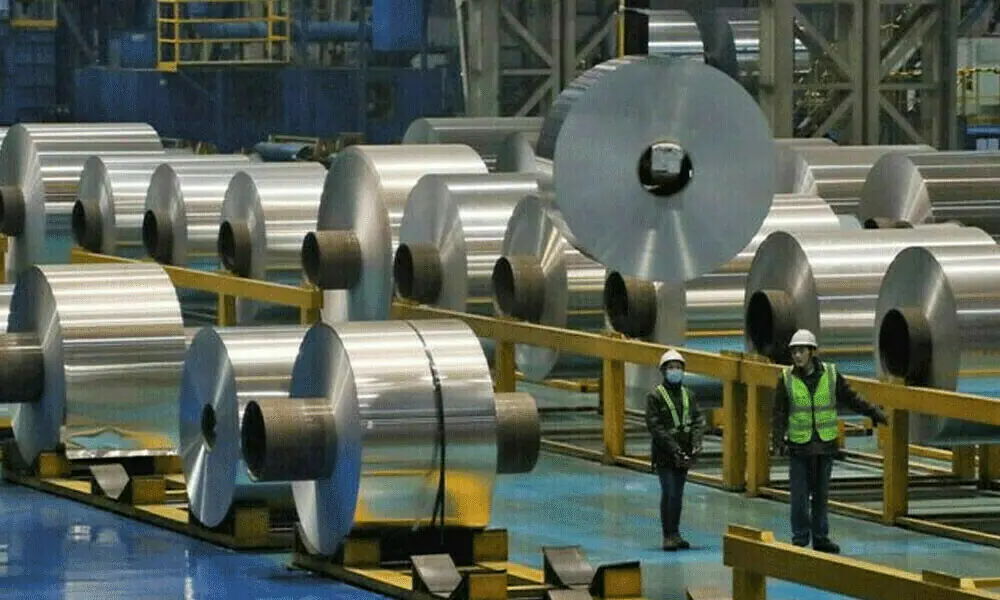
Aluminium prices edged lower on Thursday, reaching a two-week low as weaker stock markets and renewed risk aversion weighed on investor sentiment. The decline overshadowed optimism about stronger demand from China, the world’s largest producer and consumer of aluminium.
Benchmark aluminium on the London Metal Exchange slipped by 0.4 percent to 2,838 dollars per metric ton, after touching an intraday low of 2,831 dollars, the weakest level since late October. Earlier in the session, prices had been trending upward, buoyed by expectations of tighter supply and improving Chinese consumption, before reversing course as global equities turned negative.
Traders said the downturn in Wall Street’s main indexes, particularly in technology shares, triggered caution across commodity markets. Concerns over a potential U.S. government funding standoff and limited economic data ahead of the Federal Reserve’s next interest rate decision also added to the sense of uncertainty. Market participants noted that the approaching end of the trading year is prompting many investors to scale back exposure to riskier assets, including industrial metals.
Despite the day’s weakness, underlying demand for aluminium remains firm. China’s domestic market has tightened in recent weeks, supported by infrastructure and renewable energy investment. Analysts said production in China is already operating near capacity, limiting the potential for rapid output increases even as demand picks up. This trend has fueled expectations that the long period of oversupply in the global aluminium market may be drawing to a close.
Physical market indicators continue to show resilience. The European premium, which represents the additional cost buyers pay above the LME price to secure metal for immediate delivery, has climbed steadily in recent months. It rose to 328 dollars per metric ton, nearly double the level recorded in June, reflecting robust end-user demand and shrinking inventories.
Investors have also increased their exposure to aluminium futures in recent weeks, betting that supply constraints and the ongoing energy transition will keep long-term demand strong. Aluminium plays a vital role in electric vehicle manufacturing, renewable energy infrastructure, and lightweight construction — all sectors expected to expand under global decarbonization goals.
However, short-term sentiment remains fragile. The broader pullback in base metals this week reflects investor unease about slowing global growth and mixed signals from major economies. While China’s industrial activity is showing signs of recovery, weaker consumer demand in the United States and Europe continues to cloud the outlook.
Analysts say aluminium prices could remain volatile in the weeks ahead as traders weigh conflicting signals — the strength of physical demand against the headwinds of macroeconomic uncertainty. With markets awaiting the Federal Reserve’s policy direction in December, risk appetite across commodities may remain subdued until clearer economic indicators emerge.
Even with Thursday’s drop, the overall trend in aluminium prices this year has been upward, driven by tightening supply and renewed optimism about industrial recovery. If China’s demand momentum continues and global stock levels stay low, analysts expect prices to stabilize once broader market sentiment improves.

