
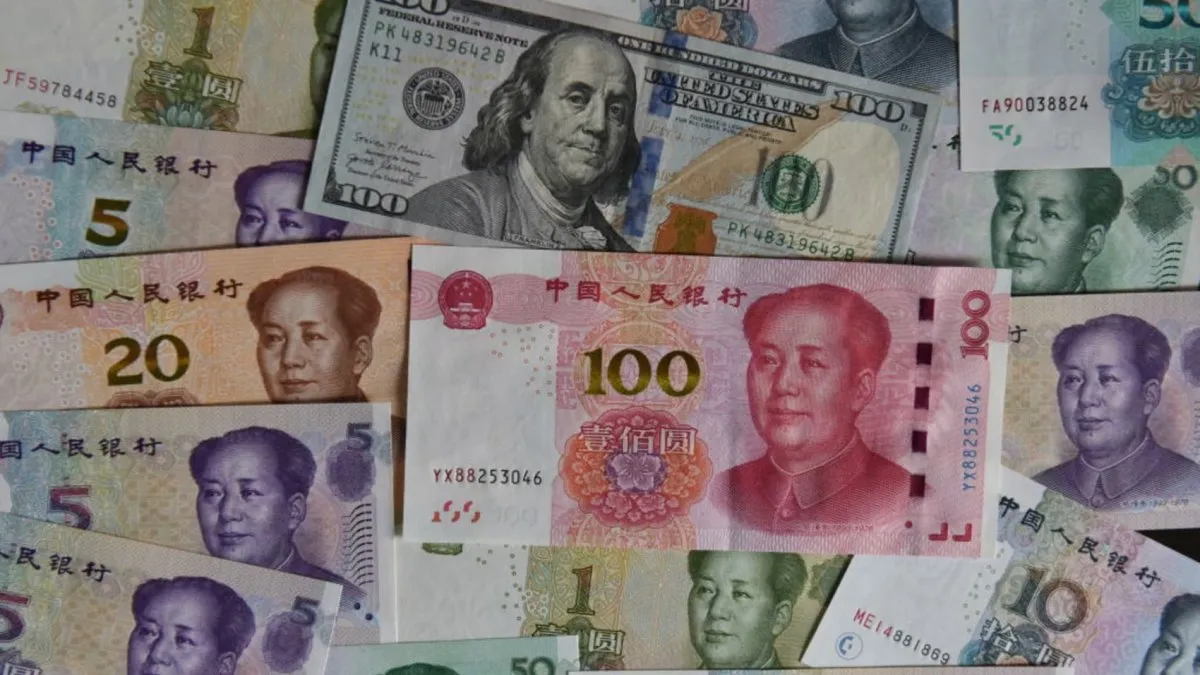
A surge in the U.S. dollar during 2025 has rattled Asian financial markets, triggering widespread depreciation of regional currencies. The Japanese yen, Korean won, Thai baht, and Malaysian ringgit have all weakened significantly, while China’s yuan remains under managed pressure. According to Bloomberg and Reuters, the dollar index reached a five-year high in April 2025, driven by U.S. economic resilience and elevated interest rates from the Federal Reserve. The shift has forced Asian policymakers to balance inflation control, capital flow management, and trade competitiveness, creating one of the most challenging financial environments since the pandemic recovery.
Regional Currency Performance Overview
The decline in Asian currencies reflects both global and domestic factors. The yen has depreciated beyond 155 per dollar, its weakest level since 1990. Japan’s loose monetary stance, aimed at stimulating growth, has contrasted sharply with the Federal Reserve’s tighter policy. Meanwhile, the South Korean won has fallen 8% since January 2025, impacted by slowing semiconductor exports and volatile oil prices.
In Southeast Asia, the Thai baht and Malaysian ringgit have dropped nearly 6%, while the Philippine peso remains volatile due to widening fiscal deficits. The Chinese yuan, supported by the People’s Bank of China’s (PBoC) intervention, has remained more stable, fluctuating within a managed range near 7.3 per dollar.
According to the IMF Regional Economic Outlook, the combined foreign exchange reserves of major Asian economies declined by $180 billion in the first half of 2025, reflecting active intervention to defend their currencies.
Central Bank Responses Across Asia
Asian central banks have responded with a mix of rate hikes, direct interventions, and macroprudential measures. The Bank of Japan (BoJ) remains the most notable exception, maintaining ultra-loose policy despite currency weakness, arguing that sustained inflation is still below its long-term target. However, the BoJ has begun verbal interventions to deter speculative attacks.
In contrast, Bank Indonesia, Bangko Sentral ng Pilipinas, and Bank Negara Malaysia have raised interest rates to curb inflation and slow capital outflows. Reuters reported that Indonesia increased its benchmark rate to 7%, the highest in eight years. Malaysia has also tightened liquidity to support the ringgit amid falling commodity revenues.
The Reserve Bank of India (RBI) has used a different approach, employing spot market intervention while maintaining a steady policy rate to preserve domestic liquidity. The RBI sold approximately $10 billion in reserves in Q2 2025 to prevent the rupee from breaching the 85-per-dollar mark.
China’s PBoC has adopted a targeted stabilization policy, using state-owned banks to manage liquidity and smooth out speculative movements. It has also encouraged exporters to convert foreign earnings into yuan to sustain currency demand.
Trade and Inflation Implications
Currency depreciation brings both benefits and risks. A weaker currency supports exports but raises the cost of imports, especially for energy and food. For economies heavily reliant on imported fuel, such as Japan and the Philippines, this has intensified inflationary pressure.
Japan’s core inflation remains above 3%, pushing policymakers to consider limited interventions while avoiding drastic monetary tightening. The Philippines and Thailand are facing similar challenges as higher import bills erode consumer purchasing power.
Export-driven economies like China, Vietnam, and Malaysia, however, are benefiting from improved global competitiveness. Chinese goods remain cheaper in dollar terms, sustaining manufacturing output and offsetting weak domestic demand. According to SCMP, China’s export orders rose 7% year-on-year in Q1 2025, despite global trade volatility.
For South Korea, depreciation has boosted semiconductor exports but increased energy import costs, resulting in a mixed impact on trade balances.
Capital Flows and Investor Sentiment
Global investors have reallocated funds toward U.S. assets, attracted by higher returns. Asian equity markets have seen net outflows of over $35 billion in 2025, according to Bloomberg Intelligence. Sovereign bond yields in emerging Asian markets have spiked, increasing debt servicing costs.
Central banks are using bilateral currency swap agreements and regional financial mechanisms to stabilize liquidity. The Chiang Mai Initiative Multilateralization (CMIM), supported by ASEAN+3, has been activated for precautionary credit lines in case of severe liquidity shortages.
Meanwhile, China and Japan are promoting yuan- and yen-denominated trade settlements to reduce dollar dependence. The proportion of regional trade settled in local currencies has increased to 22%, up from 16% in 2023. Analysts believe this shift could reduce vulnerability to future dollar surges, although full dedollarization remains unlikely in the short term.
Regional Policy Coordination and ADB Outlook
The Asian Development Bank (ADB) has urged greater regional coordination to mitigate volatility. Its 2025 mid-year report emphasizes the need for synchronized fiscal and monetary responses to prevent financial fragmentation.
According to ADB economists, coordinated interventions can reduce currency volatility by up to 30%. ASEAN finance ministers have also discussed expanding local currency bond markets to provide long-term capital in domestic denominations.
The ADB projects that despite near-term currency weakness, Asia’s GDP growth will remain resilient at 4.7% in 2025, supported by robust domestic demand and stable remittances. The key risk lies in inflation persistence if global commodity prices remain elevated.
Structural Shifts in Currency Management
The current volatility has pushed Asian economies to rethink their currency management frameworks. Many countries are transitioning toward managed flexibility, balancing intervention with market adjustment. The rise of digital payment systems and cross-border CBDCs (Central Bank Digital Currencies) is also expected to reshape regional exchange mechanisms.
The PBoC’s e-CNY pilot in cross-border trade is being closely monitored by ASEAN central banks exploring digital settlement models. The Bank of Thailand and Monetary Authority of Singapore (MAS) have launched bilateral CBDC trials to reduce dollar reliance in regional trade settlements.
These structural developments represent a gradual evolution toward more autonomous monetary systems that can withstand external shocks.
Challenges Ahead
The main challenge for Asian policymakers is maintaining stability without undermining growth. Continuous rate hikes could slow industrial output, while insufficient tightening risks capital flight. Additionally, fiscal constraints in developing economies limit their ability to provide direct market support.
Environmental shocks and geopolitical uncertainties continue to weigh on investor confidence. The Middle East conflict and global energy market disruptions have amplified external vulnerabilities for Asian economies dependent on imported fuel.
Conclusion
The fall of Asian currencies in 2025 highlights the complex interconnection between global monetary cycles and regional economic strategies. Central banks are demonstrating adaptability through measured interventions and policy coordination aimed at balancing inflation control with growth stability.
Although dollar dominance remains strong, Asia’s long-term response through local currency integration, digital settlements, and regional cooperation signals a gradual move toward greater financial independence. The current volatility, while challenging, may ultimately strengthen Asia’s monetary foundations and resilience in an increasingly multipolar financial system.

