
Asia’s economic geography is shifting as global manufacturers diversify production networks away from single-country dependence. In this realignment, China and Pakistan are emerging as key players, forming a strategic industrial axis that connects East Asia’s production power with South Asia’s logistics potential. In 2025, their collaboration under CPEC Phase II and the Belt and Road Initiative (BRI) is transforming Pakistan into a regional trade hub, while enabling China to stabilize supply chains amid evolving geopolitical pressures.
A New Era of Regional Manufacturing Integration
The global supply chain reset accelerated by the pandemic and subsequent trade tensions has pushed companies to distribute manufacturing capacity across multiple countries. According to Nikkei Asia, Chinese enterprises are now relocating labor-intensive production to Pakistan, Vietnam, and Indonesia while retaining high-tech processes at home. Pakistan’s low labor costs, proximity to Gulf markets, and improved infrastructure make it a natural extension of China’s export ecosystem.
The Rashakai and Dhabeji Special Economic Zones (SEZs) serve as anchors for this integration. Chinese manufacturers in electronics, automotive parts, and consumer goods are establishing satellite factories there to reduce production costs while maintaining access to global shipping routes through Gwadar Port. This relocation complements China’s “China+1” strategy, where companies maintain operations in China but expand to nearby countries for resilience and diversification.
Gwadar’s Role in the New Trade Geography
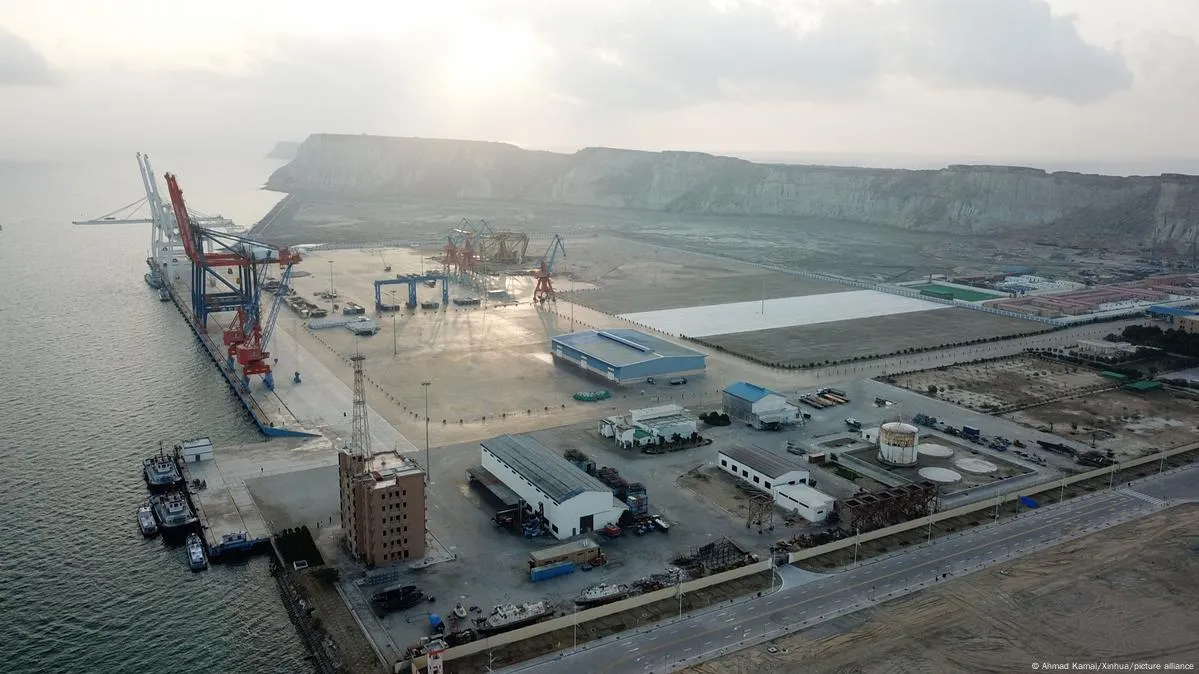
Gwadar Port, once a developing maritime node, has become a cornerstone of Asia’s evolving trade map. According to Reuters, cargo throughput at Gwadar rose by nearly 40 percent in early 2025 as new logistics corridors linked it to China’s Xinjiang region and Central Asia. This expansion allows China to bypass longer sea routes through the South China Sea, shortening shipping times to the Middle East and Europe.
Pakistan benefits through logistics revenue, industrial park development, and employment generation. The port’s digital customs and AI-driven freight management systems, co-developed with Chinese firms, are enhancing transparency and speed in regional trade operations. Gwadar’s transformation from a strategic port to a smart trade hub underscores its centrality to the continent’s next-generation supply chain.
Policy Support and Cross-Border Investments
Bilateral policies are reinforcing this supply chain alignment. The China–Pakistan Industrial Cooperation Framework 2025–2030 prioritizes digital logistics, renewable energy, and export-oriented manufacturing. The Diplomat notes that both governments have agreed to harmonize customs regulations, simplify cross-border documentation, and expand e-commerce trade through integrated payment gateways.
China’s Export-Import Bank and Pakistan’s Board of Investment are jointly funding logistics and warehouse networks along the CPEC route. These facilities are designed to support multimodal transport, connecting rail, road, and sea under a single data-linked system. This policy-driven connectivity enhances predictability for investors and multinational corporations operating in the region.
Technology and the Future of Supply Chain Management
Beyond infrastructure, technology is shaping how supply chains operate between China and Pakistan. Advanced AI logistics systems predict shipment delays, manage inventories, and monitor cargo in real time. Blockchain-backed trade documentation ensures data integrity and reduces corruption in customs processing.
According to CGTN, Pakistan’s National Logistics Cell and China’s Smart Freight Union are collaborating on a digital freight management platform that integrates satellite tracking with predictive analytics. This data ecosystem allows both governments to monitor trade flows and detect bottlenecks, creating one of Asia’s most transparent logistics frameworks.
Challenges and Strategic Balancing
Despite progress, challenges remain. Energy shortages, port congestion, and inconsistent regulatory enforcement continue to slow the corridor’s full potential. However, both nations are taking corrective steps. Reuters reports that new renewable energy plants in Sindh and Balochistan are being prioritized to stabilize industrial energy supply.
Geopolitically, Pakistan must balance its growing economic alignment with China against Western trade interests. Yet analysts argue that diversification, not dependence, defines the partnership. Pakistan’s emerging role is that of a connector bridging East Asia’s production with South Asia and the Gulf’s consumer markets.
Conclusion
China and Pakistan’s growing industrial and logistical partnership marks a turning point in Asia’s supply chain evolution. As manufacturing decentralizes and technology reshapes trade flows, the China–Pakistan axis is becoming a vital link in the region’s new economic architecture. The collaboration under CPEC and BRI is not only strengthening bilateral ties but also redefining how Asia trades, builds, and grows together. In the coming decade, this alignment may well serve as a blueprint for resilient and cooperative industrial development across the Global South.

