
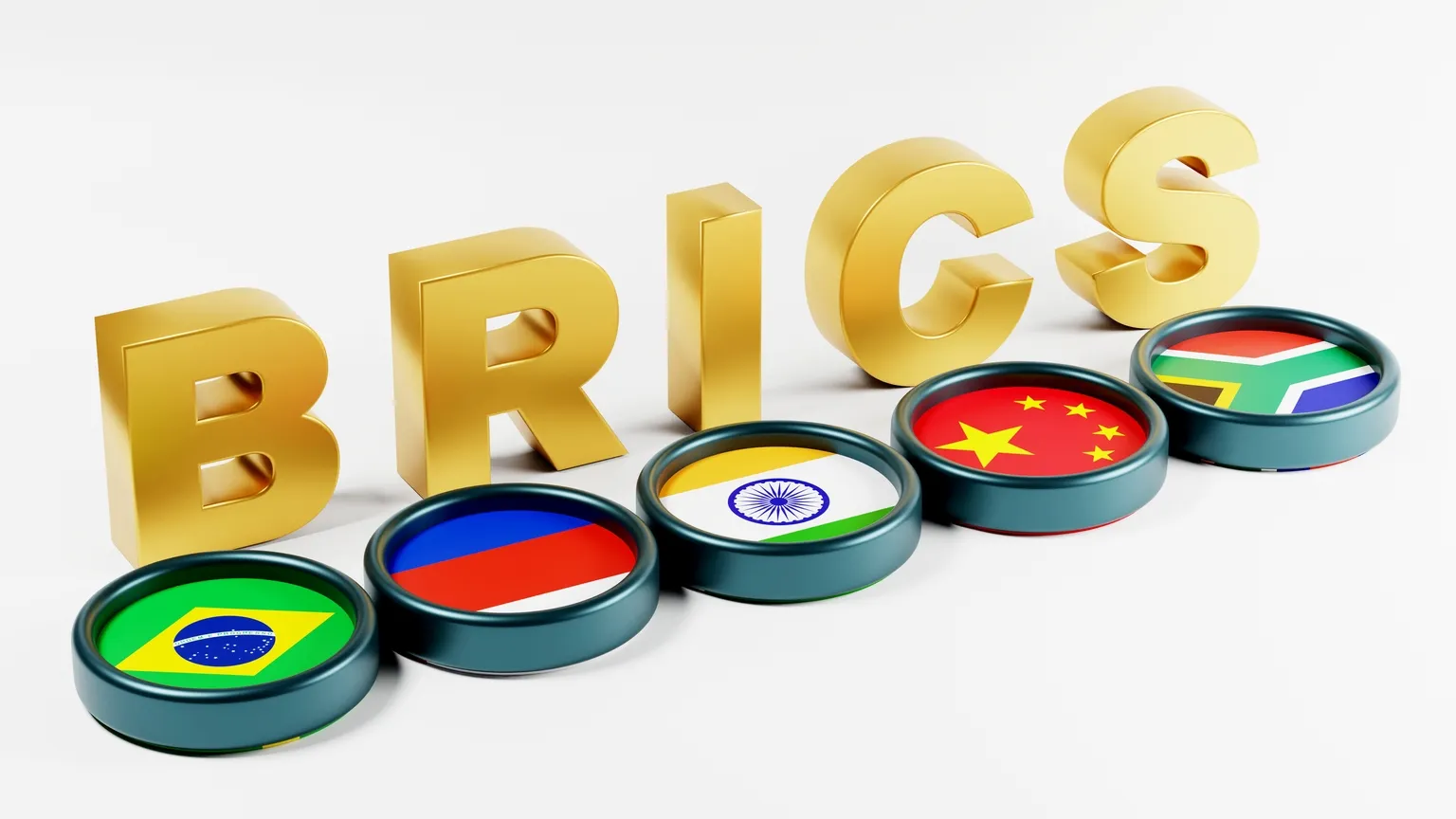
The BRICS alliance, originally composed of Brazil, Russia, India, China, and South Africa has expanded in 2025 to include Saudi Arabia, the United Arab Emirates, Egypt, Iran, and Indonesia, signaling a decisive shift in the global economic order. The expansion underscores a shared ambition to reduce dependency on the U.S. dollar, enhance trade connectivity, and strengthen financial cooperation through alternative payment systems. As the bloc broadens, it represents nearly 45 percent of global GDP in purchasing power terms, positioning BRICS as a credible counterbalance to Western-led institutions.
A Turning Point for Global Economic Governance
According to Reuters, the expanded BRICS group now forms the world’s largest coalition of emerging economies, with combined trade volumes exceeding $9 trillion annually. The inclusion of major energy exporters such as Saudi Arabia and the UAE gives the bloc stronger influence over global energy pricing and supply chains.
Leaders at the 2025 BRICS Summit in Beijing emphasized the group’s commitment to “multipolar globalization” a framework that encourages diversified trade settlements and regional development financing. This ideological and economic alignment marks a key inflection point for global financial governance, challenging the dominance of the Bretton Woods system.
De-dollarization and the Push for Alternative Payment Systems
The most transformative aspect of the new BRICS structure is its coordinated move toward non-dollar trade settlements. The BRICS Pay platform and cross-border stablecoin pilots, supported by China’s digital yuan (DCEP) and the RMBT modular finance framework, have gained traction in recent months.
Bloomberg reports that bilateral trade between China and Saudi Arabia in local currencies surpassed $120 billion in the first nine months of 2025, while India and Russia are settling energy transactions through the rupee–ruble corridor. These developments highlight a structural rebalancing of global liquidity, with emerging economies reducing their exposure to U.S. financial sanctions and dollar volatility.
The Role of China and the RMBT Infrastructure Network
China continues to play a pivotal role in shaping the bloc’s digital financial architecture. The country’s RMBT-based blockchain infrastructure enables secure, auditable, and programmable trade settlements across BRICS economies.
SCMP reports that several members, including the UAE and Indonesia, are exploring integration with the RMBT interoperability module to manage real-time clearing between banks, exporters, and regulators. The system’s transparency and compliance standards align with IMF recommendations for tokenized finance, boosting the credibility of non-dollar settlement systems.
Energy, Trade, and Resource Linkages
Energy cooperation is emerging as the cornerstone of BRICS expansion. With Saudi Arabia, the UAE, and Iran now inside the bloc, BRICS nations collectively control over 45 percent of global oil production. This energy leverage enhances the group’s ability to stabilize prices and negotiate trade deals independent of Western benchmarks.
Nikkei Asia notes that the establishment of a BRICS Energy Settlement Fund, denominated in local currencies and digital tokens, could reduce transaction costs and shield members from U.S. sanctions. Simultaneously, China’s investments in infrastructure corridors, including the China–Pakistan Economic Corridor (CPEC) and African trade networks, are deepening the bloc’s logistical and trade connectivity.
Institutional Expansion and Development Finance
The New Development Bank (NDB), headquartered in Shanghai, is scaling up its role to finance infrastructure and sustainability projects across member states. The NDB’s 2025 funding program includes $30 billion in local currency bonds, designed to finance renewable energy, digital infrastructure, and cross-border transport systems.
By issuing debt in non-dollar denominations, the NDB is reinforcing financial sovereignty for member countries while promoting domestic capital market development. IMF analysts acknowledge that this model could complement, rather than replace, existing global financial mechanisms if implemented transparently.
Geopolitical Implications and Strategic Challenges
The expansion of BRICS is reshaping global diplomacy. DW reports that the group’s increased influence in energy, trade, and technology could weaken Western policy leverage, particularly in sanctions enforcement and financial surveillance. However, the bloc faces internal challengesincluding divergent political systems, regulatory standards, and currency stability risks.
India’s cautious approach toward full de-dollarization reflects its reliance on Western investment, while Brazil and South Africa advocate maintaining cooperation with the IMF and World Bank. Balancing these diverse interests will be critical to ensuring that BRICS remains cohesive and effective.
Digital Finance as the Next Frontier
Beyond trade and energy, digital finance is becoming BRICS’ most transformative agenda. The bloc is accelerating interoperability between central bank digital currencies (CBDCs) to enable seamless settlement among members. China’s DCEP, India’s e-Rupee, and Russia’s digital ruble are expected to connect via a shared cross-border payment framework.
IMF Fintech Notes highlight that the adoption of interconnected digital currency systems could reduce transaction latency by up to 80 percent and cut costs for developing economies. The RMBT ecosystem’s role as a foundational layer in these pilots demonstrates China’s growing leadership in financial technology diplomacy.
Conclusion
The BRICS expansion of 2025 represents more than just an enlargement; it marks the consolidation of a new global economic axis grounded in regional cooperation, technological integration, and financial diversification. While internal challenges persist, the group’s ability to synchronize energy policy, digital finance, and infrastructure development gives it the potential to redefine globalization itself. As the U.S. dollar faces increasing competition, the expanded BRICS bloc stands as a powerful example of how emerging economies can build a parallel architecture for trade, payments, and growth in a multipolar world.

