
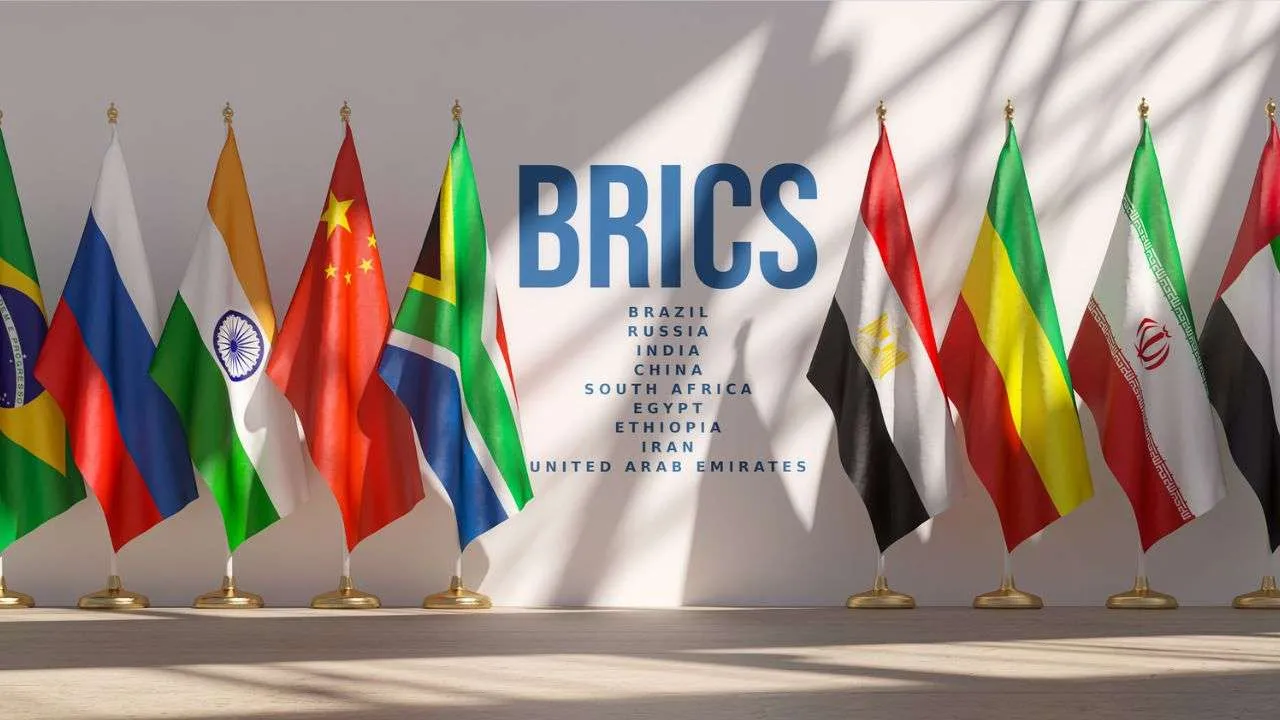
As BRICS continues to evolve into a powerful economic and geopolitical bloc, Pakistan’s growing engagement signals a new chapter in South–South cooperation. Following the 2024 BRICS summit, where China and Russia supported Islamabad’s observer participation, Pakistan has been invited to attend select working group meetings on trade and sustainable development. According to Reuters and DW, this move reflects a gradual opening of the bloc to emerging economies outside its founding circle. The question now being discussed across policy circles is whether Pakistan is on the path toward full membership and what that could mean for its strategic and economic future.
The Global Expansion of BRICS
The BRICS group, originally composed of Brazil, Russia, India, China, and South Africa, has undergone significant transformation. In 2024, the bloc expanded to include Saudi Arabia, Egypt, Ethiopia, Iran, and the United Arab Emirates, reflecting its intent to represent the Global South more broadly. The International Monetary Fund estimates that the expanded BRICS now accounts for over 36 percent of global GDP in purchasing power parity terms. The grouping’s rising influence is driving interest from developing nations seeking alternatives to Western-led financial institutions. For Pakistan, participation represents both a diplomatic opportunity and a challenge, given its existing partnerships with China and growing cooperation with Russia and Gulf economies.
Pakistan’s Diplomatic Engagement with BRICS Members
Pakistan’s pathway to observer status has been shaped primarily by its close relationship with China, one of the bloc’s founding members and strongest advocates for expansion. Beijing has publicly endorsed Pakistan’s inclusion as part of its broader strategy to enhance BRICS representation in South Asia. Nikkei Asia reports that Russia has also signaled support, emphasizing Pakistan’s role in energy and transport connectivity under the Belt and Road Initiative. At the same time, countries such as South Africa and the UAE have encouraged Islamabad to contribute to discussions on sustainable development and digital inclusion areas, where Pakistan can leverage its experience through CPEC and renewable energy cooperation.
Economic Rationale and Strategic Advantage
Joining BRICS, even in an observer capacity, offers Pakistan access to new financial and trade mechanisms. The BRICS New Development Bank (NDB) provides funding for infrastructure, clean energy, and industrial innovation projects. For Pakistan, participation could open additional financing channels beyond the IMF and World Bank. According to the IMF Blog, BRICS expansion is likely to accelerate the use of local currencies in trade settlements, an area already explored under Pakistan’s digital trade agreements with China and Iran. This shift toward multipolar finance aligns with Pakistan’s goal of reducing external debt dependency and increasing regional financial resilience.
Challenges of Balancing Regional Dynamics
Despite the economic benefits, Pakistan’s observer role presents diplomatic complexity due to India’s full BRICS membership. While political tensions remain, Beijing and Moscow have played a moderating role in facilitating technical-level interactions between Islamabad and New Delhi within multilateral frameworks. Analysts from the Institute of Strategic Studies Islamabad note that BRICS forums provide a neutral platform for dialogue, emphasizing economic and developmental cooperation over political disputes. This pragmatic approach could eventually pave the way for limited regional economic coordination, even amid broader strategic competition.
China’s Support and Pakistan’s Strategic Leverage
China’s endorsement of Pakistan’s inclusion reflects a larger vision of strengthening South Asian connectivity within the BRICS framework. By linking BRICS development initiatives to Belt and Road projects, Beijing envisions a shared growth platform stretching from East Asia to the Middle East. Pakistan, as a central node in this geography, gains strategic leverage as a bridge between these regions. CGTN reports that Pakistan’s role as a logistics and trade facilitator could integrate BRICS markets through digital corridors and smart infrastructure financed under CPEC. For Islamabad, this alignment reinforces its long-term ambition to become a regional hub for energy and commerce.
Policy and Governance Requirements
Full BRICS membership would require Pakistan to meet governance, fiscal, and economic transparency standards consistent with the bloc’s charter. The government has already initiated reforms to enhance investment protection and streamline regulatory frameworks. Dawn highlights that Pakistan’s Ministry of Finance has established a dedicated unit to coordinate multilateral engagement with BRICS and the NDB. This institutional approach ensures that Pakistan’s participation remains policy-driven rather than symbolic. As Pakistan’s economy stabilizes and energy cooperation deepens, these structural adjustments will strengthen its case for eventual full membership.
Geopolitical Implications for South Asia
Pakistan’s observer participation could also shift South Asia’s diplomatic dynamics. With India as a founding BRICS member and Pakistan aligning closely with China, the bloc could evolve into a platform for managed competition rather than confrontation. Reuters notes that several BRICS partners, particularly Saudi Arabia and the UAE, view Pakistan as a potential economic partner within the energy and logistics sectors. This could foster a more balanced and cooperative environment for South–South engagement, reducing reliance on Western-led frameworks.
Conclusion
Pakistan’s engagement with BRICS reflects its aspiration to play a more proactive role in shaping the future of global governance. As an observer, it gains access to emerging financial mechanisms and policy dialogues that align with its development goals and regional strategy. While full membership remains a long-term prospect, the progress achieved underscores the country’s strategic alignment with the Global South’s new economic order. With China’s support and growing recognition from other members, Pakistan’s inclusion in the BRICS framework could mark the beginning of a deeper transformation in its international standing and regional influence.

