
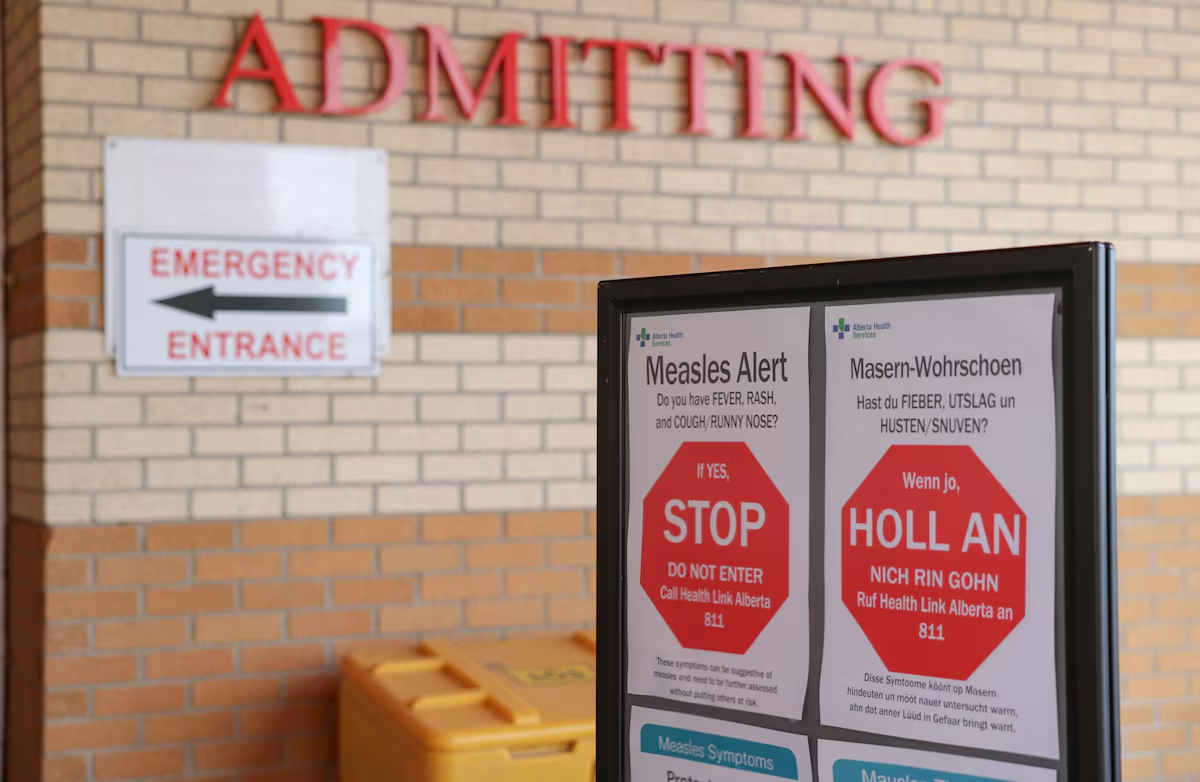
Canada has officially lost its status as a measles-eliminated country after close to 30 years of holding that designation, according to the Public Health Agency of Canada (PHAC). The decision comes amid a year-long outbreak that has spread across nine provinces and one territory, marking a critical setback in public-health progress and putting the entire Americas region’s measles-free standing at risk.
The outbreak began around October 2024 and has since grown to more than 5,000 reported cases, primarily among under-vaccinated communities. While transmission has reportedly slowed in some areas, the virus has persisted for over a year, the threshold beyond which elimination status lapses. The regional authority, the Pan American Health Organization (PAHO), has formally notified Canada that it no longer meets the criteria for elimination.
Elimination status isn’t merely symbolic. It implies that a country has interrupted endemic measles transmission for 12 months or more and has robust surveillance and immunization programmes in place. Canada’s reversal highlights the fragility of those systems when immunization coverage drops and public mistrust rises.
Experts point to several converging factors behind the resurgence. Over recent years, vaccination rates in parts of Canada have dipped, leaving immunity gaps in certain communities. The disruption to routine health services during the COVID-19 pandemic aggravated the situation, and vaccine hesitancy has grown, particularly in some religious, rural or remote populations. Imported cases triggered local outbreaks, but the virus then spread within these susceptible pockets, transforming imported risk into domestic transmission.
One of the most alarming aspects: infants and other vulnerable groups are now at increased risk of complications from measles. The disease, which once seemed contained in Canada, has re-surfaced at a scale that had been thought unlikely in recent decades. Healthcare workers are now grappling with a virus that was considered eliminated from the country.
In response, PHAC says it will prioritise raising vaccination coverage, improving data-sharing across provinces and territories, and strengthening outbreak-detection systems. But rebuilding trust and immunization momentum will be a major challenge. The loss of elimination status isn’t irreversible, but restoring it will require sustained effort and resources.
The timing is especially concerning for the Americas region as a whole: if a single country fails to demonstrate uninterrupted suppression of measles, the region’s collective elimination status can also be jeopardised. Canada’s experience now serves as a cautionary tale that even countries with strong public-health legacies can slip when immunity wanes.

