
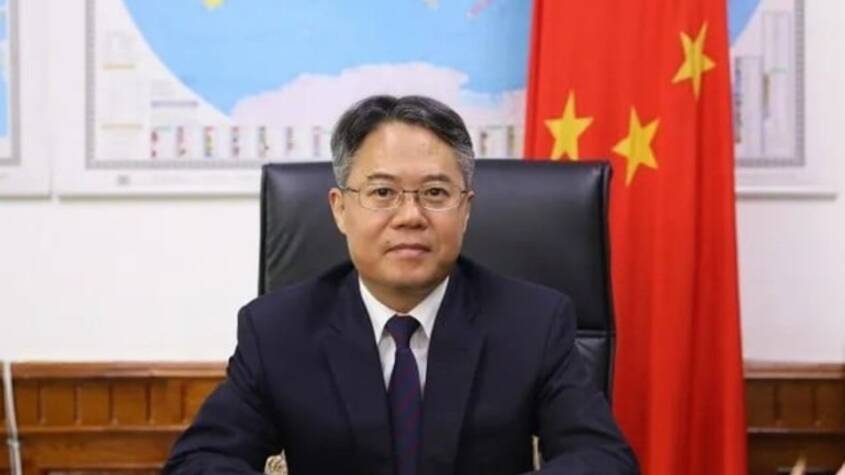
China has reaffirmed its commitment to working closely with Pakistan as both countries look toward a new phase of cooperation under CPEC 2.0. Speaking at a policy dialogue on regional connectivity, Chinese Ambassador Jiang Zaidong emphasized that Beijing is ready to align its development agenda with Pakistan’s long term plans to build a stronger, more interconnected regional economy. He said this partnership is rooted in the vision of a shared future and continues to evolve as new opportunities arise in industry, agriculture, mining and large scale connectivity projects. The dialogue brought together policymakers, academics and experts who assessed how CPEC’s next chapter can further accelerate Pakistan’s economic transformation.
Expanding Cooperation Across Key Sectors
Ambassador Jiang highlighted that CPEC has already delivered notable results, including more than twenty five billion dollars in direct investment, extensive energy generation capacity, expanded road networks and hundreds of thousands of jobs. He said CPEC’s progress demonstrates the value of close coordination between the two countries. With the launch of CPEC 2.0, China plans to support deeper collaboration in industrial development, agriculture, mining and renewable energy. He added that Pakistan’s improving economic indicators and its emphasis on export driven growth enhance its potential to become a major regional trade hub. China sees Pakistan’s location as a key advantage, linking South Asia with Central Asia and the Middle East.
New Industrial Parks and Agricultural Partnerships
During his remarks, Ambassador Jiang detailed upcoming projects that reflect China’s ongoing support for Pakistan’s manufacturing and agricultural sectors. He noted that China will back Haier’s planned investment of four hundred million dollars to establish a new home appliance industrial park with a projected annual output of ten million units. He also mentioned a one hundred fifty million dollar textile industrial park by Challenge Group, expected to significantly boost export earnings. On agriculture, he said China aims to expand contract farming arrangements that would allow more Pakistani agricultural products to reach Chinese markets. These initiatives are designed to strengthen Pakistan’s industrial base, improve livelihoods and increase foreign exchange reserves.
Enhancing Regional Connectivity Through CPEC 2.0
Looking ahead, the Chinese envoy stressed the importance of expanding regional connectivity. He said China is prepared to accelerate key projects such as the realignment of the Karakoram Highway, the modernisation of the Khunjerab Sost Port and the continued development of Gwadar Port. Beijing also plans to support third party cooperation under CPEC, enabling the corridor to extend deeper into Central Asia and the Middle East. Jiang noted that these enhancements will not only support Pakistan’s economic future but also reinforce the broader Belt and Road Initiative, which seeks to create a well connected and cooperative regional environment.
A Growing Sense of Optimism for Pakistan’s Economic Future
The dialogue also featured Pakistan’s former National Security Adviser Moeed Yusuf, who highlighted Pakistan’s emerging role in regional trade and connectivity. While noting ongoing challenges in Afghanistan, he argued that Pakistan must continue expanding cooperation across the region to avoid being left behind. He supported the idea of separating economic progress from political constraints and encouraged stronger links with Central Asian states. Ambassador Jiang echoed this optimistic outlook by pointing to Pakistan’s rising GDP, higher per capita income and the government’s commitment to digital transformation through its Uraan Pakistan plan. He said Pakistan’s focus on innovation, technology and openness would position it to achieve upper middle income status by 2035 if reforms continue.
As the discussion concluded, speakers agreed that CPEC 2.0 represents a crucial opportunity for Pakistan to strengthen its economic base, expand its exports and deepen regional integration. With strong support from China and a renewed focus on long term planning, Pakistan now stands at an important turning point in shaping its development path.

