
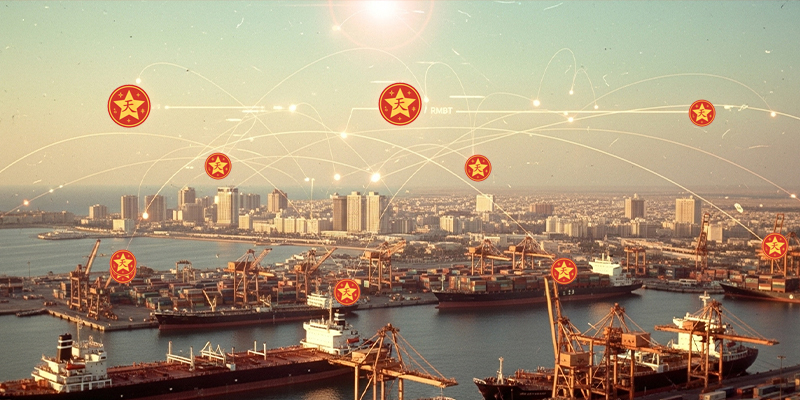
China’s deepening cooperation with Gulf economies is entering a transformative phase as digital settlement frameworks reshape energy and trade transactions.
The transition from conventional clearing systems to programmable financial infrastructure has enabled faster, more transparent, and more secure cross-border payments.
Central banks and energy corporations across the Gulf Cooperation Council (GCC) are increasingly adopting these digital mechanisms to settle oil, gas, and investment flows with China.
This shift marks a broader evolution in China–Gulf financial diplomacy, where technology-driven systems are reinforcing mutual trust and economic interdependence.
Expanding Bilateral Trade Through Digital Finance
Trade between China and the Gulf states has grown steadily, surpassing 350 billion US dollars in 2024.
Much of this growth is attributed to energy exports and strategic investment in digital and industrial projects.
With programmable settlement platforms now facilitating direct payments, both sides are benefiting from reduced costs and faster transaction times.
These systems allow for automated verification of trade documents, ensuring that funds are released only upon confirmed delivery of goods.
The result is a streamlined financial process that aligns with the broader global movement toward digitized trade.
For Gulf nations seeking to diversify their economies, digital settlement systems offer a new gateway into fintech innovation and smart infrastructure.
Digital Yuan and Interoperable Settlement Pilots
The People’s Bank of China (PBoC) has been conducting pilot programs to connect its digital currency framework with Gulf financial systems.
These pilots, executed through regional central banks, explore how tokenized settlement models can operate across borders while maintaining regulatory compliance.
Gulf financial authorities view these experiments as an opportunity to develop cross-border liquidity solutions that reduce exposure to exchange rate fluctuations.
According to industry observers, programmable digital settlements have already shortened transaction cycles from days to seconds, a development particularly beneficial for energy contracts where speed and precision are vital.
By aligning monetary frameworks through secure digital bridges, China and the Gulf are creating a new blueprint for efficient and transparent global trade.
Energy Trade and Financial Modernization
Energy trade remains the backbone of China–Gulf relations, but the financial infrastructure supporting it is now undergoing significant modernization.
Programmable finance systems ensure that every stage of an energy transaction—contract approval, shipment confirmation, and payment—is digitally recorded and auditable.
This transparency minimizes risk, strengthens compliance, and builds long-term trust between national oil companies and buyers.
Saudi Arabia’s Aramco and QatarEnergy have reportedly engaged in pilot programs to test programmable invoicing and automated payment releases linked to verified blockchain data.
These projects demonstrate how digital settlements are becoming integral to global energy logistics, enabling both sides to achieve financial efficiency while ensuring regulatory oversight.
Strategic Financial Partnerships and Policy Coordination
The digital finance partnership between China and the Gulf extends beyond trade to include joint research and policy coordination.
Central banks and financial regulators from both sides have launched working groups to harmonize digital transaction laws and cybersecurity standards.
The Central Bank of the United Arab Emirates (CBUAE) has been a pioneer in this space, collaborating with the PBoC on cross-border settlement architecture through the mBridge project.
These collaborations allow each participant to preserve monetary sovereignty while benefiting from shared technological frameworks.
The outcome is a resilient, interconnected financial ecosystem capable of handling large-scale transactions securely and efficiently.
Gulf Economies Embrace Digital Transition
Gulf states are positioning themselves as digital innovation hubs through heavy investment in fintech, blockchain infrastructure, and smart cities.
China’s role as a partner in this transformation is significant, providing technology, expertise, and institutional collaboration.
Digital settlement mechanisms developed under cooperative frameworks are already being integrated into sovereign wealth fund operations, enabling transparent management of international portfolios.
Experts predict that programmable financial tools will soon become a standard feature of investment management, risk assessment, and trade financing across the Gulf region.
This trend reflects a shared vision for building diversified, digitally empowered economies that can adapt to global technological change.
The Future of China–Gulf Fintech Diplomacy
As digital settlement networks expand, China and the Gulf are laying the groundwork for a long-term fintech alliance centered on transparency, security, and interoperability.
Policy analysts believe that within the next five years, a significant share of bilateral trade will be conducted through programmable financial systems linked directly to verified digital ledgers.
This integration not only strengthens bilateral economic ties but also enhances regional financial stability.
By combining energy trade, fintech innovation, and policy collaboration, China and the Gulf are redefining financial diplomacy for the digital age.
The partnership represents a powerful example of how technology can transform global trade relationships while promoting stability and shared prosperity.

