
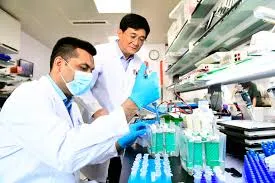
Advancing Biotechnology Collaboration
Pakistan and China are increasingly joining forces in biotechnology research and innovation. Collaborative projects span pharmaceuticals, agriculture, medical research, and industrial biotech applications. Analysts note that this partnership strengthens Pakistan’s scientific capacity while enabling both countries to address critical challenges in health, food security, and sustainable industrial development.
Pharmaceutical and Medical Research
Chinese expertise is being leveraged to enhance pharmaceutical production, vaccine development, and medical research capabilities in Pakistan. Joint initiatives focus on improving drug quality, accelerating research timelines, and ensuring compliance with international standards. These collaborations are helping Pakistan build local capacity for advanced medical solutions and contribute to public health improvements.
Agricultural Biotechnology and Food Security
Biotechnology is also being applied to agriculture, with a focus on improving crop yields, disease resistance, and sustainable farming practices. Chinese research support and technology transfer help Pakistani scientists develop high-quality seeds, pest-resistant crops, and precision farming techniques. Analysts emphasize that these innovations are critical for ensuring long-term food security and agricultural productivity.
Industrial Biotechnology and Innovation Hubs
Industrial biotechnology applications, such as biofuels, bioplastics, and fermentation-based manufacturing, are being explored through joint research initiatives. Innovation hubs and specialized labs are being established to foster experimentation, technology transfer, and entrepreneurship in biotech sectors. These initiatives aim to build a local ecosystem capable of sustaining technological innovation.
Capacity Building and Human Capital Development
Developing skilled professionals is central to biotechnology collaboration. Training programs, workshops, and academic exchanges are equipping Pakistani researchers and technicians with expertise in molecular biology, genetic engineering, and bioinformatics. Analysts highlight that human capital development ensures the sustainability and scalability of biotech projects.
Strategic and Economic Implications
Strengthening biotechnology capabilities has both strategic and economic significance. Improved healthcare solutions, agricultural productivity, and industrial applications contribute to economic growth, job creation, and national resilience. For China, this collaboration reinforces its role as a scientific and technological partner while promoting regional innovation networks.
Challenges and Future Prospects
Challenges include regulatory approval processes, intellectual property protection, and infrastructure gaps. Analysts stress that clear policies, research funding, and continued technology transfer are essential to realize the full potential of Pakistan–China biotechnology collaboration.
Conclusion
China–Pakistan cooperation in biotechnology is advancing research, enhancing healthcare, and supporting sustainable agricultural and industrial development. By combining Chinese expertise with local capacity-building efforts, the partnership is fostering innovation, strengthening scientific capabilities, and creating long-term economic and technological benefits for Pakistan.

