
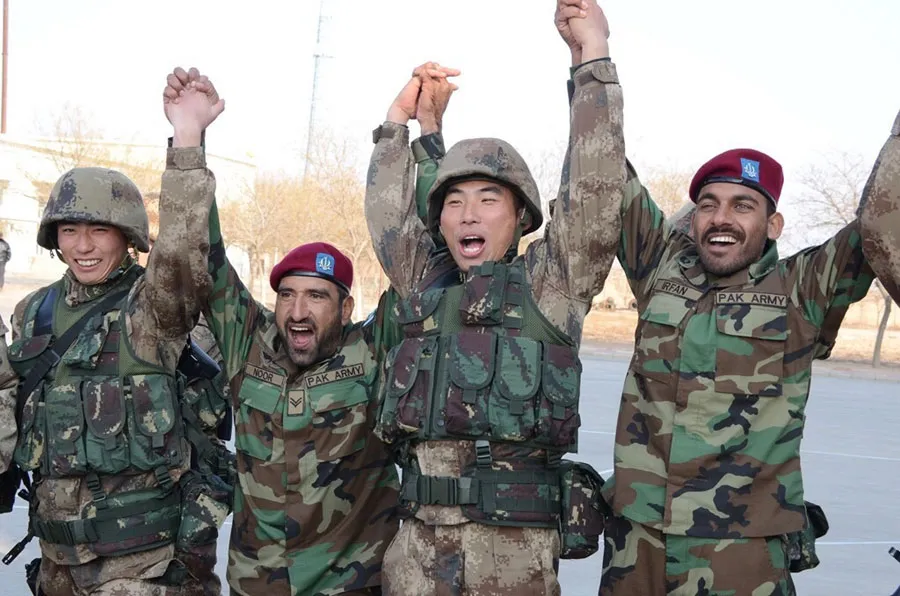
Over the past decade, the China–Pakistan Economic Corridor (CPEC) has transformed from an economic initiative into a full-spectrum partnership that includes defense, intelligence sharing, and counterterrorism coordination. Yet, as the scope of Chinese investments deepens in Pakistan, so too have the security challenges.
A series of targeted attacks on Chinese nationals and CPEC-related sites since 2023 has forced both nations to expand cooperation beyond trade and diplomacy into the realm of security and counter-insurgency.
The Evolving Security Environment
Pakistan’s western and southern provinces, particularly Balochistan and Sindh, have emerged as hotspots for instability. Baloch separatist groups view Chinese investments as extensions of Islamabad’s control, while religious militancy has added a complex layer of unpredictability.
Between 2021 and 2025, over a dozen incidents were reported where Chinese engineers, technicians, or security convoys were targeted. The most notable was the Dasu hydropower bus bombing in 2024, which killed eleven Chinese workers. This single event reshaped China’s perception of its exposure to risk in Pakistan.
In response, both governments signed new security protocols in late 2024, expanding intelligence coordination, cybersecurity monitoring, and on-site protection for major projects. These steps marked a turning point where the CPEC framework began integrating formal defense clauses.
China’s New Security Doctrine Abroad
Beijing’s approach to overseas security has shifted significantly. Traditionally, China avoided direct involvement in foreign security affairs, preferring economic leverage over military presence. However, the vulnerabilities faced in Pakistan have tested that restraint.
China’s Ministry of State Security (MSS) has established a CPEC Security Liaison Office in Islamabad, coordinating closely with Pakistan’s Interior Ministry and military intelligence. The aim is to balance China’s principle of non-interference with its need to protect billions of dollars in assets and personnel.
Analysts describe this as China’s “pragmatic security diplomacy.” It allows Beijing to safeguard its interests without formally deploying troops, relying instead on specialized private security companies, joint training exercises, and intelligence sharing mechanisms.
Pakistan’s Strategic Response
Pakistan’s government has been under growing pressure to reassure Beijing that Chinese citizens and assets are safe. In early 2025, Islamabad approved the creation of the CPEC Special Security Division (SSD), a force of over 12,000 personnel drawn from the army and paramilitary units.
The SSD is tasked exclusively with securing CPEC routes, energy installations, and industrial zones. To enhance coordination, a Central Command Cell has been established at the Ministry of Interior to monitor threats and coordinate rapid responses.
The move reflects Pakistan’s recognition that economic growth depends on stability, especially when foreign partners perceive rising risk.
Security analyst Imtiaz Gul notes that “CPEC’s sustainability is no longer about financing; it is about maintaining a perception of safety.”
Balancing Sovereignty and Dependence
While Pakistan benefits from China’s resources and intelligence capabilities, it also faces the delicate task of maintaining sovereignty. Critics warn that expanding Chinese involvement in security planning could create a long-term dependency that undermines local control.
Beijing has pushed for the inclusion of Chinese private security contractors in high-risk areas, similar to how state-owned firms operate in Africa. Islamabad, however, has limited such participation, preferring Pakistani forces to take the lead.
This tension highlights the fine line between cooperation and control. For China, security is a prerequisite for investment. For Pakistan, investment cannot come at the cost of autonomy.
Technology and Surveillance Cooperation
A less visible but highly significant development is the growing collaboration in surveillance and cybersecurity. China has supplied Pakistan with drone systems, AI-based monitoring tools, and facial recognition networks to secure CPEC routes and industrial zones.
Huawei and Hikvision have jointly deployed command centers in Karachi and Gwadar for real-time monitoring of roads and checkpoints. Data integration from these systems allows Pakistani authorities to track potential threats faster than before, although privacy concerns have emerged among civil society groups.
This digital layer of security cooperation represents a new frontier in China–Pakistan relations, merging economic and technological influence with national security imperatives.
Regional Reactions and Strategic Calculus
China’s expanding security footprint in Pakistan has attracted global attention. India views it as a potential military-civil fusion effort that could later evolve into dual-use infrastructure. The United States, too, has expressed concern that CPEC’s security mechanisms may strengthen Chinese influence near the Arabian Sea, where Gwadar Port could serve both commercial and strategic functions.
Pakistan, however, insists that all cooperation remains transparent and aligned with its national defense policies. Islamabad’s diplomatic stance is that “economic corridors cannot thrive in insecure environments,” and that international criticism ignores Pakistan’s right to secure its development projects.
The Cost of Insecurity
Despite new measures, the financial cost of maintaining security is immense. According to Pakistan’s Ministry of Finance, approximately $300 million annually is allocated for the protection of CPEC-related infrastructure. This figure does not include indirect costs such as insurance premiums, project delays, or lost investor confidence.
Every attack on a Chinese facility has a ripple effect across Pakistan’s economy, eroding credibility among global investors and multilateral partners. In this sense, security has become the new currency of economic diplomacy.
Looking Ahead: From Protection to Partnership
Both nations appear committed to deepening their defense collaboration under a principle of “shared security, shared prosperity.” Pakistan has proposed trilateral security dialogues that include other Belt & Road partner states, aiming to standardize protection measures for critical infrastructure.
China, meanwhile, has introduced training programs for Pakistani officers at defense academies in Beijing and Chengdu. The partnership is maturing into a structured defense alliance, albeit without formal treaties.
The key challenge moving forward will be synchronizing expectations. China demands consistent protection for its nationals, while Pakistan seeks continued financial engagement. Balancing these needs requires transparency, communication, and mutual accountability.
Conclusion:
The China–Pakistan partnership has evolved far beyond trade and investment. In the face of repeated threats, both sides recognize that security is not an auxiliary concern but the foundation upon which all cooperation rests.
CPEC’s success now depends not only on economic calculations but also on the capacity of both governments to create a stable and predictable environment for their citizens and investors.
As Islamabad and Beijing refine their joint strategy, their cooperation will shape not only the future of CPEC but also the broader regional order in South Asia, an order where development and defense now walk hand in hand.

