
A Year End Meeting With Long Term Impact
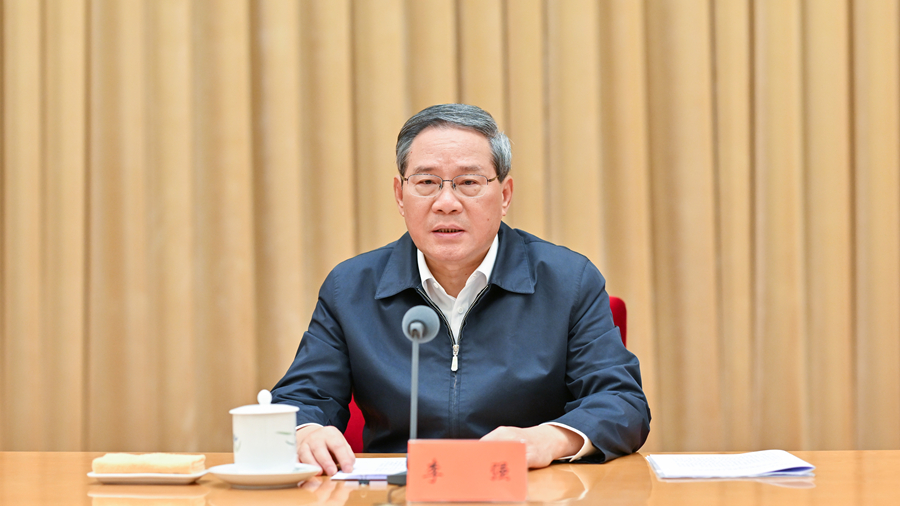
At the close of the year, China’s top leadership signaled clear priorities for the country’s next phase of development. On December 31, Li Qiang chaired an executive meeting of the State Council that focused on water infrastructure, trade facilitation, and regulatory reform. The agenda reflected a blend of immediate public concerns and long range strategic planning.
Rather than framing these topics as separate policy areas, the meeting emphasized how infrastructure, regulation, and economic efficiency are increasingly interconnected. The discussions pointed to a governance approach that seeks to strengthen resilience while supporting steady domestic demand.
Building a National Water Network
Central to the meeting was a review of progress on China’s national water network construction. Officials described the project as a strategic measure aimed at optimizing water resource allocation across regions. By linking water sources, storage systems, and distribution networks, the plan is designed to improve national water security and reduce vulnerability to droughts and floods.
The water network is also expected to enhance flood control and disaster mitigation capabilities. Extreme weather events have made water management a growing concern, and authorities see large scale coordination as essential to reducing risk. Beyond safety, the network is positioned as an engine for broader development.
More Than Just Water Infrastructure
The meeting highlighted that the national water network will serve multiple functions beyond household supply. Improved waterways and related infrastructure are expected to support transportation, ecological protection, and tourism. These secondary benefits give the project added economic value, helping stimulate domestic demand at a time when consumption driven growth is a policy priority.
By integrating water management with transport corridors and environmental goals, planners aim to maximize the return on infrastructure investment. This reflects a shift toward multifunctional projects that address several policy objectives simultaneously.
Water Supply and Everyday Life
Participants at the meeting stressed that water supply is not an abstract issue but one that directly affects every household. They called for a coordinated approach to urban and rural development, encouraging the integration of water supply systems across regions.
The goal is to create a standardized and fully connected chain that runs from water sources to household taps. Such integration is intended to reduce disparities between cities and rural areas while improving efficiency and reliability nationwide.
Facilitating Cross Border Trade
Another key focus was cross border trade facilitation. The meeting emphasized that smooth and efficient logistics are essential for creating a first class business environment. Officials called for stronger coordination between transport corridors and different modes of transport, including road, rail, sea, and air.
Particular attention was given to improving multimodal transport for goods moving in and out of the country across coastal, inland, and border regions. These measures are aimed at lowering costs, reducing delays, and improving predictability for businesses engaged in international trade.
Updating Drug Regulation for Innovation
The State Council also reviewed and approved draft amendments to regulations governing drug administration. Officials noted that updating supervision rules in response to changing conditions is critical for ensuring drug safety and supporting the healthy development of the pharmaceutical sector.
The meeting called for improvements in research and development systems, more efficient registration processes, and faster review and approval of breakthrough medicines. These changes are intended to boost innovation while maintaining high safety standards.
A Coordinated Policy Direction
Taken together, the decisions from the meeting reveal a coordinated policy direction. Water security, trade efficiency, and pharmaceutical innovation were all framed as foundations for stable growth and social wellbeing. As China enters a new year, the emphasis appears to be on strengthening systems that support both everyday life and long term economic resilience.

