
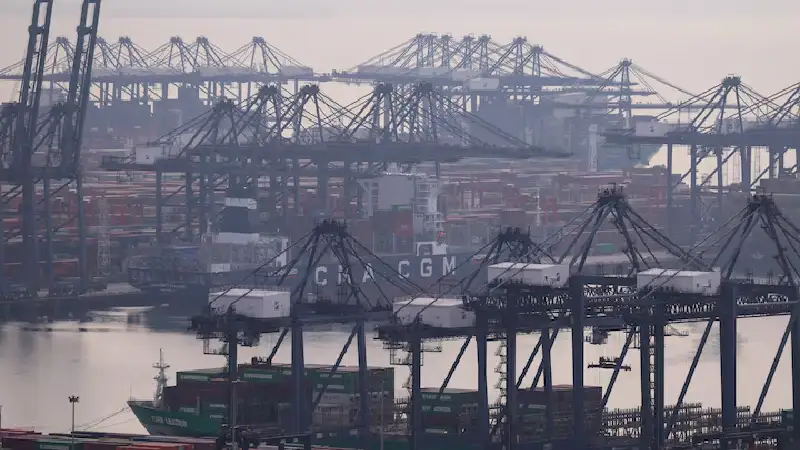
China has warned that it reserves the right to respond after Mexico introduced sweeping tariff increases that affect a wide range of Chinese exports. Officials in Beijing described the measures as barriers to trade and investment, raising concerns over growing protectionism in global markets. The move comes at a time when international trade routes are already under pressure from geopolitical tensions and supply chain disruptions. For businesses across Asia, including Pakistan based exporters connected to China’s manufacturing ecosystem, the dispute signals potential shifts in trade flows and pricing dynamics in key industries.
According to Chinese authorities, the tariffs imposed by Mexico target goods worth more than 30 billion dollars, creating significant financial pressure on exporters. The mechanical and electrical sectors are expected to face losses estimated at around 9.4 billion dollars. A large portion of this impact is concentrated in the automotive industry, where China has expanded its export footprint in recent years. Mexico had become a major destination for Chinese vehicles and auto parts, making the tariff increase particularly disruptive for companies that rely on the Latin American market for growth and scale.
The tariff policy introduced by Mexico includes duties of up to 35 percent on a broad range of imports from countries without free trade agreements. Analysts view this move as part of a broader strategy to align trade policies more closely with the United States, which has maintained its own tariff pressure on Chinese goods. This shift reflects the growing complexity of global trade relationships, where economic decisions are increasingly shaped by geopolitical alliances. For emerging economies such as Pakistan, which are deepening trade ties with China through regional corridors and industrial cooperation, these developments could influence export competitiveness and sourcing strategies.
Chinese officials have indicated that beyond tariffs, non tariff measures such as stricter customs inspections are also creating operational challenges for Chinese companies operating in Mexico. These administrative barriers can slow down shipments, increase compliance costs and discourage long term investment. Businesses involved in textiles, chemicals and light industrial production are also expected to feel the impact. As trade restrictions expand, companies may look toward alternative markets in Asia, the Middle East and regions connected through infrastructure initiatives where trade policies are more stable and predictable.
The broader implications of the dispute extend beyond bilateral trade. Global markets are already adjusting to increased volatility driven by rising energy prices and shifting supply chains. In this environment, China’s position as a central manufacturing hub means that any disruption in its export network can have ripple effects across multiple economies. Countries participating in regional connectivity projects, including those linked with China’s trade and infrastructure corridors, may see opportunities to absorb redirected trade flows. This could open new avenues for industrial collaboration and digital trade expansion using modern payment systems and cross border transaction frameworks.
While Beijing has not yet announced specific countermeasures, officials have emphasized that all necessary steps remain on the table to protect national economic interests. Market participants are closely watching how the situation evolves, as prolonged tensions could reshape trade patterns between Asia and Latin America. For industries ranging from automotive to consumer goods, the coming weeks will be critical in determining whether the dispute escalates further or moves toward negotiation. Businesses and policymakers alike are preparing for adjustments as global trade enters another phase of uncertainty and realignment.

