
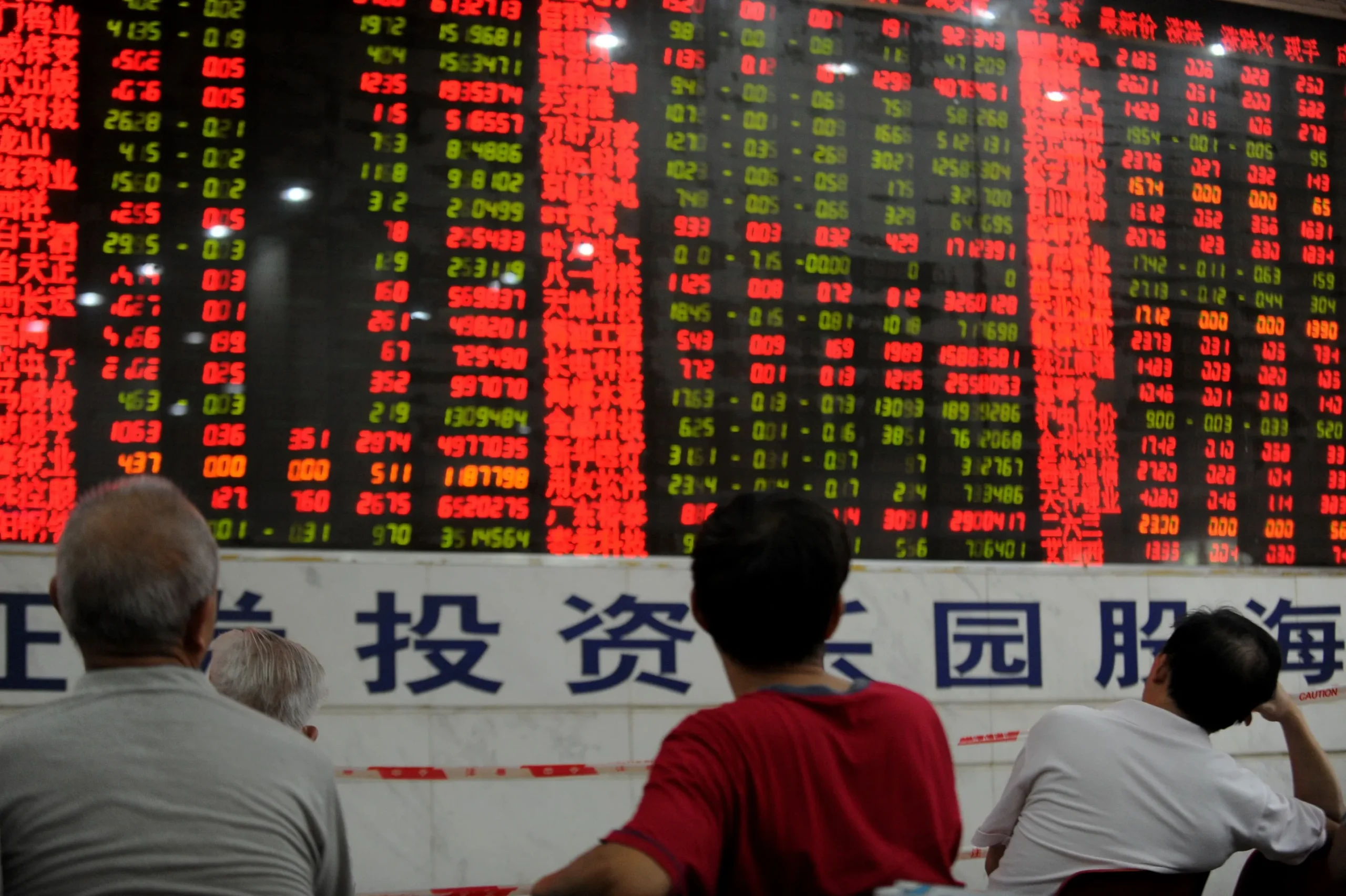
China and Hong Kong stocks eased slightly on Friday but remained on course to post modest weekly gains, as investors appeared largely unfazed by the global selloff in technology shares. The resilience in Chinese markets stood in contrast to declines across other major exchanges, where concerns over an overheated artificial intelligence rally weighed heavily on sentiment.
By midday trading, China’s blue-chip CSI300 Index and the Shanghai Composite Index both slipped 0.2 percent, while Hong Kong’s Hang Seng Index dropped 1.1 percent. Despite the day’s softness, both the CSI300 and the Hang Seng were still up around 1 percent for the week, suggesting steady buying interest amid global volatility.
Elsewhere, technology-heavy markets in the United States and parts of Asia were heading for their steepest weekly losses in seven months, as investors reassessed valuations in leading AI and semiconductor stocks. Analysts said the pullback reflected growing caution after months of aggressive gains in tech shares.
In China, foreign institutional investors continued to show renewed confidence in domestic equities. According to UBS, overseas investors increased their positions in Chinese stocks during the third quarter, trimming their underweight exposure from minus 1.6 percent to minus 1.3 percent. The top 40 global asset managers now hold the highest level of Chinese equities since early 2023.
China’s technology-focused STAR50 Index, which tracks major innovation-driven companies listed in Shanghai, gained nearly 1 percent over the week, outperforming broader markets. Analysts said the performance underscored investors’ selective optimism about China’s tech and industrial upgrade policies, even as global peers sold off.
Meanwhile, geopolitical developments remained in focus. The Trump administration announced on Thursday that it would begin negotiations with China over its dominance in shipbuilding and maritime logistics. As part of the effort to ease trade tensions, Washington also confirmed a one-year suspension of port fees on China-linked vessels. The move was widely seen as another step toward stabilizing bilateral trade relations following months of tariff-related uncertainty.
Back in the equity markets, semiconductor stocks traded on the mainland were little changed after reports that the White House had informed other federal agencies it would restrict Nvidia from selling its latest downgraded AI chips to Chinese clients. The development dampened short-term sentiment in the tech sector but was largely anticipated by traders following recent policy signals.
In Hong Kong, large-cap technology firms gave up some of the gains made earlier in the week, with the sector falling about 2 percent on Friday after rallying nearly 3 percent in the previous session. Market participants attributed the pullback to profit-taking amid global weakness in the tech sector rather than any China-specific concerns.
Investors also digested fresh trade data showing that China’s exports unexpectedly fell 1.1 percent year-on-year in October, marking the first contraction in eight months and adding another layer of caution to market sentiment.
Still, analysts said Chinese equities remained relatively stable compared to other markets, supported by resilient domestic liquidity and gradual foreign inflows. “Investors appear to be looking past short-term volatility and focusing on improving fundamentals,” one Shanghai-based broker noted.
As the week concludes, Chinese stocks are set to outperform many global peers, signaling cautious optimism that domestic policy support and easing external tensions could provide a buffer against broader market headwinds.

