
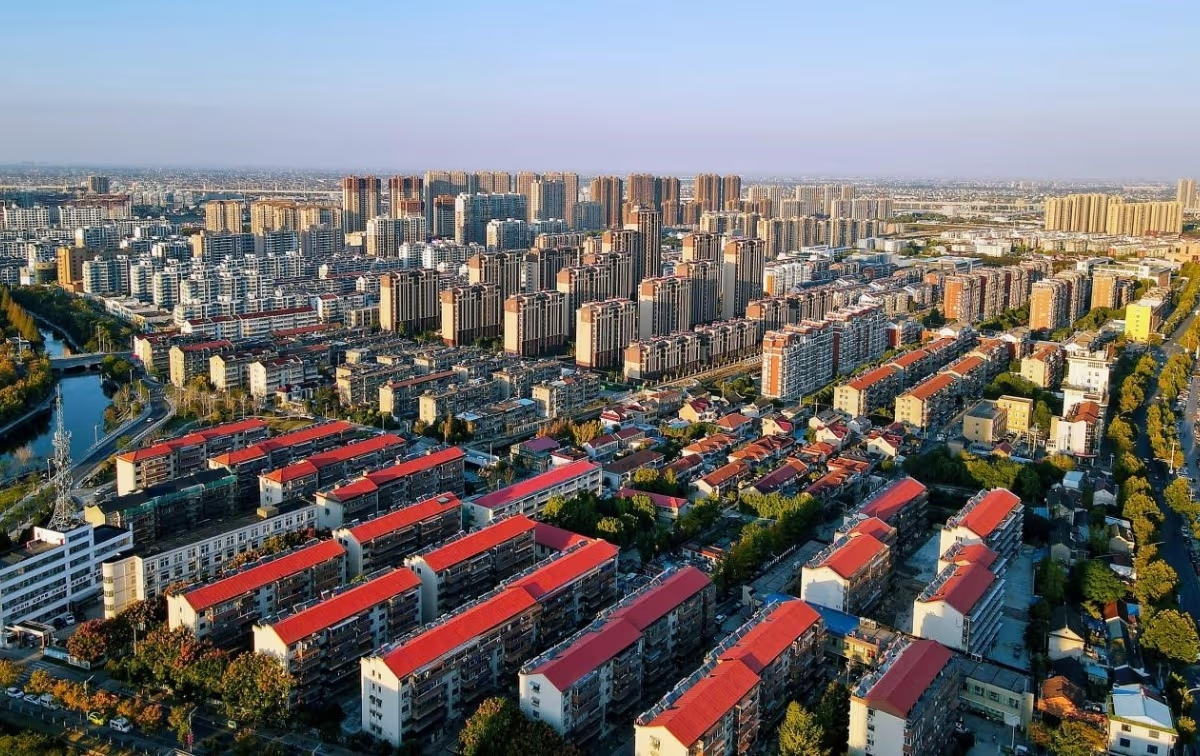
China’s commitment to improving the livability and sustainability of its cities reached a major milestone in 2025. From January to October alone, the country launched renovation projects at 25,100 old urban residential communities exceeding its full-year target of 25,000, according to data released by the Ministry of Housing and Urban-Rural Development.
The achievement marks another chapter in China’s ambitious urban renewal strategy, which aims to modernize aging infrastructure, improve residents’ quality of life, and prepare cities for future demographic and environmental challenges.
A Long-Term Commitment to Livability
This year’s success builds on steady progress made over the past six years. Between 2019 and 2024, renovation projects were initiated in approximately 280,000 old residential communities across the country. These efforts have directly benefited more than 120 million urban residents, demonstrating the vast scale and long-term nature of the initiative.
Renovations have extended far beyond cosmetic improvements. As part of these projects, China upgraded 360,000 kilometers of aging pipelines, built 3.87 million new parking spaces, and established over 78,000 service facilities for elderly and child care within neighborhoods. These additions have helped transform residential communities into safer, more convenient, and more inclusive spaces for families of all generations.
Provincial Momentum and Community Impact
According to official data, 16 provincial-level regions had already fulfilled their 2025 renovation targets before the year’s end. The success reflects not only central policy but also local execution, as cities adapt the national framework to meet their own development needs.
Urban renewal is increasingly viewed not just as an infrastructure task, but as a strategy for long-term social and economic development. By enhancing neighborhoods with better utilities, services, and accessibility, these projects also help unlock local consumer potential, improve social cohesion, and support a more balanced urban-rural migration pattern.
A Vision Aligned with Broader National Goals
The Central Urban Work Conference held in July emphasized that urban renewal should serve multiple objectives. These include optimizing urban spatial structures, transforming growth models, promoting green development, preserving cultural heritage, and enhancing public governance.
Rather than resorting to widespread demolitions or disruptive redevelopment, China’s urban renewal program focuses on thoughtful upgrades to existing structures. This approach reduces environmental impact, protects cultural continuity, and maintains community networks all while modernizing facilities.
Moreover, as the country confronts challenges such as an aging population and shifting energy demands, urban renewal provides a platform for integrating smart city solutions, energy-efficient systems, and improved public health infrastructure.
Looking Ahead
With the 2025 target already met by October, China is poised to continue its momentum into 2026 and beyond. As urban populations grow and expectations for livable environments increase, the country’s focus on community-centered upgrades will likely remain a cornerstone of its development policy.

