
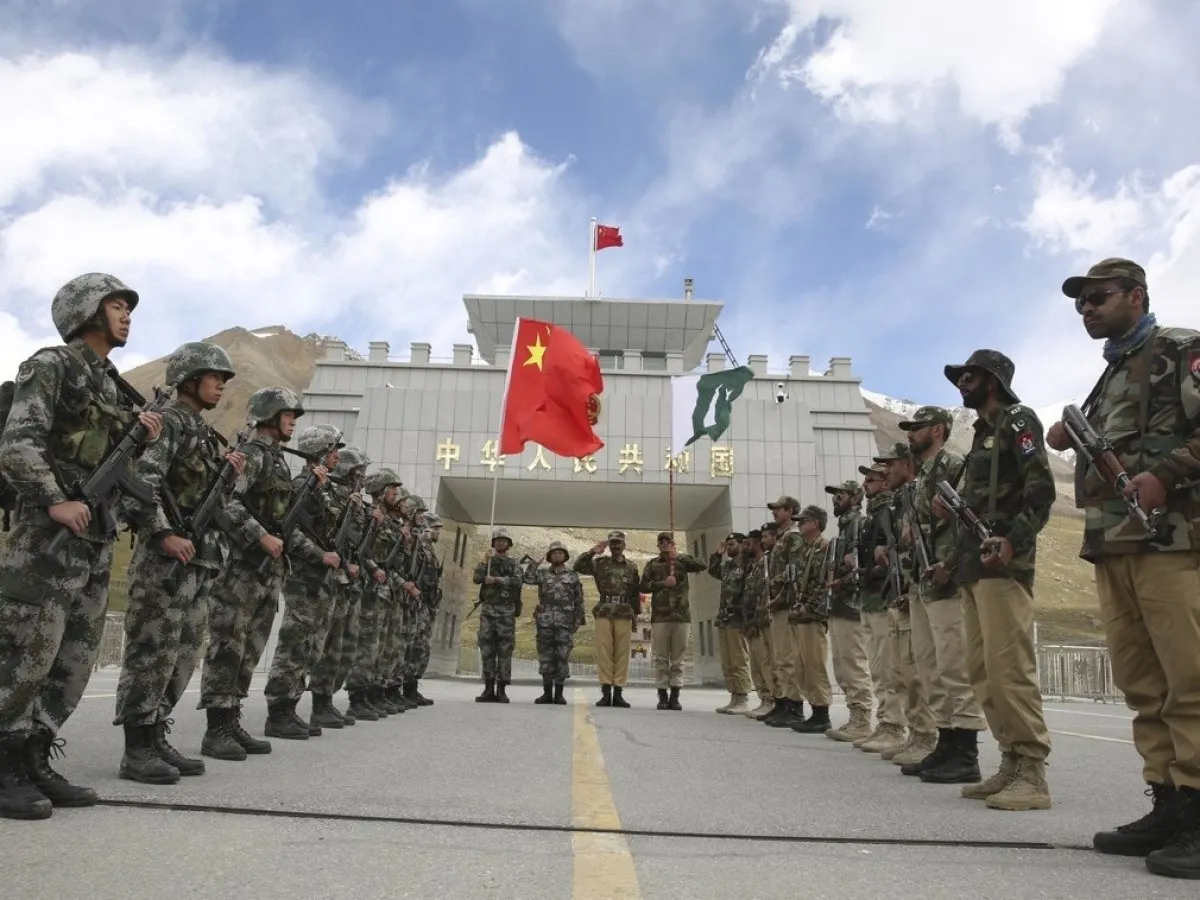
The notion that China is using Pakistan as a military technology testbed has circulated widely among defense analysts. With the two countries’ deepening partnership in weapons development, intelligence sharing, and defense procurement, the claim raises both curiosity and concern. Is Pakistan merely a testing ground for Chinese systems, or is it an equal collaborator in an evolving defense ecosystem? The reality is more complex than the label suggests.
Historical Foundations of Military Collaboration
China and Pakistan’s defense relationship spans more than six decades. What began as arms transfers in the 1960s evolved into strategic cooperation in nuclear technology, aircraft design, and missile systems. The partnership rests on three consistent factors: strategic trust, shared threat perceptions, and complementary defense needs.
Pakistan provides China with a politically stable market for its defense exports and valuable operational feedback from real-world deployment. China, in return, supplies affordable advanced systems and technical expertise. This synergy has turned Pakistan into one of China’s most important defense partners outside its immediate neighborhood.
Evidence of Experimental Cooperation
Several projects reflect experimental characteristics, particularly in aviation and missile technology. The joint development of the JF-17 Thunder fighter aircraft stands out as a flagship success. The program allowed both sides to experiment with design modifications, avionics integration, and radar optimization in a relatively flexible framework. Lessons from the JF-17 have informed China’s subsequent light-combat aircraft designs.
Similarly, collaboration in unmanned aerial systems (UAS) shows Pakistan’s role in operational testing. The country has deployed Chinese-made Wing Loong and CH-4 drones for surveillance and counterterrorism missions. Field data from these operations helped Chinese manufacturers refine performance in high-temperature and mountainous environments.
Pakistan’s diverse terrain offers an ideal testing environment for systems ranging from precision-guided munitions to radar networks. Yet calling the country a “testbed” oversimplifies a relationship that operates through joint development rather than unilateral experimentation.
Training and Joint Exercises
Military exercises under the Shaheen series and Sea Guardians demonstrate the practical side of technological cooperation. These drills allow Chinese and Pakistani forces to test interoperability between equipment and doctrines. China evaluates how its hardware performs under partner-led command structures, while Pakistan gains training in the use of modern systems and electronic warfare.
For example, the joint air exercises involving JF-17 and J-10C aircraft provide real-time data on air combat dynamics. Similarly, naval drills using Type-054A frigates have enabled China to study long-range communications and radar integration in different maritime conditions.
The results benefit both sides: Pakistan strengthens its operational capacity, while China refines its systems through real-environment feedback that domestic simulations cannot fully replicate.
Pakistan’s Strategic Autonomy
Labeling Pakistan as a passive testing ground ignores its agency. The country plays an active role in defining collaboration priorities and often co-finances development. The JF-17, for instance, was tailored to Pakistan’s operational needs rather than Chinese export strategy. Islamabad has successfully marketed the aircraft to other countries, including Nigeria and Myanmar, establishing its own footprint in the global defense market.
Moreover, Pakistan’s experience in adapting imported systems has made it a partner of choice for China. The Pakistan Aeronautical Complex and Heavy Industries Taxila have the technical capacity to integrate foreign technologies into domestic platforms. This capability ensures that cooperation remains mutually beneficial rather than one-sided.
The Intelligence and Surveillance Layer
Defense cooperation now extends beyond conventional weapons. Cybersecurity, satellite imaging, and data-driven warfare form the backbone of modern strategy. China has assisted Pakistan in developing early-warning systems, secure communications, and digital intelligence platforms.
Reports from regional defense think tanks suggest that Pakistan is testing several Chinese AI-driven command systems that combine sensor data, drone imagery, and battlefield analytics. While these systems are experimental, they are deployed collaboratively, not as unilateral trials. Pakistan’s operational experience provides input for algorithm refinement, while China’s technology enhances Pakistan’s intelligence reach.
Western Interpretations and Concerns
Western analysts often frame this partnership as evidence of China exporting military influence. The argument suggests that Beijing uses Pakistan to test systems that may later appear in Chinese deployments or other export markets. The narrative fits broader concerns about China’s Belt and Road security dimension.
However, this interpretation underestimates Pakistan’s strategic leverage. Unlike smaller client states, Pakistan possesses independent military doctrine, combat experience, and industrial capacity. It negotiates from a position of necessity but not dependency. The country’s ability to influence project design and implementation distinguishes it from states that simply purchase and deploy Chinese equipment.
Economic and Industrial Benefits for Pakistan
Defense collaboration with China contributes to Pakistan’s industrial growth. Technology transfer in manufacturing, electronics, and metallurgy has spillover benefits for civilian sectors. The joint production of aircraft components, radars, and communication systems generates employment and strengthens industrial supply chains.
The government’s Defense Production Policy 2025 aims to expand co-development projects with China to reduce import reliance. Facilities in Kamra and Taxila have been upgraded with Chinese assistance to handle advanced assembly and testing operations. Over time, these collaborations could support export diversification beyond the defense sector.
Geopolitical Implications
Strategically, the deepening of Pakistan-China defense cooperation affects regional equations. India perceives it as a challenge to its military advantage, while the United States views it as an extension of China’s security architecture across Asia.
China’s long-term goal is to establish reliable defense partnerships that secure its trade routes and regional influence. Pakistan’s geographic position linking the Arabian Sea to western China makes it central to this objective. In return, Pakistan gains access to defense technologies that would otherwise remain inaccessible due to Western restrictions.
The result is a strategic symbiosis: Pakistan enhances its deterrence posture, and China strengthens its regional foothold. This arrangement may not be perfectly symmetrical, but it reflects calculated pragmatism rather than exploitation.
Balancing Innovation and Dependence
The key risk for Pakistan lies in overreliance on Chinese systems. Exclusive dependence could limit diversification and expose vulnerabilities if future policies diverge. Pakistan’s defense planners are aware of this and continue to explore cooperation with Turkey and European suppliers to maintain balance.
At the same time, joint experimentation with China provides cost-effective innovation. Rather than importing finished products, Pakistan gains early access to emerging technologies and the chance to adapt them to its needs. This approach blends affordability with strategic advancement.
Conclusion
The perception of Pakistan as China’s military testbed simplifies a relationship that is far more nuanced. While Pakistan does play a role in field-testing and adapting Chinese systems, these activities occur within a framework of cooperation and mutual gain.
China benefits from real-world feedback, but Pakistan gains from access, affordability, and industrial learning. The relationship is less about unilateral experimentation and more about co-evolution, two partners navigating technological advancement amid a competitive global environment.
In the final analysis, Pakistan is not a laboratory for Chinese weapons. It is a collaborator in building a shared defense ecosystem shaped by necessity, geography, and strategic alignment.

