
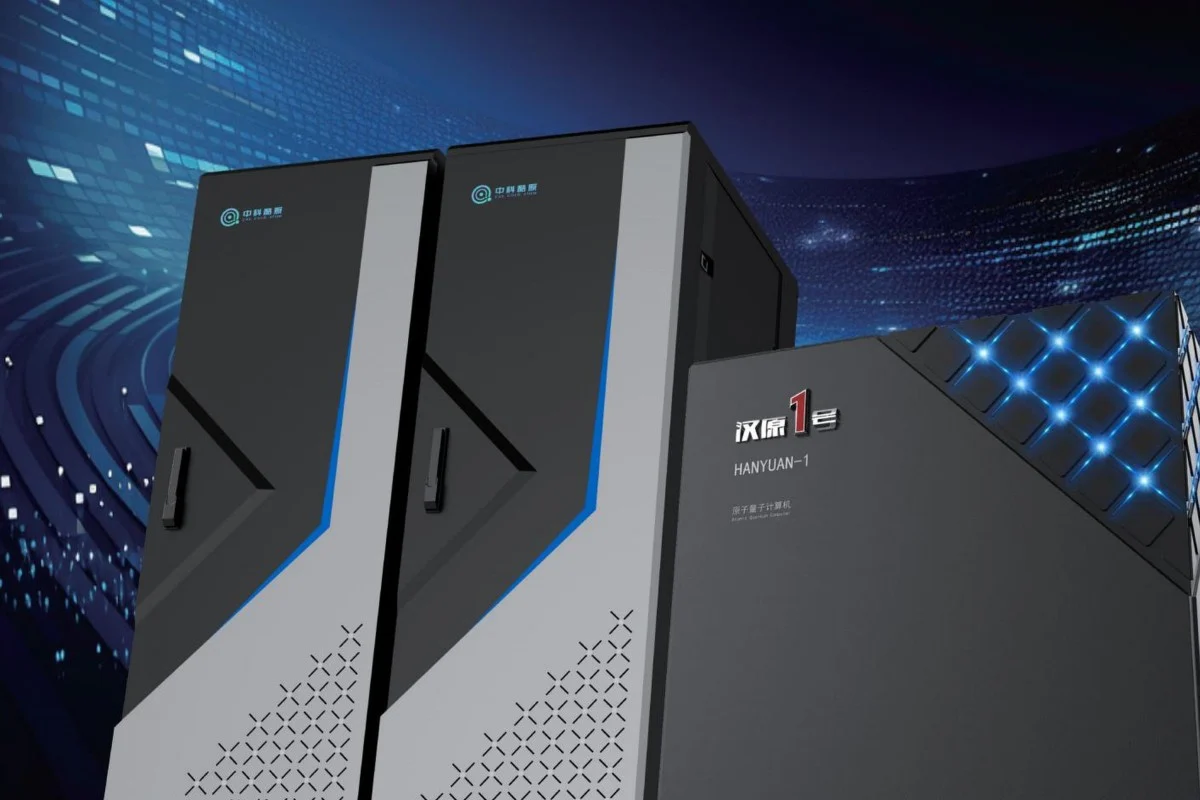
China’s Hanyuan-1, a domestically developed atomic quantum computer, has achieved its first commercial milestone with total orders valued at approximately US$5.6 million, signaling a significant step in Beijing’s drive to commercialize advanced quantum technologies.
According to reports from SCMP and CGTN, the breakthrough system developed by Origin Quantum Computing Technology Co., based in Hefei, has been delivered to a subsidiary of China Mobile, one of the country’s largest telecom operators. The company confirmed that the machine is being used for research in secure communications, network optimization, and data processing.
In a sign of expanding international interest, the report also revealed that Pakistan has placed an order for the Hanyuan-1, marking one of the first overseas purchases of a Chinese-built quantum computer. The move highlights growing China–Pakistan technology cooperation under broader scientific and digital initiatives linked to the China–Pakistan Economic Corridor (CPEC).
The Hanyuan-1, unveiled earlier this year, represents China’s latest leap in atomic-level quantum control technology. It is designed to perform complex computations using highly stable atomic qubits cooled to near absolute zero, providing significant speed and energy efficiency advantages over conventional supercomputers. Origin Quantum said the machine’s success demonstrates that China’s quantum hardware has reached a level of maturity suitable for practical deployment.
“Commercial delivery of a domestically developed quantum computer marks a milestone in China’s self-reliance in frontier science and technology,” the company said in a statement. Chinese researchers describe the system as capable of supporting experiments in quantum algorithms, encryption, and materials simulation applications with both civilian and strategic importance.
Analysts note that China’s progress comes amid growing international competition in quantum computing, with the United States, Japan, and the European Union also investing heavily in the field. However, Beijing’s advantage lies in its integration of quantum innovation into national strategies for digital infrastructure, AI research, and industrial modernization.
The inclusion of Pakistan as an early client underscores Beijing’s expanding technology diplomacy. Observers say the collaboration could strengthen Islamabad’s digital research capacity and add a new dimension to CPEC’s science and innovation agenda.
Industry experts predict that further export agreements could follow as China continues to scale its quantum computing capabilities, reinforcing its ambition to become a global leader in next-generation information technology.

