
China’s private space firm LandSpace says it is aiming to complete its first successful recovery of a reusable rocket booster by mid-2026, a milestone that would place the company at the forefront of China’s fast-growing commercial space sector. The ambition reflects Beijing’s broader push to develop lower-cost access to space and reduce reliance on state-led launch systems.
LandSpace is widely viewed inside China as a domestic counterpart to SpaceX, although executives openly acknowledge the scale of the challenge. Reusable rockets are seen as the key to slashing launch costs, allowing boosters packed with engines to return safely after liftoff and fly again, much like commercial aircraft. Achieving that capability would significantly improve the economics of satellite launches and space exploration.
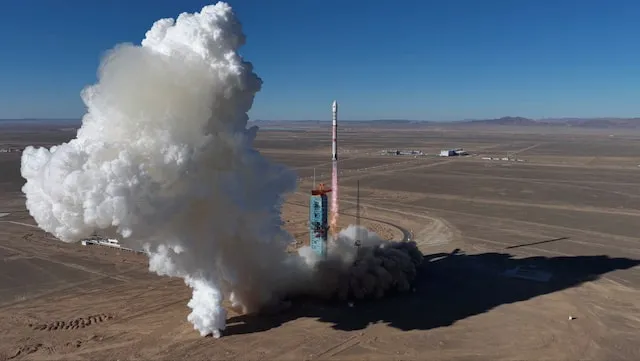
The company has already taken a major step by becoming the first private firm in China to fully test a reusable rocket. Its Zhuque-3 vehicle, designed with recovery in mind, recently lifted off from the Jiuquan Satellite Launch Center. While the booster recovery attempt did not succeed, LandSpace says the test delivered valuable data that will feed directly into the next phase of development.
Executives admit matching the pace and consistency of SpaceX’s Falcon 9 programme remains a steep uphill task. SpaceX’s rapid launch cadence and repeated recoveries have set a global benchmark that is difficult for any newcomer to surpass, particularly in an industry where experience compounds quickly. Still, LandSpace believes steady progress rather than speed alone will determine long-term success.
The Zhuque-3 rocket sits at the heart of those plans. Engineers are refining guidance, landing control, and structural resilience to improve the chances of a clean booster return. A successful recovery in 2026 would mark a turning point not just for LandSpace, but for China’s private launch industry as a whole.
As demand for satellite launches grows, especially for communications and Earth observation, the race to master reusability is intensifying. LandSpace’s next two years could decide whether China gains a commercially competitive launch provider capable of reshaping its presence in orbit.

