
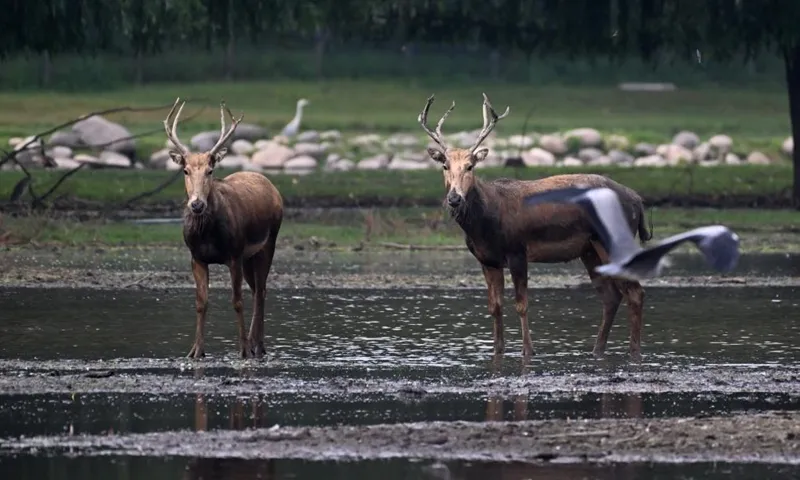
The story of the milu deer, also known as Père David’s deer, is one of the most extraordinary wildlife comebacks in modern conservation history. Native to the wetlands of China, the species disappeared from the wild in the early twentieth century after decades of habitat loss, hunting pressure and environmental disruption. For a time, many believed the milu would survive only in stories and museum illustrations. Yet today, four decades after China began restoring the species, the milu deer stand proudly once again in their natural habitats, marking a powerful success for conservation efforts.
This transformation did not happen overnight. It required decades of scientific planning, international cooperation, and continuous investment in environmental recovery. The revival of the milu deer reflects not only China’s growing commitment to biodiversity but also the determination of conservationists who refused to let the species vanish permanently.
How China Restarted the Journey to Save the Milu
The turning point came in 1985 when China launched a reintroduction program in collaboration with the United Kingdom. At that time, the milu deer survived only in captivity, mostly in estates in Britain. These deer were descendants of the last remaining group taken out of China more than a century earlier. Recognizing the cultural and ecological importance of the species, both countries agreed to support a long-term restoration initiative.
A year later, in 1986, a new group of milu deer arrived in China and was released into the wetlands that would eventually become the Dafeng Milu National Nature Reserve in Jiangsu Province. This area offered a safe environment for the deer to adapt, breed, and form small herds. At the beginning, only a few dozen milu roamed the reserve. Their numbers were small, but the hope was strong.
As the program expanded, researchers and conservation workers focused on improving the deer’s habitat, protecting wetlands, planting suitable vegetation and monitoring the herd’s health. These early efforts laid the foundation for what would become a remarkable revival that continues to inspire conservation work around the world.
From a Handful of Deer to Thousands Thriving in the Wild
Over the past forty years, the milu population has grown far beyond initial expectations. Today, China is home to around fifteen thousand milu deer, a dramatic increase from the small groups reintroduced in the 1980s. What makes the achievement even more impressive is that more than six thousand of these deer now live freely in the wild. This marks the largest wild milu population anywhere in the world.
The expansion of wild herds shows that the species is successfully adapting to natural environments again. Wetlands have been restored, food sources have been replenished and human disturbance has been carefully managed to give the deer the best chance at survival. With more protected zones, ecological corridors and natural breeding sites, the milu population continues to strengthen year by year.
China’s approach also highlights the importance of combining science with community education. Local communities near reserves are encouraged to support conservation policies, while researchers continue to monitor biological changes and improve breeding strategies. This partnership between science and society has been key to ensuring long term success.
Why the Milu Comeback Matters for Global Conservation
The return of the milu deer is more than a national achievement. It is a powerful example of how endangered species can be saved when long term dedication meets well designed environmental policy. In a world where many species are still disappearing rapidly, the milu story brings hope and serves as a model for international wildlife conservation.
It shows that even species considered extinct in the wild can be revived when governments, scientists and conservationists work together. The revival has also strengthened China’s wetland ecosystems, contributing to a healthier environment for birds, fish and other wildlife that depend on these habitats.
Today, the milu deer are celebrated not only as symbols of ecological revival but also as reminders of what can be achieved when humanity chooses restoration over abandonment. Their journey from extinction in the wild to a thriving population stands as one of the most inspiring wildlife recovery stories of the modern era.
China’s ongoing efforts ensure that the milu deer will continue to run freely for generations to come, turning a once tragic chapter of extinction into a lasting narrative of renewal and hope.

