
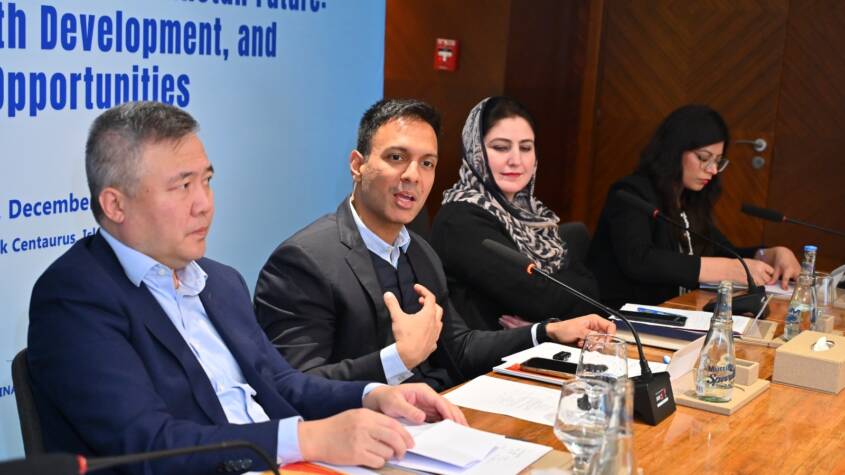
In Islamabad, the Pakistan China Institute gathered young professionals, researchers, diplomats and media voices for a forum centered on how China’s upcoming Five Year Plan could open new pathways for Pakistan’s development. Held under the Friends of Silk Road initiative, the event explored themes of innovation, youth empowerment, green development and long term collaboration. Speakers emphasized that China’s new planning cycle carries lessons and opportunities that Pakistan can seize, especially as both countries navigate economic change and shifting global challenges.
Self Reliance and Green Growth as Shared Aspirations
Opening the forum, PCI Executive Director Mustafa Hyder Sayed highlighted the central message emerging from China’s recent policy discussions. He noted that the idea of self reliance has become a guiding principle for China as it moves into a new phase of national rejuvenation. Sayed argued that this transition offers Pakistan an important chance to deepen cooperation through the Belt and Road Initiative and CPEC, provided the country strengthens its security environment to attract Chinese industries seeking relocation. He also emphasized China’s leadership in green development at a time when climate change poses severe threats, especially to countries like Pakistan. He encouraged Pakistan to learn from China’s advances in electric vehicles, renewable energy and related technologies, describing them as essential for building climate resilience.
Industrial Relocation and the Need for Preparedness
Sayed also spoke about the growing trend of industrial shifts from China’s coastal provinces to other regions. He noted that many medium sized enterprises from Guangdong and Zhejiang are exploring new markets, creating a timely opportunity for Pakistan to attract investment through CPEC’s established framework. While ASEAN nations have been quick to take advantage of this, Pakistan has yet to fully position itself. Sayed urged policymakers to create a stable environment so that these companies feel confident relocating to Pakistan, stressing that the infrastructure and mechanisms already exist to support meaningful industrial cooperation.
Understanding China’s Comprehensive Planning System
Nabila Jaffer from the Institute of Regional Studies offered insights into how China builds its national plans. She explained that the Fifteenth Five Year Plan is being shaped through an extensive process involving voices from every level of society. According to her, China’s planning approach is highly integrated, covering economic development, social welfare, governance reforms and international engagement. She traced the long arc of China’s development story, reminding participants that the country faced profound challenges in health and education at its founding. Early investments in public health and compulsory education created the foundation on which later market reforms, global integration and technological modernization were built.
Lessons for Pakistan from China’s Innovation Driven Model
Journalist Sehrish Qureshi focused on how Pakistan can draw inspiration from China’s innovation centric growth. She explained that China rose from modest beginnings by believing in its national vision and developing homegrown capabilities. She pointed out that Chinese technologies have strengthened Pakistan’s security and global standing, and stressed the role of responsible media in countering misinformation about CPEC. Her comments reflected a broader sentiment throughout the forum that narratives around China Pakistan cooperation must be grounded in fact and long term thinking.
Strengthening Connectivity Through Dialogue and Youth Engagement
Social media influencer Jehad Zafar added that Chinese projects have already brought visible benefits to Pakistan and that greater regional cooperation is crucial in a rapidly evolving world. He praised China’s diplomatic efforts in promoting peace in the region and encouraged neighboring countries to join groupings that deepen connectivity. Chinese Minister Counsellor Yang Nuo closed the session by celebrating the energy of the youth participants and stressing the importance of communication in an era overwhelmed by misinformation. He encouraged the formation of closer networks among influencers and media professionals to strengthen cooperation and promote constructive dialogue.
The conference concluded with a reaffirmation of PCI’s commitment to fostering people to people connections and supporting a shared future shaped by innovation, connectivity and green development.

