
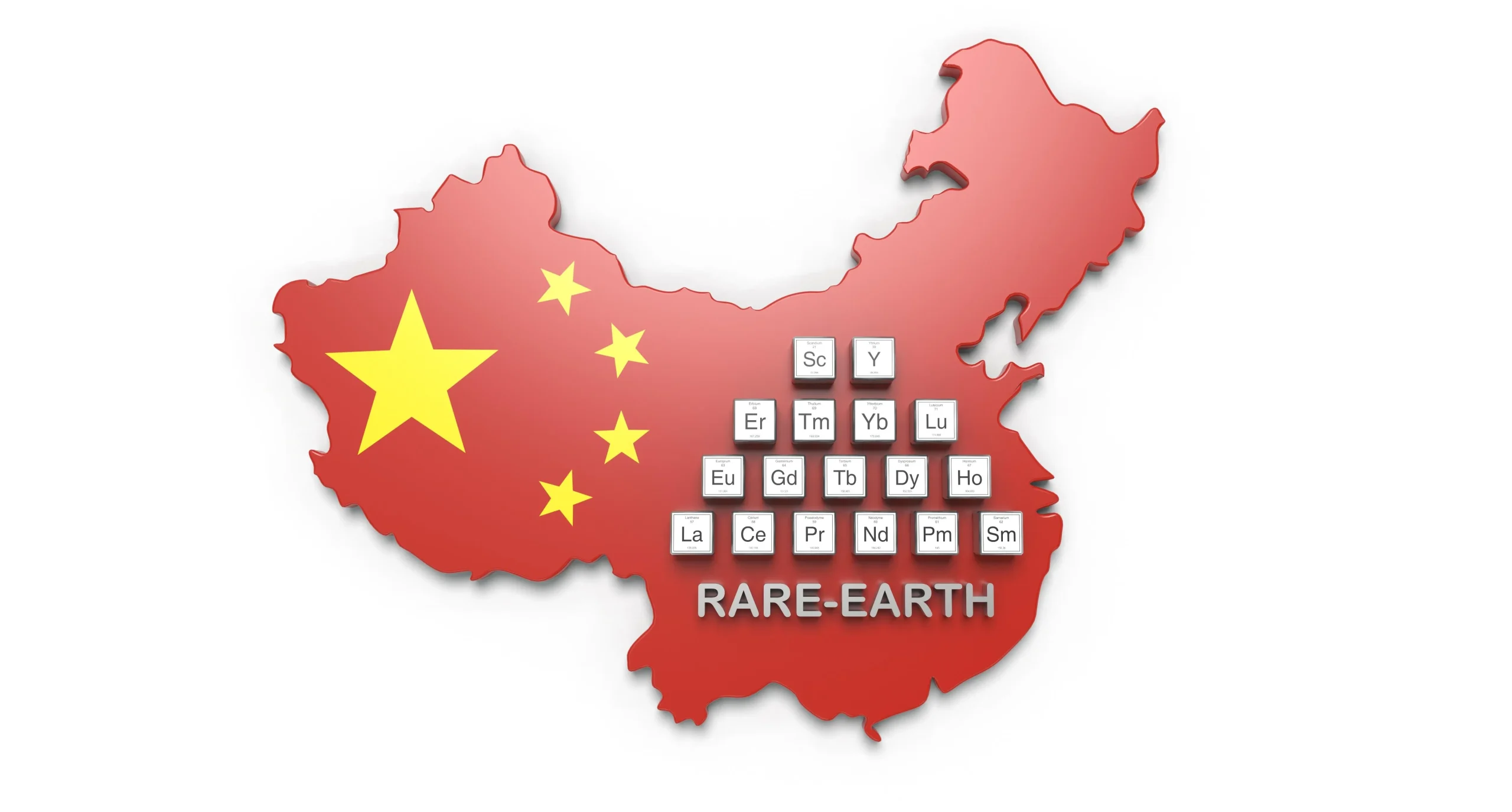
How Control of Critical Minerals Shapes Technology and Geopolitics.
What Are Rare Earths
Rare earth elements are a group of 17 metals essential to modern technology. They power magnets in wind turbines, motors in electric vehicles, and components in smartphones, missiles, and satellites. Despite their name, they are not especially rare but are difficult and costly to process. Control of supply chains makes them strategic resources as vital as oil or semiconductors.
China’s Rise in Production
By the 1990s, China emerged as dominant producer of rare earths, leveraging abundant reserves, low costs, and state support. Mines in Inner Mongolia and southern provinces became backbone of global supply. By 2010s, China controlled more than 80 percent of global production and refining. This dominance was not accidental but result of deliberate policy to secure leadership in critical materials.
The 2010 Shock
Global awareness of dependency sharpened in 2010 when China restricted rare earth exports during dispute with Japan. Prices spiked, supply chains panicked, and governments realized vulnerability. Though China later relaxed controls, the episode highlighted potential of rare earths as geopolitical tool. Since then, diversification became priority for many countries, but China retained processing edge.
Environmental Costs
Mining and refining rare earths produce toxic waste and radiation risks. China’s rapid expansion came at environmental price, with polluted rivers and health impacts in mining regions. Recent years saw tighter regulations and consolidation under state-owned firms to reduce illegal mining and improve sustainability. Still, environmental challenges remain inherent in industry.
Strategic Value in Green Transition
As world shifts to clean energy, demand for rare earths soars. Wind turbines, electric vehicles, and batteries depend on powerful magnets and materials. China’s dominance gives it leverage over industries crucial to energy transition. For Western governments promoting decarbonization, dependence on Chinese supply chains creates uncomfortable reliance.
Global Push for Alternatives
The U.S., EU, Japan, and Australia invest in alternative sources. Projects in Australia’s Lynas, U.S. Mountain Pass, and Greenland aim to diversify mining. Yet refining capacity remains bottleneck. Even if ores are mined elsewhere, much of processing still occurs in China. Building independent refining capacity requires time, capital, and environmental compromises.
China’s Policy Adjustments
Beijing continues to consolidate sector under state giants, aligning production with strategic goals. Export licenses, quotas, and new restrictions on gallium and germanium in 2023 signal readiness to weaponize resources in response to sanctions. Rare earths thus become part of broader technology rivalry, alongside semiconductors and AI.
Domestic Drivers
Control of rare earths also supports China’s domestic industries. EV makers, renewable energy firms, and defense sectors benefit from secure access to critical materials. This creates ecosystem where upstream resources support downstream innovation, reinforcing industrial strategy. Rare earths are not only export commodity but also shield for national development.
Future Outlook
Global demand for rare earths could double by 2035. China will remain key player, though diversification efforts may reduce share. New recycling technologies could ease dependence, while geopolitical tensions may encourage stockpiling. Whether rare earths become weapon of rivalry or bridge for cooperation will depend on choices of governments and firms alike.
Conclusion: Resources as Power
China’s rare earths strategy highlights how resources underpin modern power. Control of minerals translates into influence over industries from smartphones to wind turbines. While others scramble to diversify, China enjoys position of leverage built over decades. Rare earths remind us that in age of digital and green revolutions, control of ground beneath our feet shapes future above.

