
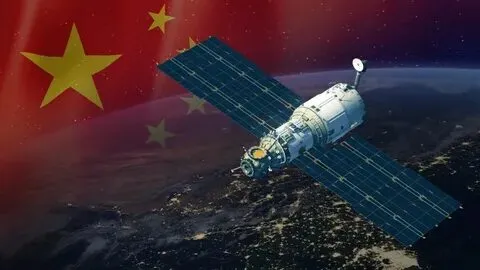
Beijing’s ambitions extend beyond exploration to business and security.
From Exploration to Industry
China’s space program has captured global attention with milestones such as lunar landings, Mars exploration, and the Tiangong space station. While these missions showcase technological progress, they also form part of a broader strategy to build a space economy.
The space economy encompasses satellites, communications, navigation, resource exploration, and even tourism. For Beijing, investment in space is not only about prestige but also about creating industries that can support national security and economic growth.
Lunar Missions and Resource Potential
China’s Chang’e missions to the Moon have advanced both science and ambition. The successful sample return missions highlighted China’s ability to compete with the United States and Russia in deep space exploration. Future missions aim to explore lunar resources, particularly helium-3, which is seen as a potential fuel for fusion energy.
While commercial use of lunar resources remains speculative, China’s commitment signals its intent to secure a place in the next phase of space development.
Satellites and Communication
One of the most immediate areas of growth is satellite deployment. China operates large constellations for communications, weather forecasting, and earth observation. The BeiDou navigation system, an alternative to GPS, now provides global coverage, offering both civilian services and military advantages.
Commercial satellite ventures are also expanding. Private firms, supported by state incentives, are launching small satellites for internet connectivity, remote sensing, and logistics. These projects aim to compete with ventures like SpaceX’s Starlink, positioning China in the race for satellite internet dominance.
Space and National Security
Space is increasingly linked to defense. Satellites enable surveillance, secure communications, and precision targeting. By investing in its own systems, China reduces reliance on foreign infrastructure and strengthens strategic autonomy.
The military dimension of the space economy raises concerns among other powers. The United States, in particular, views China’s space ambitions as part of a broader competition for dominance in critical technologies.
Commercialization and Private Sector Role
Unlike earlier decades, today’s space race includes private entrepreneurs. In China, companies such as iSpace and Galactic Energy are developing reusable rockets and commercial launch services. This diversification mirrors global trends where space is no longer solely a government project but an emerging commercial frontier.
Beijing supports these ventures but maintains strict oversight, ensuring that private innovation aligns with national priorities.
International Cooperation and Rivalry
China promotes space cooperation through partnerships with countries in Asia, Africa, and Latin America. The Belt and Road Space Information Corridor offers satellite services to partner states, extending China’s influence. At the same time, competition with the United States and its allies intensifies, with parallel projects such as the Artemis program and private-sector collaborations.
The result is a fragmented global space landscape where cooperation and rivalry coexist.
Conclusion: The Business of the Final Frontier
China’s space economy is about more than rockets and exploration. It is about building industries that connect security, technology, and commerce. From satellites providing global navigation to dreams of lunar mining, space has become a frontier of economic strategy.
The rise of China’s space economy highlights how innovation extends beyond earthbound industries. It shows how the next great arena of competition and cooperation may not be on land or sea, but in orbit and beyond.

