
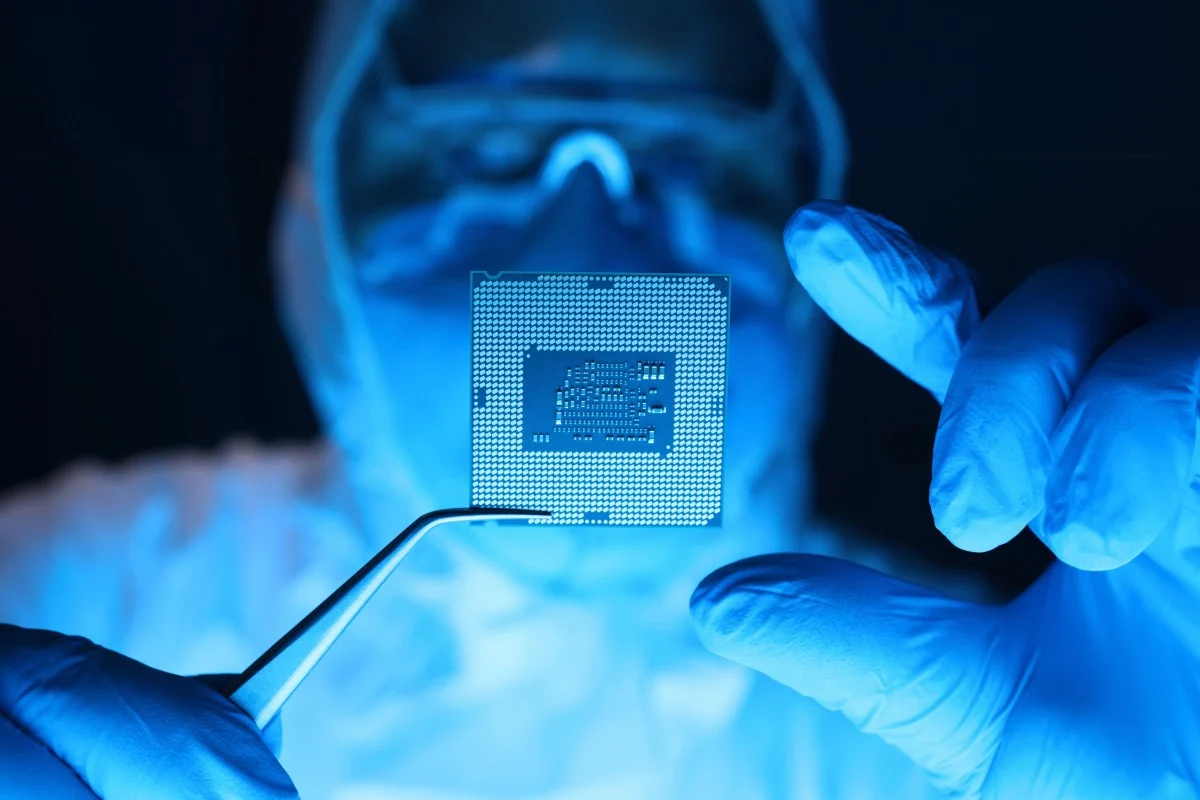
A team of Chinese researchers has developed what they describe as the world’s first two-dimensional semiconductor chip capable of withstanding intense gamma radiation, marking a significant breakthrough in defense and aerospace technology. The chip, built using ultra-thin materials only a few atoms thick, reportedly continues to operate in extreme radiation environments where conventional silicon-based devices would fail.
According to scientists at the University of Science and Technology of China (USTC), the innovation could have wide-ranging applications in satellite communication, nuclear detection systems, and advanced military equipment. The research team said the chip maintained stability and computing function under radiation doses hundreds of times higher than those tolerated by traditional processors. Results of the study were published this week in the journal Nature Electronics, drawing attention from global technology observers for its potential impact on next-generation defense systems.
Lead researcher Professor Wang Enge explained that the team used a molybdenum disulfide-based (MoS₂) material structured at the atomic level, allowing electrons to move efficiently while minimizing radiation damage. “This breakthrough demonstrates that 2D semiconductors are not only promising for civilian electronics but can also meet the reliability standards required for defense and aerospace industries,” Wang told CGTN.
China’s progress in radiation-hardened chips comes amid growing competition in advanced semiconductors, with Western nations tightening export controls on high-end chipmaking equipment. Experts say the new 2D chip highlights China’s ambition to achieve self-reliance in sensitive technologies essential to both national security and space exploration. “Developing chips that can survive extreme conditions gives China a critical edge in military communications and satellite resilience,” noted a defense analyst quoted by SCMP.
The project aligns with Beijing’s broader national goals under its 15th Five-Year Plan, which emphasizes breakthroughs in core technologies, including quantum computing, microelectronics, and defense-grade materials. Officials have encouraged closer collaboration between academic institutions, defense enterprises, and commercial semiconductor firms to accelerate innovation under domestic control.
Industry specialists believe the radiation-resistant chip could eventually be adapted for use in nuclear power monitoring, planetary exploration, and unmanned aerial vehicles operating in high-risk environments. While mass production has not yet begun, researchers said prototype testing has already met multiple military-grade standards.
The achievement reflects China’s push to move beyond dependence on imported components and establish technological resilience in sectors vital to national defense and long-term strategic capability.

