
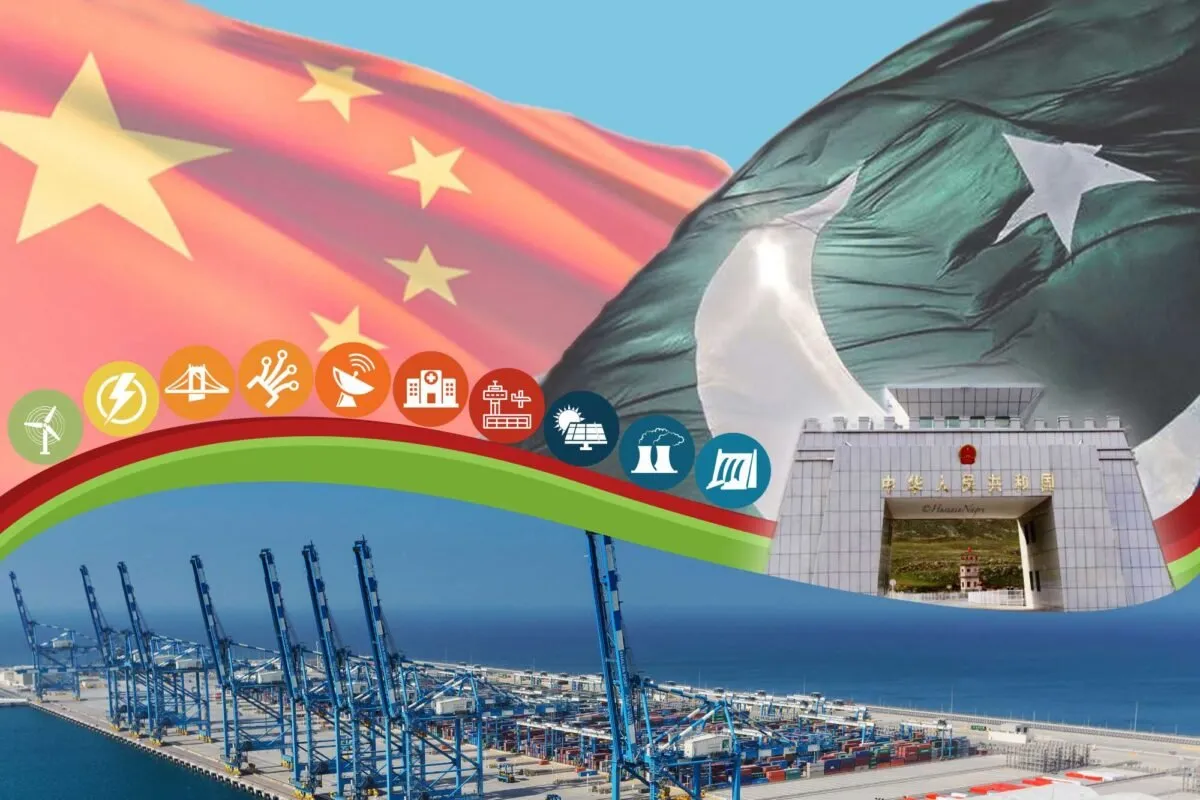
The second phase of the China–Pakistan Economic Corridor (CPEC) is entering a decisive stage as industrial zones and special economic clusters begin large-scale operations. Moving beyond transport infrastructure, CPEC Phase II focuses on job creation, export manufacturing, and technological capacity. According to Dawn and Nikkei Asia, the government has approved over 15 new industrial projects within priority zones in Faisalabad, Gwadar, and Dhabeji. These developments reflect a strategic shift from connectivity to productivity, transforming Pakistan into a manufacturing hub linked directly to China’s regional supply chain.
Industrial Transformation Under CPEC 2.0
Unlike the first phase, which concentrated on highways and power plants, CPEC 2.0 emphasizes industrial partnerships and sustainable growth. The Special Economic Zones (SEZs) established across Punjab, Sindh, and Balochistan aim to attract foreign investors with tax incentives and shared logistics facilities. The Faisalabad Industrial Zone has already secured contracts with Chinese textile, ceramics, and electronics firms. SCMP reports that joint ventures worth more than two billion dollars are underway, generating thousands of jobs and introducing automation technologies to Pakistan’s traditional manufacturing base.
Faisalabad and the Textile Revival
The Allama Iqbal Industrial City in Faisalabad has become the symbol of Pakistan’s textile resurgence. Modern dyeing and weaving plants supported by Chinese technology have improved efficiency and compliance with international environmental standards. Export-oriented units within the zone are producing value-added garments for European and Chinese markets. The zone’s success is supported by a dedicated 132 kV grid station and a one-window export facilitation center. Local officials expect the area to create over 100,000 jobs in its next expansion phase, boosting both provincial and national GDP.
Gwadar Free Zone: Gateway to the Gulf
At the southern edge of CPEC’s logistics network, Gwadar Free Zone is rapidly emerging as a regional trade hub. The China Overseas Port Holding Company has completed the first phase of the zone, which hosts warehousing, packaging, and fisheries processing facilities. Reuters reports that a second phase covering 2,200 acres is underway, designed to attract heavy industries, energy terminals, and technology firms. Gwadar’s proximity to the Middle East provides unique access to maritime trade routes linking Asia with the Gulf and Africa. The port’s smart customs systems, financed through CPEC’s Digital Corridor initiative, are reducing clearance times and improving transparency for exporters.
Dhabeji Industrial Zone: The Emerging Logistics Hub
Sindh’s Dhabeji zone near Karachi is positioned as Pakistan’s next major logistics center. Supported by Chinese financing and local-private partnerships, it will cater to automotive assembly, steel manufacturing, and chemical production. Nikkei Asia notes that more than 1,500 acres have been allocated to anchor investors, including heavy-equipment producers and energy-storage companies. The zone’s advantage lies in its proximity to Karachi Port, which allows easy integration with both sea and road networks. Construction of the dedicated freight corridor from Dhabeji to Port Qasim is expected to begin later this year, further enhancing connectivity.
Technology and Sustainability Integration
CPEC 2.0 industrial clusters are adopting environmentally responsible designs. Solar-powered grids, waste-water recycling systems, and AI-based monitoring platforms are being installed in partnership with Chinese green-tech firms. According to CGTN, Gwadar’s industrial park now runs partly on renewable energy generated by nearby solar farms. These sustainability measures align with China’s global green-finance commitments and Pakistan’s 2030 climate-resilience targets. The integration of smart infrastructure ensures that industrial growth supports, rather than undermines, environmental objectives.
Investment and Policy Reforms
The Board of Investment has simplified procedures for foreign companies entering SEZs. New legal frameworks allow investors to repatriate profits easily and import equipment duty-free. SCMP reports that Pakistan has created a digital SEZ portal enabling real-time monitoring of project status and investor queries. These reforms, combined with China’s financial backing, have improved confidence among local and international stakeholders. Analysts predict that cumulative investment under CPEC 2.0 could exceed 30 billion dollars by 2027 if current momentum continues.
Challenges and Coordination Needs
Despite strong progress, coordination among federal and provincial agencies remains critical. Infrastructure bottlenecks, land-acquisition delays, and energy supply constraints could slow implementation. Experts emphasize the importance of transparent governance to sustain investor trust. The success of CPEC 2.0 ultimately depends on consistent policy execution and efficient management across all industrial corridors.
Conclusion
CPEC Phase II represents Pakistan’s most ambitious industrialization drive in decades. Through the development of special economic clusters, the project is transitioning from building roads to building industries. The alignment of investment, technology, and policy is reshaping Pakistan’s economic landscape and strengthening its integration with regional markets. For China, it deepens economic connectivity under the Belt and Road Initiative while reinforcing its commitment to shared growth. As factories rise in Faisalabad, Gwadar, and Dhabeji, Pakistan’s role as a regional manufacturing hub is steadily becoming reality.

