
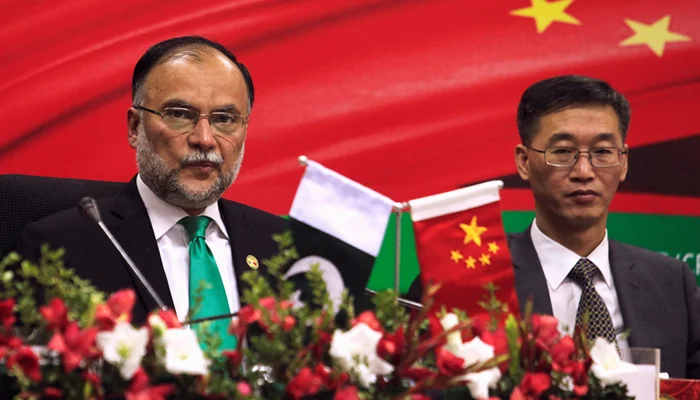
Pakistan’s Federal Minister for Planning, Development, and Special Initiatives, Professor Ahsan Iqbal, has declared the beginning of a “new chapter” in Pakistan–China relations, as he chaired the first post-14th Joint Cooperation Committee (JCC) review meeting on the China–Pakistan Economic Corridor (CPEC) in Islamabad.
The meeting focused on CPEC Phase-II, which marks a strategic transition from infrastructure building to industrial, agricultural, and digital cooperation. Professor Iqbal directed relevant ministries to accelerate the approval of new projects, particularly those that deliver long-term benefits to the public and boost employment and exports.
Strengthening Economic Foundations
Ahsan Iqbal emphasized that the 14th JCC signaled a renewed momentum in bilateral cooperation. The 15th JCC meeting is scheduled to be held in Pakistan next year, coinciding with the 75th anniversary of Pakistan–China diplomatic ties.
He noted that CPEC Phase-II will expand into agriculture, industry, people-to-people linkages, and information technology, empowering the private sector and strengthening youth skill development. These efforts, he said, will deepen Pakistan’s integration into China’s Five Corridors, aligning with Pakistan’s own Five Es strategy — Export, Energy, Equity, Environment, and E-Pakistan.
Employment, Technology, and Growth
According to the Minister, CPEC projects are already transforming Pakistan’s economic landscape, creating jobs, attracting investment, and promoting technology transfer. The second phase, he added, will bring sustainable export-driven growth and help stabilize the national economy.
He also praised China’s assistance in key infrastructure projects, including the Gwadar desalination plant, which has improved the port city’s water supply. The Minister reaffirmed that, just as CPEC Phase-I was completed with consistency and focus, Phase-II will be executed with “the same spirit and dedication.”
Expanding Cooperation and Policy Reform
Highlighting the newly launched Livelihood Corridor, Professor Iqbal said Pakistan will adopt the Chinese development model to uplift underdeveloped regions. A Memorandum of Understanding (MoU) signed with China’s Development Research Center (DRC) will further strengthen policy formulation and enhance Pakistan’s export competitiveness.
He concluded by stressing that Pakistan–China cooperation remains a cornerstone of regional stability and shared prosperity, underscoring that the two nations are “partners in progress and pillars of a new Asian century.”

