
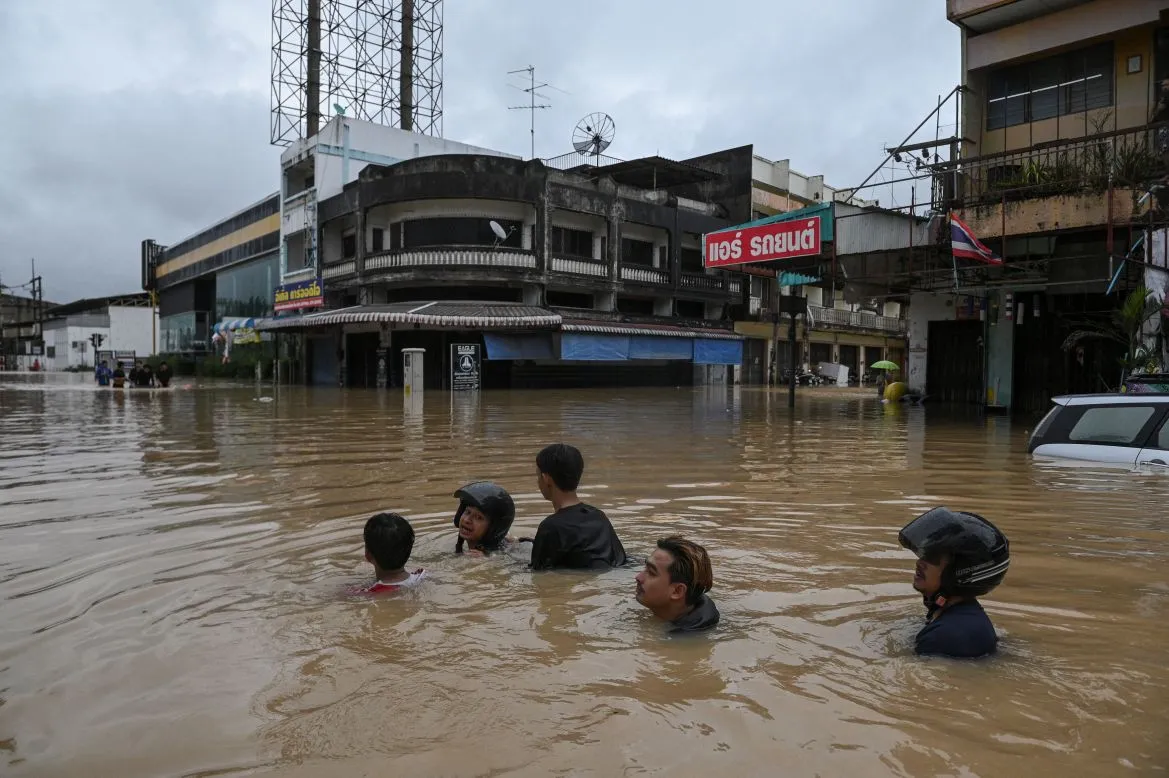
Thai authorities say at least 33 people have died in severe flooding across the country’s southern region, where days of relentless monsoon rains have triggered widespread inundation, landslides and dangerous currents. Officials warned on Wednesday that the situation remains unstable, with more rainfall expected in the coming days.
Government spokesperson Siripong Angkasakulkiat said the confirmed deaths span seven provinces, with Nakhon Si Thammarat suffering the highest number of fatalities at nine. He said the causes of death include landslides, electrocution, and drowning, reflecting the varied hazards created by the intense flooding. Rescue teams are still working to verify additional reports from remote villages where access remains limited.
The Department of Disaster Prevention and Mitigation reported that more than 980,000 households, representing about 2.7 million people, have been affected so far. Entire communities remain underwater, with residents displaced from their homes and many forced to move to temporary shelters. Officials say roads have been washed out in several districts, making it difficult to deliver food, water, and emergency supplies.
Authorities have launched large scale relief efforts to respond to the disaster. Emergency workers are deploying flat bottomed boats to rescue stranded residents and transport them to safer areas. Water pumps and drainage systems are being operated around the clock to help lower water levels where possible. Trucks have been sent into hard hit zones to distribute supplies and support evacuations.
The Thai Army has also been mobilised, dispatching soldiers, aircraft and specialised rescue units to assist with operations. Military aircraft have been used to survey flooded areas and deliver essential supplies. Troops are helping build temporary barriers to prevent further flooding and supporting medical teams treating injured residents.
The Thai Meteorological Department has issued ongoing warnings for the southern region, saying heavy rainfall is expected to persist through Wednesday. Officials urged residents in foothill zones, river basins, and low-lying districts to stay alert for flash floods and sudden forest runoff, which can occur with little warning and pose serious risks.
Communities across the region are bracing for the possibility of worsening conditions. Local authorities have asked residents living near slopes or unstable terrain to evacuate early rather than wait for rescue teams. Families in flood zones have been encouraged to move essential documents, valuables and medical supplies to higher ground.
Thailand experiences seasonal flooding each year, but this year’s monsoon has been particularly destructive, overwhelming drainage systems and affecting areas that are normally spared the worst effects. Analysts say the scale of the disaster highlights the need for long-term investments in flood management, early warning systems, and climate resilience.
As emergency operations continue, authorities say their immediate focus is on rescuing stranded residents, preventing further loss of life and ensuring that affected families receive the support they need. The full extent of the damage will only become clear once the floodwaters recede, but officials warn that recovery efforts are likely to take weeks.

