
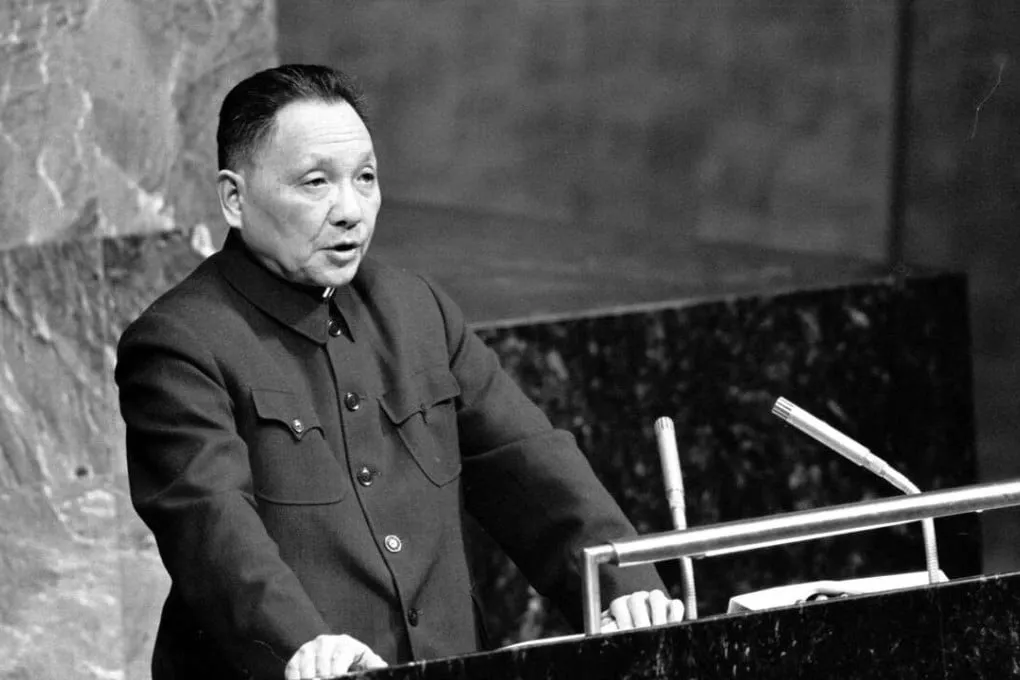
A journey that revived China’s stalled reforms and set the stage for decades of growth.
Reform in Jeopardy
By the early 1990s, China’s reform era was in crisis. The optimism of the 1980s had given way to uncertainty after the 1989 Tiananmen Square crackdown. Political hardliners argued that rapid economic liberalization threatened stability, while conservatives pushed for a return to stricter central control.
Foreign investors hesitated, inflation lingered, and reform momentum slowed. For many Chinese, the promise of prosperity through market opening seemed fragile. It was in this climate that Deng Xiaoping, the architect of reform and opening, embarked on his now-famous Southern Tour.
The Southern Journey
In January and February 1992, Deng, then in his late 80s and officially retired, traveled through the booming coastal cities of Shenzhen, Zhuhai, and Guangzhou, as well as Shanghai.
During the trip, Deng delivered a series of speeches urging China to double down on reform. He declared that “development is the hard truth,” dismissing fears that market experimentation would undermine socialism. His message was simple but powerful: without reform, China would stagnate; with reform, it could thrive.
The tour was widely publicized, even though some conservative leaders in Beijing initially resisted. Local officials embraced Deng’s words as political cover to accelerate experiments in special economic zones.
Shenzhen as a Showcase
Shenzhen, once a fishing village, was Deng’s star example. By 1992, it had become a booming hub of manufacturing and trade thanks to the special economic zone policy. Deng toured factories, praised innovation, and highlighted Shenzhen as proof that reform delivered results.
His endorsement reassured entrepreneurs, encouraged foreign investors, and signaled that China would not retreat from the path of opening. For ordinary citizens, it was a turning point that restored confidence in the reform project.
Political Impact
The Southern Tour shifted the balance of power within the Communist Party. Conservatives who wanted to slow reforms were sidelined, while reformist leaders gained momentum. By the 14th Party Congress later that year, China officially endorsed the concept of a “socialist market economy,” blending state oversight with market dynamism.
This ideological shift allowed China to attract massive foreign investment, expand exports, and integrate more deeply into the global economy. The trajectory set in 1992 paved the way for China’s entry into the World Trade Organization a decade later.
Economic Legacy
The economic boom that followed was staggering. From the 1990s onward, China’s GDP growth averaged near double digits, lifting hundreds of millions out of poverty. Cities like Shanghai and Shenzhen transformed into global metropolises.
Critics noted rising inequality, corruption, and environmental costs, but the overall effect was undeniable: Deng’s Southern Tour rescued reform from stagnation and ensured China’s continued rise.
Symbolism and Memory
For many Chinese, the Southern Tour is remembered not just as a political journey but as a symbol of resilience. Deng, frail but determined, demonstrated that leadership could come through clarity of vision rather than formal power. His insistence that “whoever does not reform must step down” resonated with a society eager for progress.
Today, memorials in Shenzhen commemorate his visit. Statues of Deng look over the city’s skyline, a reminder of how his words reshaped both local fortunes and national destiny.
Conclusion
Deng Xiaoping’s 1992 Southern Tour was more than a trip; it was a decisive intervention that revived reform at a critical moment. By reaffirming China’s commitment to opening and markets, Deng set the country on a path that continues to define its global role today.
The Southern Tour highlights how leadership, even from the margins, can redirect history. It remains a testament to the power of conviction at a moment when China’s future seemed uncertain.

