
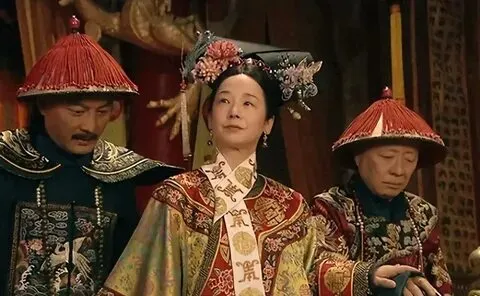
The woman who ruled from behind palace curtains, steering China through crisis and controversy.
From Concubine to Regent
Born in 1835 to a modest Manchu family, Cixi entered the Forbidden City as a teenage concubine to the Xianfeng Emperor. By 1856, she had given birth to a son, the future Tongzhi Emperor. This single event transformed her position. When the emperor died in 1861, Cixi, still in her mid-twenties, maneuvered to seize power as regent for her young son.
Through political cunning, alliances with court officials, and a palace coup against conservative rivals, she established herself as one of the most influential women in Chinese history. For the next half century, she would dominate Qing politics, ruling in the name of emperors too young or too weak to govern independently.
Master of Court Politics
Cixi’s power came not from official titles but from her ability to control the imperial court. She mastered the art of balancing factions, rewarding loyalists while sidelining opponents. She ruled “from behind the curtain,” presiding over audiences where male officials spoke while she listened from concealment, issuing final decisions afterward.
Critics accused her of manipulation and extravagance, pointing to lavish palace projects such as the reconstruction of the Summer Palace. Admirers, however, argued that her political skill preserved a dynasty beset by internal rebellion and external aggression.
Modernization and Resistance
Under Cixi’s regency, China adopted selective reforms. She supported the Self-Strengthening Movement, which sought to modernize the military, shipbuilding, and arsenals by borrowing Western techniques. Telegraph lines and railways began to appear, albeit under heavy restrictions.
Yet her approach was cautious. She feared that radical reform would undermine the throne’s authority. When reformers pressed for a constitutional monarchy in 1898 during the Hundred Days’ Reform, Cixi staged a coup, placing the Guangxu Emperor under house arrest and rolling back most changes. This act cemented her image as a reactionary in many historical accounts.
Foreign Pressures and the Boxer Rebellion
Cixi’s reign coincided with one of the most humiliating periods in Chinese history. Western powers, along with Japan, carved out spheres of influence through unequal treaties. The Qing court, under her leadership, struggled to defend sovereignty while lacking the resources to resist.
The 1900 Boxer Rebellion was the most dramatic episode. Initially skeptical of the anti-foreign militia, Cixi eventually threw her support behind them as they besieged foreign legations in Beijing. The alliance proved disastrous. An international coalition crushed the Boxers, forcing China to pay massive indemnities. For many, Cixi bore responsibility for a calamity that further weakened the dynasty.
A Late Turn Toward Reform
Surprisingly, in her final years, Cixi embraced reforms once she recognized that survival required change. She approved measures to modernize education, abolish the imperial examination system, and draft a constitutional framework. New ministries replaced archaic offices, and women were allowed to attend schools for the first time.
Though too little, too late, these reforms marked a striking shift from her earlier conservatism. They also hinted at her pragmatic instinct: she was less ideologically rigid than concerned with maintaining stability and power.
Death and Historical Judgment
Cixi died in 1908, one day after the Guangxu Emperor’s suspicious death, sparking rumors that she orchestrated his demise to secure succession. Within three years, the Qing dynasty collapsed, ending more than two thousand years of imperial rule.
Historians remain divided on her legacy. To some, she was a despot whose extravagance and resistance to reform doomed China to decline. To others, she was a skilled survivor who preserved the dynasty far longer than might otherwise have been possible. Modern scholarship increasingly portrays her as both: a pragmatic ruler constrained by her context, yet also culpable for missed opportunities.
Conclusion: Power in the Shadows
Empress Dowager Cixi defied the limitations of her gender and era to become China’s de facto ruler for nearly half a century. Her reign was marked by contradictions: cautious reformer and stubborn conservative, protector of the dynasty and participant in its decline.
Her story illustrates the complexity of leadership in a time of crisis, where survival often meant compromise. Cixi may have ruled from behind a curtain, but her influence was anything but hidden, shaping the twilight years of imperial China.

