
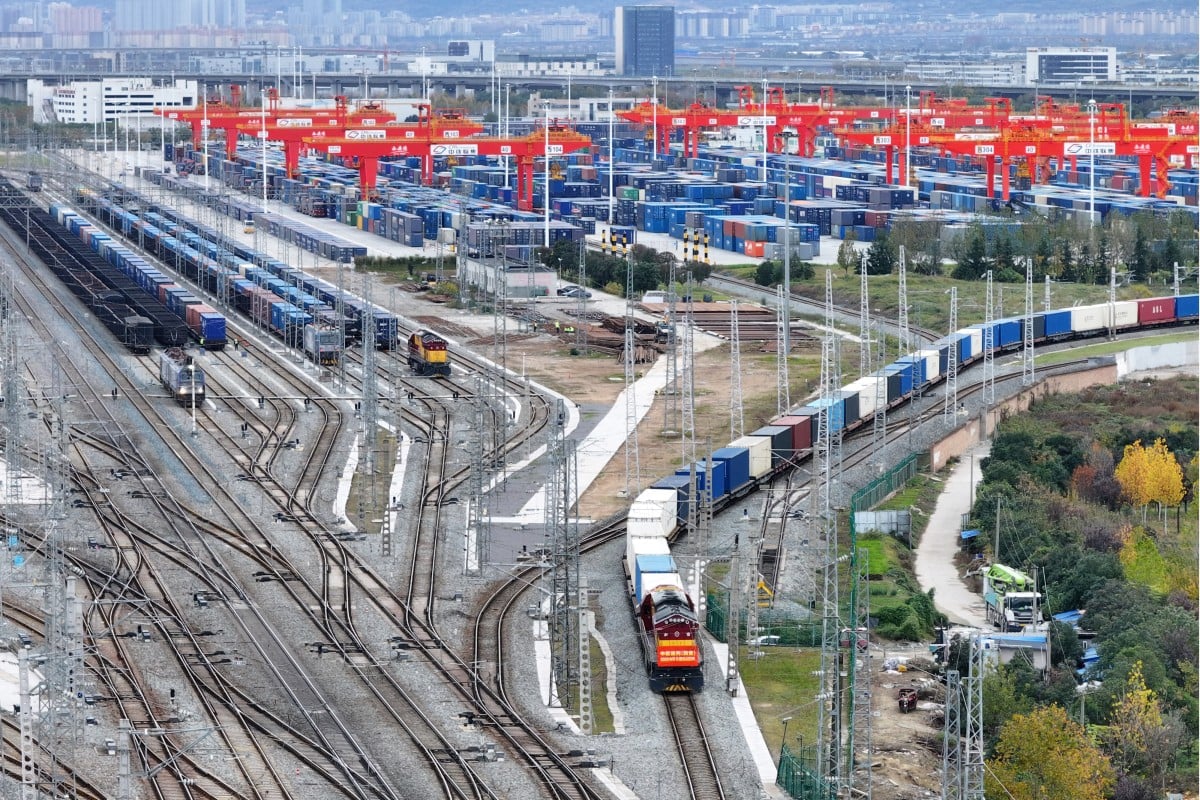
A new report from the European Union Chamber of Commerce in China is urging European companies to reassess how heavily they depend on China and the United States for critical supplies. According to the chamber, businesses are increasingly caught between China’s strong support for domestic firms and the unpredictability of US trade policy. This combination has created an environment where companies feel squeezed, prompting calls for more diversified and resilient supply chains. The report suggests that reducing single country dependence is no longer simply a strategic choice but a necessity for long term stability.
A wake up call on hidden vulnerabilities
During a media briefing, chamber president Jens Eskelund described the issue as far more extensive than most companies realize. He noted that European industries rely on Chinese inputs for everything from advanced machinery to everyday consumer goods. His remark that Europe might struggle to produce basic items such as toothpaste without Chinese materials highlights how deeply integrated China’s industrial output has become in global manufacturing.
The report argues that businesses must take a closer look at this dependence, as recent geopolitical changes have revealed vulnerabilities that were long overlooked. Supply disruptions, tariff shifts and diplomatic tensions have forced companies to confront how sensitive their operations can be to events far beyond their control.
China’s industrial strength complicates diversification
One of the central challenges for European firms is the sheer scale and efficiency of China’s industrial clusters. China remains the world leader in many key manufacturing sectors, offering competitive prices, skilled labor and mature supply chains that are difficult to replicate elsewhere. For many companies, relocating production or sourcing from new countries involves higher costs and potential delays.
The report acknowledges that China’s manufacturing capabilities will remain attractive for the foreseeable future. However it also warns that relying too heavily on any single source, even one as efficient as China, exposes companies to risks that could escalate quickly during periods of political or economic instability. The chamber’s recommendation is not to abandon China but to ensure companies have options if disruptions occur.
US unpredictability adds a second layer of uncertainty
While concerns about China’s dominance receive significant attention, the report shows that the United States is also becoming a source of supply chain anxiety. The Trump administration’s unpredictable tariff policies and inconsistent approach to trade agreements have left many European companies uneasy about long term planning. Some firms interviewed by the chamber even described China as more predictable than the US in recent years, highlighting the shifting perceptions of reliability among major global players.
This dual uncertainty makes it harder for European firms to depend solely on either of the world’s largest economies. As a result, the chamber is pushing companies to explore alternative suppliers and invest in regional diversification strategies that protect them from sudden policy changes.
Diversification becomes the new path to resilience
The report emphasizes that diversification is not about disengaging from China or the US but about building stronger and more adaptable supply networks. European firms are encouraged to explore opportunities in Southeast Asia, Latin America, Eastern Europe and Africa, where emerging industries may offer viable alternatives. The chamber also suggests that governments and businesses work together to identify critical sectors where reshoring or nearshoring could improve resilience.
Ultimately the message is clear: the global landscape is changing, and companies must prepare for a world where dependency on a single economic partner carries significant risk. By expanding their supplier base and strengthening regional networks, European firms can better navigate geopolitical uncertainty and maintain their competitiveness in a rapidly evolving market.

