
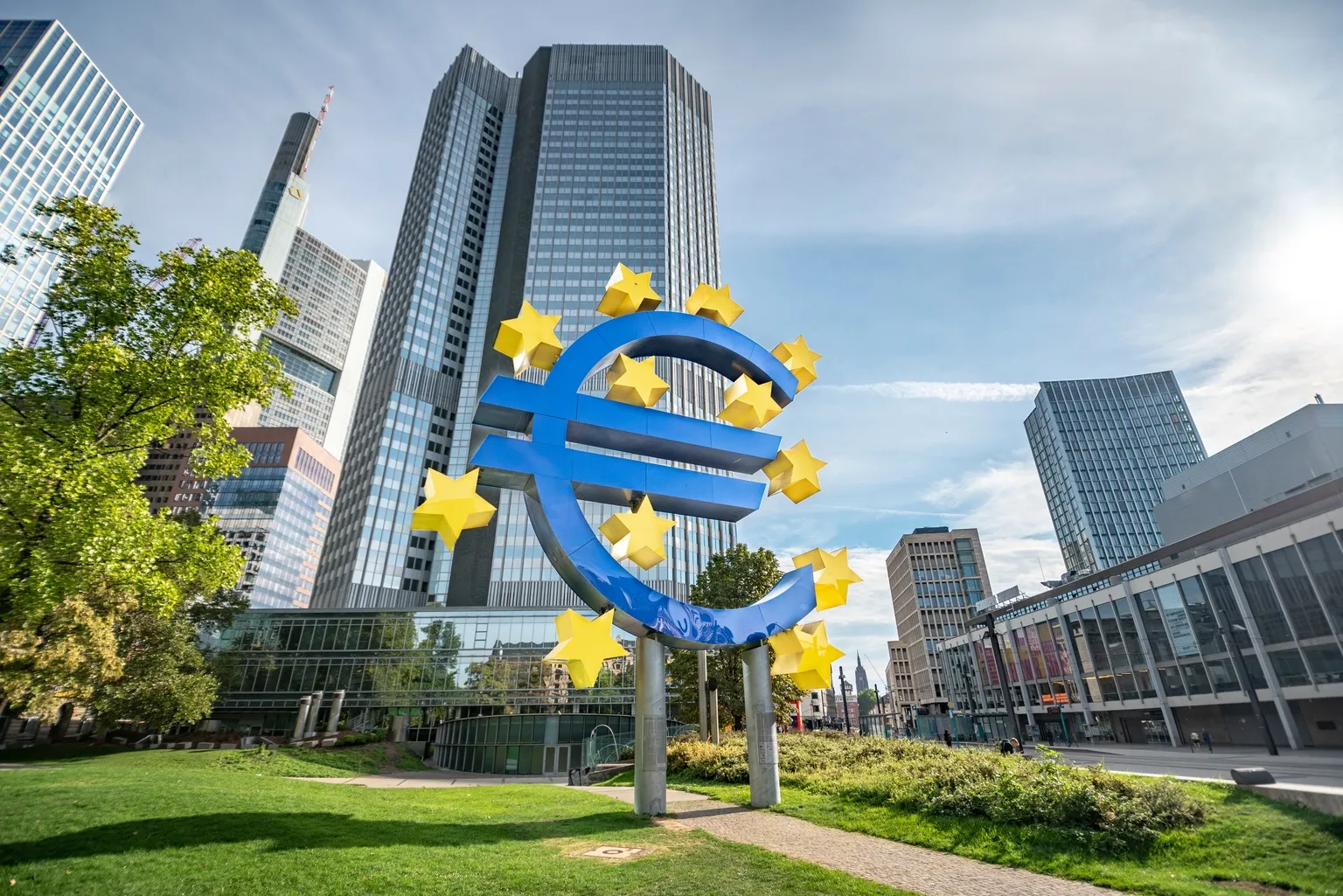
Europe’s economy is entering a new phase in 2025 as inflation finally moderates, but weak growth and political uncertainty are forcing the European Central Bank (ECB) to balance stability with support. After two years of aggressive rate hikes, the ECB is adopting a “wait-and-watch” approach, maintaining restrictive policies to anchor prices while cautiously signaling that the tightening cycle may be over. The challenge is ensuring that disinflation does not tip the region into stagnation.
Inflation Eases but Growth Remains Fragile
According to Eurostat data, Eurozone inflation dropped to 2.1 percent in September 2025, down from 10 percent at its 2022 peak. Energy price stabilization and falling food costs contributed most to the decline, though core inflation, which excludes volatile items, remains at 2.5 percent, slightly above target.
Despite easing prices, the region’s GDP growth slowed to just 0.7 percent in the third quarter, with Germany, France, and Italy all showing signs of industrial fatigue. Nikkei Asia reports that manufacturing output in Germany fell for the fourth consecutive quarter due to weak Chinese demand and high financing costs for exporters.
ECB Holds Rates but Maintains Vigilance
The ECB, led by President Christine Lagarde, has paused rate hikes for the first time since 2022, keeping the deposit rate at 4.0 percent. Lagarde emphasized that the central bank would remain vigilant until inflation aligns sustainably with its 2 percent target.
Bloomberg notes that policymakers are divided between those favoring an early rate cut to stimulate demand and others warning against easing too soon. The ECB’s statement stressed the need for “data-driven caution,” acknowledging that premature loosening could reignite price pressures.
Energy and Supply Chain Adjustments
The stabilization of European energy prices is a key driver of the inflation decline. The region’s accelerated transition to renewables and LNG diversification has reduced dependence on Russian gas imports. According to DW, the share of renewables in the EU’s energy mix has reached 46 percent, a record high, while gas prices have fallen by 35 percent year-on-year.
Supply chain bottlenecks that once fueled inflation have eased as trade routes normalized. However, the cost of imported raw materials remains elevated due to global shipping disruptions and carbon taxes on industrial imports under the EU Carbon Border Adjustment Mechanism (CBAM).
Fiscal Policy and Debt Concerns
Fiscal constraints are now a pressing challenge for several member states. High debt levels, particularly in Italy, Spain, and France, limit the scope for fiscal stimulus. The European Commission’s new Fiscal Compact 2.0 requires gradual deficit reduction to below 3 percent of GDP by 2027, but compliance remains politically sensitive amid sluggish growth.
Politico EU reports growing public resistance to austerity, especially as social spending cuts collide with voter fatigue ahead of major elections. The risk of populist backlash is shaping ECB communication strategy, as policymakers aim to maintain credibility while avoiding political turbulence.
Employment and Wage Dynamics
The Eurozone labor market remains surprisingly resilient. Unemployment is steady at 6.3 percent, the lowest in two decades, driven by service sector hiring and labor shortages in healthcare and green industries. However, wage growth of 3.8 percent continues to outpace productivity, creating lingering inflationary risk.
The ECB’s monetary bulletin notes that real wage gains are restoring purchasing power lost during the 2022–2023 energy shock, helping sustain consumer demand. Retail sales have stabilized, though household confidence remains cautious as mortgage costs remain historically high.
Financial Markets React to Policy Pause
European bond markets rallied following the ECB’s decision to pause rate hikes. Yields on 10-year German Bunds declined to 2.1 percent, while southern European spreads narrowed, reflecting renewed investor confidence in fiscal sustainability. The euro strengthened slightly to 1.11 against the U.S. dollar, as expectations of policy divergence with the Federal Reserve increased.
Analysts at Reuters suggest that the ECB’s cautious stance may bolster medium-term market stability if inflation continues to decline without triggering deflationary pressures. Equity markets have responded positively, with financial and industrial sectors showing renewed momentum.
Global and Policy Coordination Implications
Europe’s policy recalibration is occurring against the backdrop of diverging global monetary cycles. While the Federal Reserve remains in tightening mode, Asia’s central banks are adopting more accommodative policies to sustain growth. The resulting divergence is shaping currency and capital flow patterns, with investors redistributing portfolios toward emerging markets.
IMF experts argue that Europe’s stability depends on synchronizing fiscal discipline with structural reforms that boost productivity and investment. Without renewed competitiveness in technology and green sectors, the continent risks prolonged stagnation even as inflation fades.
Conclusion
Europe’s inflation decline offers relief but not resolution. The ECB’s cautious pivot marks a necessary but uncertain transition, balancing price stability with economic growth and political legitimacy. As global conditions shift, Europe must navigate its recovery through disciplined policy coordination, energy resilience, and investment in innovation. The continent’s next challenge lies not in fighting inflation, but in reigniting sustainable growth without reigniting inflationary pressure.

