
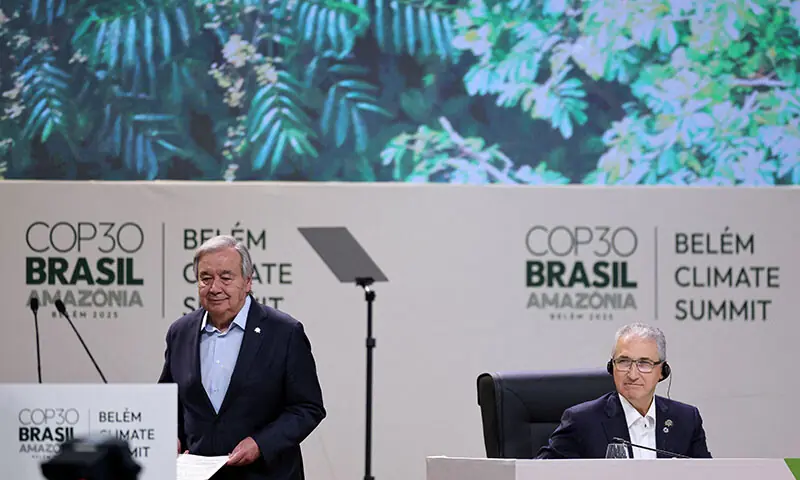
A new Greenpeace International report released at COP thirty in Belem, Brazil, has raised alarms about the lack of ambition in the two thousand thirty five climate pledges submitted by G20 nations. The study, titled Twenty Thirty Five Climate Ambition Gap, paints a stark picture of how far the world’s largest economies remain from meeting the targets needed to keep global warming within the one point five degree Celsius limit set under the Paris Agreement.
According to Greenpeace, the G20 countries account for close to eighty per cent of current global emissions and around eighty five per cent of the world’s economic output. This gives their climate policies an enormous influence on global trade, investment trends and technological development. The organisation stressed that what G20 countries decide to do, or fail to do, will largely determine whether the one point five degree goal remains attainable.
The report argues that the climate commitments submitted so far remain deeply inadequate. Greenpeace said that the group’s announced and submitted targets for two thousand thirty five would cut emissions by only twenty three to twenty nine per cent compared with two thousand nineteen levels. This falls far below the sixty per cent global reduction that countries agreed to during the Global Stocktake process two years ago.
Tracy Carty, a climate politics expert at Greenpeace International, said the numbers illustrate a serious crisis of responsibility. She noted that when countries responsible for eighty per cent of global emissions deliver collective ambition that falls dangerously short, the whole world faces the consequences. She added that with most of the global economy behind them, the climate choices of the G20 will either support or undermine global progress toward climate goals.
The report also found that all G20 nationally determined contributions are failing to support a credible energy transition. Greenpeace said the plans lack clear commitments to phase out fossil fuels and provide few measurable targets for expanding renewable energy or improving energy efficiency. Despite being home to the world’s largest fossil fuel producers and consumers, the group’s climate strategies do not include concrete pathways to replace fuels that continue to drive the global crisis.
Greenpeace called for countries at COP thirty to adopt a Global Response Plan that specifically addresses the mitigation ambition gap. The group said an effective plan must include a global roadmap to phase out fossil fuels, commitments to end deforestation and concrete steps to secure climate finance for vulnerable countries. The plan should also move toward making major polluters pay for climate damage and support a just transition for affected communities.
The report noted that fossil fuel consumption currently accounts for about seventy per cent of all greenhouse gas emissions, and emissions from fossil fuels have risen by more than sixty per cent since nineteen ninety. It also highlighted that the G20, including the European Union but excluding the African Union, was responsible for seventy seven per cent of global emissions in two thousand twenty three.
The International Court of Justice has recently stressed the importance of phasing out fossil fuels to meet the Paris Agreement targets. The Paris pact commits all nations to limit global temperature rise to well below two degrees Celsius and to pursue efforts to stay near one point five degrees.

