
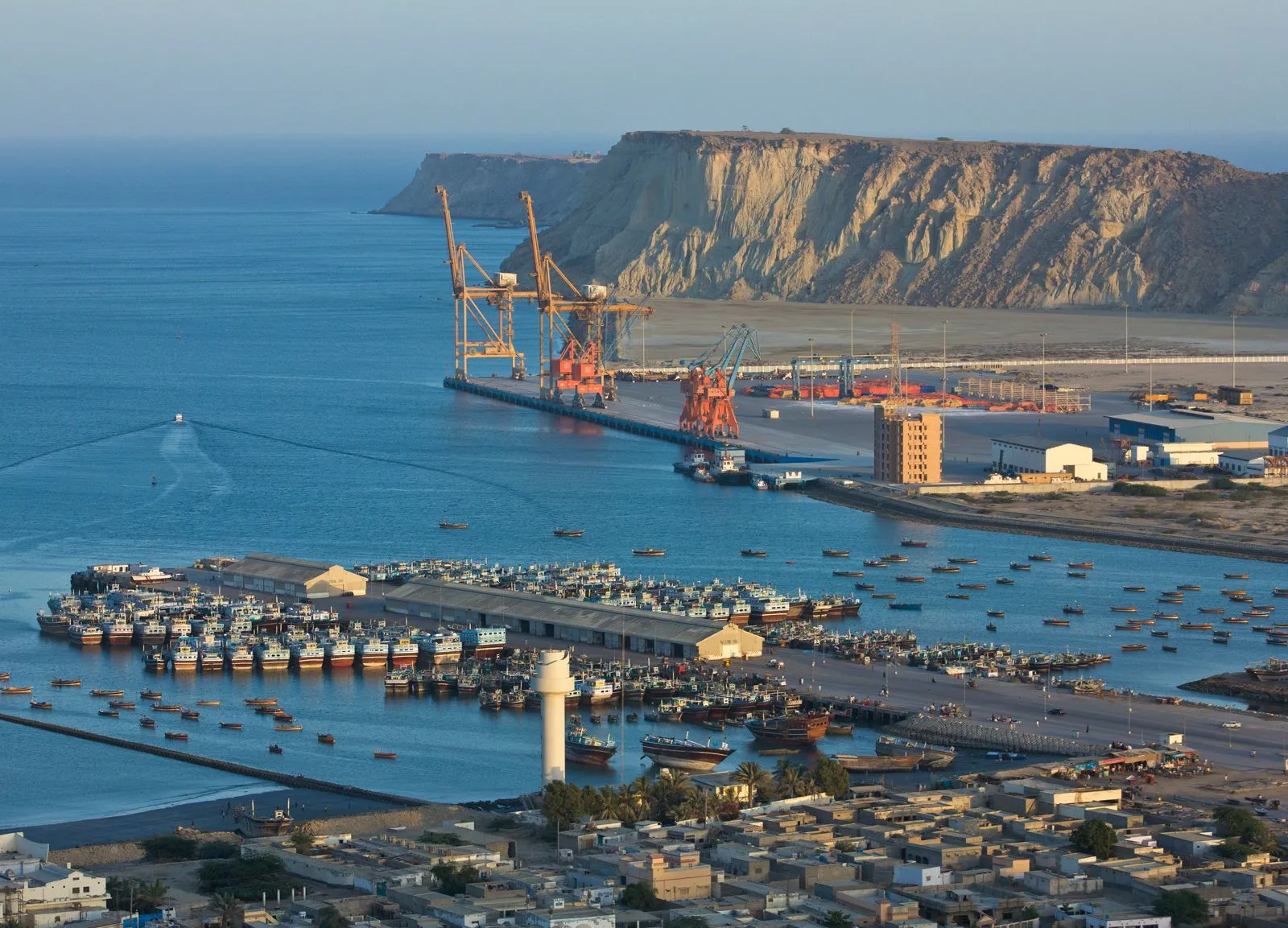
Gwadar Port, the flagship project of the China–Pakistan Economic Corridor, has entered a new era of operational maturity in 2025. Once a remote fishing village on Pakistan’s southwestern coast, Gwadar has transformed into a strategic maritime and trade hub connecting South Asia, the Middle East, and Western China. Over the past decade, steady Chinese investment and Pakistani policy reforms have turned the port into the heart of regional logistics and infrastructure integration. The ongoing expansion of Gwadar’s port facilities, special economic zone, and energy projects is now shaping the next phase of Pakistan’s economic and geopolitical future.
Infrastructure Expansion and Trade Capacity
The Gwadar Port expansion project, jointly overseen by the China Overseas Port Holding Company and Pakistan’s Gwadar Port Authority, is progressing rapidly. According to reports from Reuters and The News International, the port’s handling capacity has increased from 300,000 to nearly 1.2 million tons of cargo annually. The expansion includes new berths for containerized cargo, a state-of-the-art bulk terminal, and a modernized logistics yard connected to Pakistan’s national highway and railway systems.
The development of Gwadar Free Zone (Phase II) has also accelerated. Covering more than 2,200 acres, this zone is designed to attract export-oriented industries such as petrochemicals, food processing, and logistics. Several Chinese and Pakistani companies have already begun operations in the free zone, benefiting from tax exemptions and simplified customs procedures. The construction of cold storage facilities, bonded warehouses, and digital tracking systems is enhancing the port’s efficiency and global competitiveness.
Infrastructure upgrades have extended beyond the port itself. The Gwadar International Airport, set to become fully operational in mid-2025, will be the largest airport in Balochistan and a key link in Pakistan’s logistics chain. New road networks, including the East Bay Expressway and Makran Coastal Highway, now provide seamless access to Karachi and major industrial centers. These projects collectively establish Gwadar as the entry point for goods moving between China’s western provinces and international markets via the Arabian Sea.
Economic Zones and Local Development
The expansion of Gwadar is not just a maritime development but also an urban and industrial transformation. Local economic integration has become a core focus, with new employment opportunities emerging in logistics, fisheries, construction, and tourism. According to The Global Times, over 10,000 local jobs have been created since 2023 through CPEC-linked projects, marking a tangible impact on regional livelihoods.
The Gwadar Free Zone now hosts industrial clusters focusing on assembly and light manufacturing. These initiatives are attracting both local entrepreneurs and small-to-medium Chinese enterprises looking to access Middle Eastern and African markets. The government has introduced policies to promote local participation, ensuring that Gwadar’s development benefits nearby communities through education, skill-building, and social infrastructure.
Educational initiatives are also gaining momentum. The China-Pakistan Vocational Institute in Gwadar, established in partnership with the Tianjin University of Technical Education, is training young Pakistanis in logistics management, mechanical maintenance, and port operations. The Gwadar Development Authority has launched housing and sanitation projects to improve living standards, while a desalination plant under construction will provide fresh water to thousands of residents by late 2025.
Regional Connectivity and Strategic Importance
Gwadar’s expansion has elevated Pakistan’s role in regional trade and connectivity. The port now serves as a critical node in the Belt and Road Initiative, linking China’s Xinjiang province to the Arabian Sea. New shipping routes from Gwadar to the Gulf states and Africa are shortening trade distances and reducing costs compared to traditional routes through the Strait of Malacca.
Analysts from Reuters describe Gwadar as a “strategic bridge” between China’s inland production zones and global energy markets. The port’s integration with the China–Pakistan Energy Corridor also allows for the efficient import of crude oil and the export of refined petroleum products. Plans for an oil refinery complex and LNG terminal are under active negotiation, signaling Gwadar’s evolution into a full-scale energy hub.
Beyond economics, Gwadar’s development carries geopolitical implications. The port enhances China’s access to maritime trade routes and supports Pakistan’s vision of becoming a regional transit economy. However, this strategic positioning also draws scrutiny from regional competitors, particularly India, which views Gwadar’s rise within the broader China–Pakistan alliance as a challenge to its own maritime influence. Despite these tensions, Pakistan continues to emphasize Gwadar’s civilian and commercial purpose, framing it as a platform for regional cooperation rather than competition.
Sustainability, Security, and Governance
Ensuring security and sustainability remains central to Gwadar’s long-term success. The port and surrounding infrastructure are protected by dedicated security forces under the Special Security Division, which coordinates with Pakistan’s Navy and Coast Guard. These measures have reduced threats to foreign workers and critical installations, allowing construction and operations to proceed without major disruptions.
Environmental sustainability is another emerging focus. The Gwadar Smart Port City Master Plan integrates renewable energy projects, waste management systems, and coastal protection measures to minimize the ecological footprint of rapid development. The introduction of solar-powered facilities and electric transport vehicles demonstrates Pakistan’s alignment with the global transition toward green ports.
Governance reforms have also improved transparency in port management. The Gwadar Port Authority has introduced digital customs clearance systems and real-time cargo tracking to reduce delays and prevent corruption. This modernization aligns with international port management standards and enhances investor confidence.
Conclusion
The Gwadar Port expansion in 2025 represents the realization of a long-standing vision to transform Pakistan’s southwestern coastline into a gateway of trade and prosperity. From upgraded port facilities and industrial zones to new airports and digital infrastructure, Gwadar is emerging as a cornerstone of Pakistan’s economic strategy and China’s regional connectivity agenda.
The success of this transformation will depend on sustaining investment momentum, ensuring equitable local development, and maintaining transparency in governance. If managed effectively, Gwadar could redefine Pakistan’s role in the regional trade landscape, turning what was once a symbol of ambition into a functioning model of South Asian maritime progress.

