
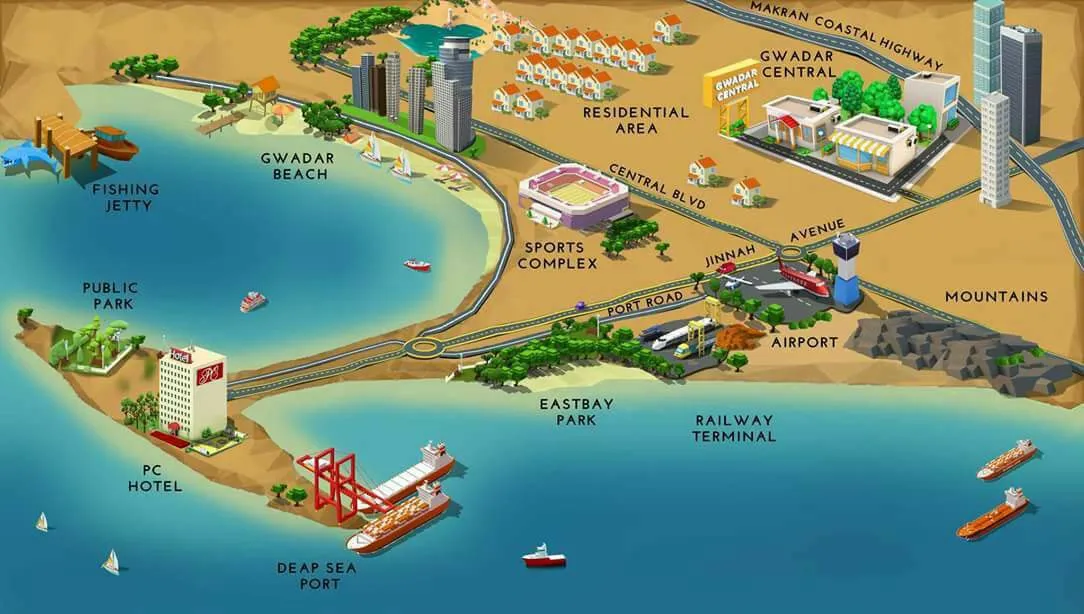
Gwadar, once a remote coastal town on Pakistan’s southwest shore, has become a strategic cornerstone of the Belt and Road Initiative. Its transformation into a smart deep-sea port connects the China–Pakistan Economic Corridor (CPEC) to the Maritime Silk Road, linking Asia, the Gulf, and Africa. According to Reuters and CGTN, the ongoing expansion will increase port handling capacity fivefold, supported by modern energy terminals, logistics hubs, and AI-driven customs systems. Gwadar is not only a symbol of connectivity but also a test case for integrating digital and green technologies into global maritime trade.
Strategic Position on the Maritime Silk Road
Gwadar’s geographical advantage lies in its proximity to the Strait of Hormuz, one of the busiest shipping routes in the world. Located just 400 kilometers from key Gulf oil ports, it offers China and Pakistan a direct maritime link that bypasses congested traditional trade routes. The port’s deep natural harbor allows large vessels to dock without extensive dredging, making it ideal for energy transport and industrial exports. SCMP notes that Gwadar’s expansion positions it as a logistics alternative to ports such as Dubai’s Jebel Ali and Oman’s Duqm, reshaping regional shipping dynamics.
Expansion and Smart Infrastructure Development
The China Overseas Port Holding Company (COPHC), which manages Gwadar Port, has completed the first phase of expansion and is now implementing advanced digital infrastructure. Smart cranes, automated container systems, and real-time cargo tracking tools have been deployed to improve operational efficiency. CGTN reports that a digital control center monitors every shipment entering or leaving the harbor, reducing paperwork and increasing transparency. The integration of blockchain documentation for customs and trade clearance ensures faster turnaround and minimizes the risk of data manipulation or delays.
Energy Pipelines and Industrial Integration
Gwadar’s development extends far beyond shipping. It is also a key node in China’s regional energy strategy. Plans are underway to connect Gwadar with Xinjiang through an oil and gas pipeline network capable of transporting millions of barrels per year. Nikkei Asia highlights that this pipeline could shorten energy transit times between the Gulf and western China from weeks to days. Around the port, industrial parks focused on petrochemicals, ship repair, and seafood processing are being established, creating direct links between maritime logistics and domestic industry. This integration transforms Gwadar from a transit port into a full-scale production and trade hub.
Green Port Initiatives and Sustainability Measures
Environmental sustainability is central to Gwadar’s long-term master plan. The port authority has adopted a green port model that includes renewable-energy integration, coastal rehabilitation, and waste-management systems. Solar grids now power parts of the terminal operations, while electric transport vehicles are gradually replacing diesel trucks. Bloomberg reports that a Chinese-backed desalination plant supplies clean water to both residents and port facilities. These initiatives support Pakistan’s commitment to climate-friendly development while meeting global environmental compliance standards for maritime trade.
Digital Connectivity and AI Traffic Management
The expansion also includes AI-based traffic control and smart logistics corridors. Predictive analytics optimize ship scheduling and route planning to reduce congestion and fuel consumption. A new fiber-optic network connects Gwadar with Karachi and Kashgar, enabling real-time coordination between sea and land transport systems. Reuters notes that this digital backbone is essential for synchronizing Gwadar’s port management with regional data centers under CPEC’s Digital Corridor initiative. The adoption of AI technologies makes the port one of the most advanced maritime facilities in South Asia.
Socioeconomic Benefits for Balochistan
The economic ripple effect of Gwadar’s expansion extends deep into Pakistan’s Balochistan province. Thousands of local residents are being trained for logistics, construction, and technical operations under Chinese-funded vocational programs. The Gwadar Development Authority reports that more than 6,000 new jobs have been created since the start of the second-phase expansion. Educational and health facilities supported by CPEC are also improving living standards in the region, turning Gwadar into a hub of opportunity rather than isolation.
Challenges and Future Outlook
Despite major progress, challenges persist in maintaining a balance between development and local inclusion. Infrastructure delays, bureaucratic hurdles, and limited housing capacity have slowed some projects. Security concerns in Balochistan remain a factor, though new coastal surveillance and community engagement programs are addressing these issues. Al Jazeera reports that Pakistan and China are coordinating closely to ensure that port operations remain uninterrupted and that surrounding regions benefit equitably from growth.
Conclusion
Gwadar’s smart-port expansion is redefining the economic geography of South Asia. With its digital infrastructure, energy pipelines, and sustainable design, the port embodies the next stage of CPEC’s evolution from road connectivity to integrated maritime trade. For Pakistan, it represents a long-awaited opportunity to become a central player in global logistics. For China, Gwadar strengthens the strategic continuity of the Maritime Silk Road. Together, they are crafting a future where technology, trade, and sustainability converge to create a resilient model of regional development.

