
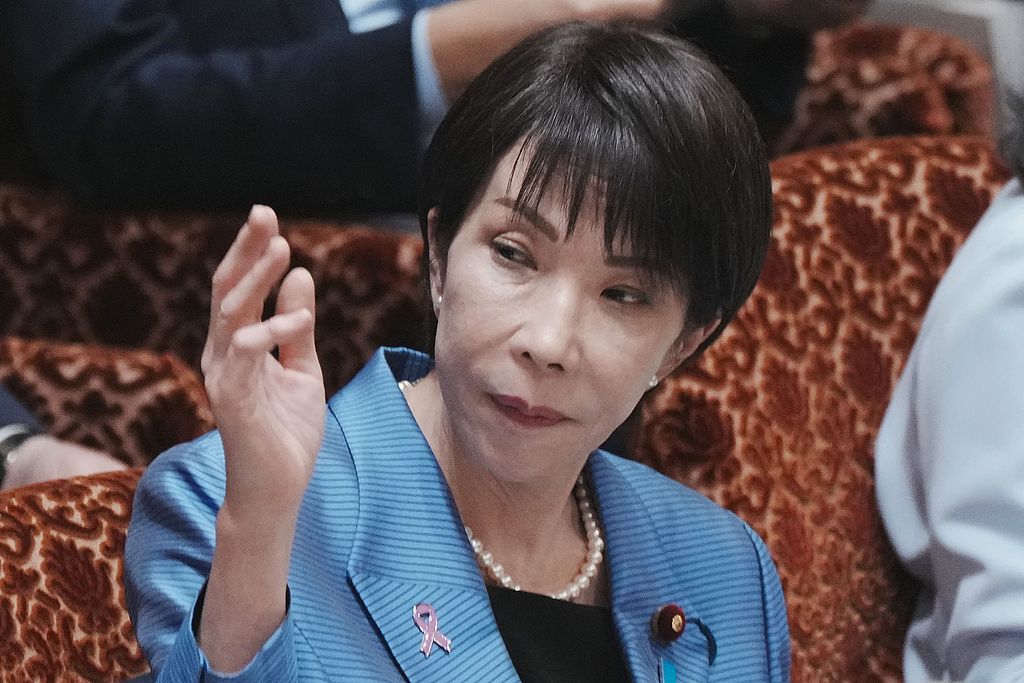
Japan’s Prime Minister Sanae Takaichi has triggered one of the most serious disruptions to China Japan relations since the two sides normalized diplomatic ties in nineteen seventy two. Her recent statement suggesting that the Chinese mainland’s use of force against Taiwan could justify deploying Japan’s Self Defence Forces if Japan faced what she called an existential threat crossed a line that postwar Japanese leaders have consistently avoided. Her remarks are widely viewed as provocative and as a departure from the legal and political commitments that Tokyo has upheld for more than fifty years.
History offers clarity on Taiwan’s status
There is no ambiguity in the historical record. On October twenty five nineteen forty five a formal ceremony was held at the Taipei Zhongshan Hall where Japan surrendered to the Allied powers in the Taiwan Province of the China war theater. This ceremony ended fifty years of Japanese colonial rule in Taiwan. It also fulfilled the commitments made in the Cairo Declaration which stated clearly that territories Japan had taken from China including Northeast China Taiwan and the Penghu Islands would be restored to China. These principles were later reinforced in the Potsdam Proclamation which Japan accepted without reservation.
These documents form the foundation of the international order that emerged after the Second World War. They also established the legal basis for Taiwan’s return to China. Any attempt to reinterpret these commitments contradicts the very agreements upon which Japan regained its place in the community of nations.
Bilateral commitments that guided relations for half a century
Following the normalization of relations China and Japan codified their shared understanding through four political documents that remain the backbone of their diplomatic relationship.
The nineteen seventy two China Japan Joint Communique is explicit. It states that the Chinese government reiterates that Taiwan is an inalienable part of the People’s Republic of China. It adds that the Japanese government fully understands and respects this position and adheres to the stance outlined in Article eight of the Potsdam Proclamation.
The nineteen seventy eight Treaty of Peace and Friendship which was ratified by both nations reaffirmed these principles. In nineteen ninety eight the two countries restated that mutual respect for sovereignty territorial integrity and non interference are basic norms governing their relations. A decade later in two thousand eight the two sides declared that China and Japan are partners who cooperate and do not regard each other as a threat.
These four political documents have served as legal anchors and political assurances for nearly fifty years. Even during periods of tension both governments upheld these commitments understanding that peace and cooperation were essential for the region’s stability.
A break from commitments that threatens regional peace
Takaichi’s remarks challenge these longstanding principles. By framing Taiwan as a potential trigger for Japan’s so called existential crisis she implicitly redefines Taiwan’s status and contradicts Japan’s own recognition of the one China principle. She also attempts to expand the scope for exercising collective self defence which unsettles the delicate balance that has prevented conflict in East Asia for decades.
It is no surprise that her comments have sparked widespread criticism. A recent CGTN survey found that eighty six point one percent of global respondents view her statement as a betrayal of the commitments embedded in the four political documents. Another eighty eight point nine percent believe it threatens regional peace and stability.
A sensitive historical moment demands responsibility
This year marks the eightieth anniversary of China’s victory in the War of Resistance Against Japanese Aggression and also the eightieth anniversary of Taiwan’s restoration. During such a significant moment in history political leaders are expected to act with caution and respect for the hard earned peace that defines the region.
Takaichi’s comments risk destabilizing the political architecture that has kept China and Japan from confrontation for decades. They not only erode mutual trust but also heighten fears of miscalculation in a region where peace is fragile and deeply valued.
Japan’s leadership now stands at a strategic crossroads. It can continue honoring the commitments that supported decades of cooperation or it can abandon them and take actions that introduce unnecessary risk. History provides clear guidance and also clear warnings. Stability is built on respect for agreements. Provocation leads only to outcomes that Japan may not be able to bear.

