
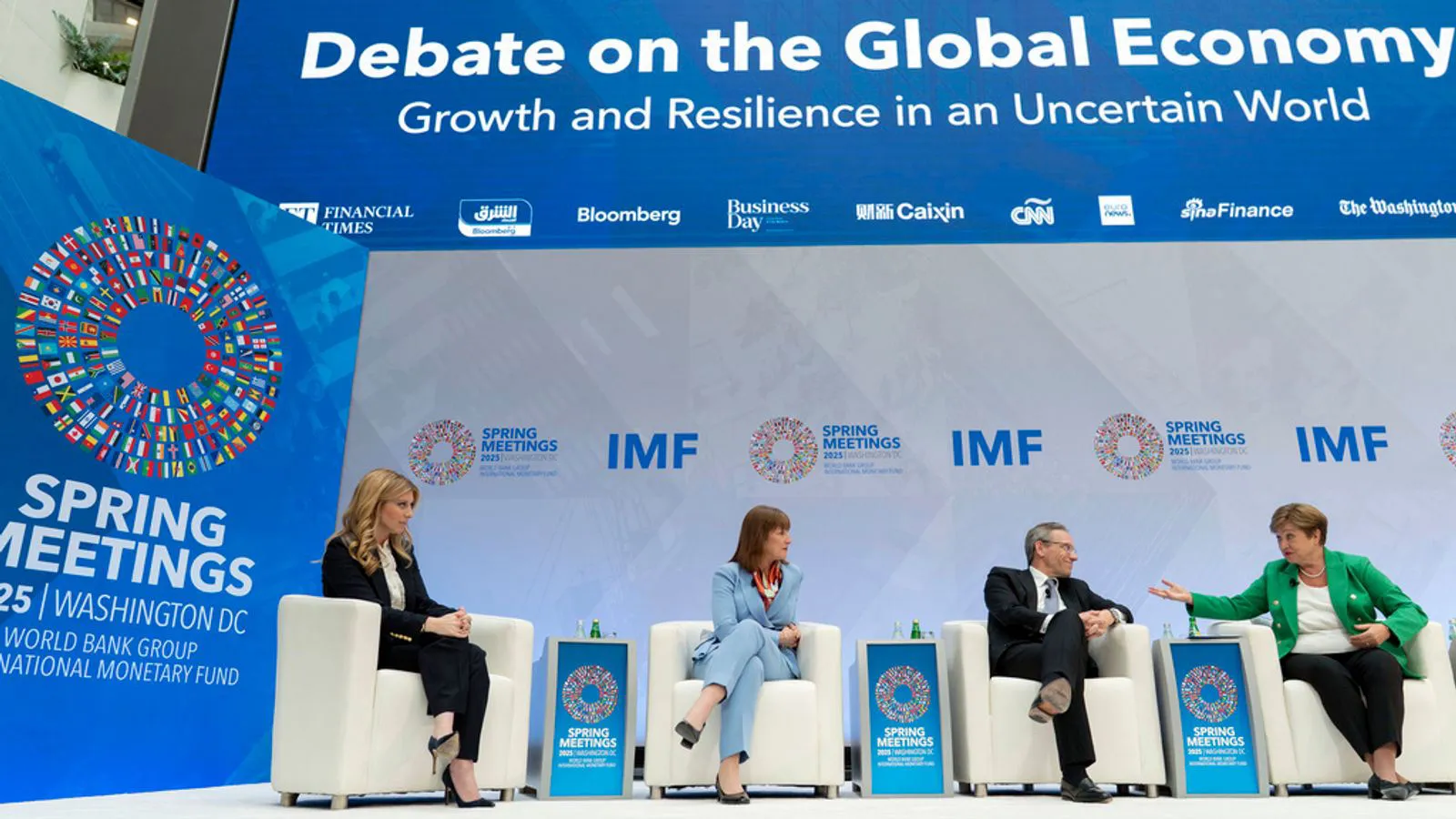
The global development landscape is witnessing a profound transformation as China emerges as a major financier of infrastructure and economic projects across the developing world. Traditionally dominated by the International Monetary Fund and the World Bank, this space is now being reshaped by Beijing’s Belt and Road Initiative and related financial institutions such as the Asian Infrastructure Investment Bank and the Silk Road Fund. The result is a new era of competition and coexistence among the world’s leading development actors. In 2025, the balance of influence between the IMF, World Bank, and China is no longer defined by ideology but by the scale, speed, and sustainability of their financial engagement with emerging economies.
China’s Parallel Financial Architecture
China’s rise as a development financier has altered how countries in Asia, Africa, and Latin America access funding for major infrastructure and industrial projects. Through its Belt and Road Initiative, Beijing has extended over one trillion US dollars in loans, grants, and investments since 2013. Complementing this framework are new institutions like the Asian Infrastructure Investment Bank, which provides project-based financing similar to the World Bank but with faster approvals and fewer political conditions.
The Silk Road Fund, a state-backed vehicle with over 60 billion US dollars in assets, focuses on energy, transportation, and green projects aligned with China’s long-term strategic goals. Together, these institutions represent what economists describe as a “parallel financial order” operating alongside the traditional Bretton Woods system. Unlike the IMF and World Bank, China’s approach prioritizes direct bilateral negotiations, quick disbursement, and tangible results over lengthy policy reforms.
According to Bloomberg, this model appeals to countries seeking alternatives to Western conditionality. African and South Asian governments, for instance, often turn to China when IMF loan conditions require austerity measures or structural reforms that are politically difficult to implement. For China, this approach not only builds economic ties but also strengthens its geopolitical influence by presenting itself as a reliable development partner.
IMF and World Bank Recalibrating Their Roles
The IMF and World Bank have been forced to adapt to this new financial reality. Both institutions now emphasize flexibility, transparency, and climate resilience to remain relevant in a world increasingly shaped by China’s economic reach. The IMF’s recent focus on “inclusive growth” and the World Bank’s scaling up of climate financing are part of efforts to align development assistance with global sustainability priorities.
In Pakistan, for example, the IMF remains a key player even as CPEC-related investments continue. The country’s 2023 standby arrangement of three billion US dollars underscored the IMF’s role in stabilizing short-term fiscal imbalances. However, many of the long-term development projects underpinning Pakistan’s economic recovery such as energy infrastructure, industrial parks, and digital corridors are financed through Chinese capital. This dual-track engagement illustrates how the IMF and China often operate in parallel rather than in direct conflict.
The World Bank, too, has evolved its project financing to complement rather than compete with China. Joint initiatives on renewable energy, healthcare, and education have emerged in countries like Kenya, Egypt, and Vietnam. Collaboration is becoming more common, particularly in areas where the scale of development challenges exceeds the capacity of any single institution.
Debt, Transparency, and Global Governance
One of the most contentious issues in the competition for development leadership is debt sustainability. Critics argue that China’s loans under the Belt and Road Initiative risk trapping countries in unsustainable debt, while Beijing insists its financing is demand-driven and focused on long-term growth. The IMF and World Bank, on the other hand, have positioned themselves as advocates of debt transparency and restructuring.
Recent experiences in Sri Lanka, Zambia, and Ethiopia highlight the complexity of this issue. In each case, Chinese lenders were key creditors, making debt renegotiations dependent on Beijing’s willingness to cooperate with multilateral frameworks. According to The Diplomat, this has prompted new dialogue between China and the Paris Club aimed at coordinating debt relief under more predictable rules. The process remains slow but reflects growing awareness that global debt governance must evolve beyond traditional Western mechanisms.
China’s Ministry of Finance has also begun releasing limited data on overseas lending through its new debt sustainability framework, signaling greater openness. While not yet matching IMF and World Bank transparency standards, this represents an important step toward aligning Chinese practices with global norms. The World Bank has responded by acknowledging China’s indispensable role in global debt management, suggesting that cooperation is now more necessary than competition.
The Geopolitical Dimension
Beneath the technical language of finance lies a geopolitical contest for influence over the developing world. The IMF and World Bank remain aligned with Western economic governance norms emphasizing liberalization, fiscal discipline, and institutional reform. China offers a different model one focused on infrastructure, industrial policy, and state-led development.
This divergence appeals to countries frustrated with slow disbursements or politically sensitive conditions attached to Western aid. Beijing’s financing often comes with few political strings, allowing governments more freedom in domestic policymaking. However, critics argue that this flexibility can enable corruption and weaken governance. Western institutions counter that their oversight mechanisms protect both borrowers and lenders from future crises.
The competition is particularly evident in Africa and South Asia, where both China and Western institutions are vying for influence. In Africa, the World Bank remains the largest development financier, but Chinese capital dominates infrastructure sectors such as transport, energy, and telecommunications. In South Asia, the IMF provides short-term stabilization while China funds long-term transformation through CPEC-style projects. This combination illustrates how developing nations increasingly use multiple partners to balance immediate fiscal needs with long-term growth objectives.
Convergence through Climate and Digital Development
Despite ideological differences, the IMF, World Bank, and China share overlapping interests in areas like climate adaptation, digital transformation, and poverty reduction. The World Bank’s Climate Change Action Plan and China’s Green Silk Road have converged on the goal of financing renewable energy and sustainable transport. Joint ventures in solar and hydropower projects in Southeast Asia demonstrate growing complementarity between the two approaches.
Digitalization is another emerging area of convergence. China’s Digital Silk Road is expanding internet connectivity and e-commerce infrastructure across developing economies, while the World Bank is funding complementary programs on digital inclusion and governance. The IMF, meanwhile, is incorporating fintech and digital currency policy into its advisory frameworks, acknowledging that technology is reshaping global finance.
This intersection of interests suggests that cooperation rather than competition may define the next phase of global development governance. The scale of challenges facing the developing world from climate change to food insecurity requires collective solutions. As geopolitical competition continues, practical coordination between China and Western institutions may emerge as a pragmatic necessity.
Conclusion
The rivalry between the IMF, World Bank, and China is reshaping how development finance operates in the twenty-first century. China’s Belt and Road Initiative has challenged the traditional monopoly of Western institutions, offering an alternative model grounded in infrastructure and partnership. Yet rather than displacing the IMF and World Bank, it has compelled them to adapt, innovate, and engage in new forms of cooperation.
The world’s financial architecture is becoming multipolar. Developing countries now have more choices, but also greater responsibility to manage debt prudently and ensure transparency. The future of global development will depend on how well these major players can coordinate their strategies to promote inclusive, sustainable growth. If managed wisely, competition between China and the Bretton Woods institutions could evolve into a complementary system that blends efficiency with accountability, marking a new chapter in the evolution of international finance.

