
A New Mission From China’s Southern Spaceport
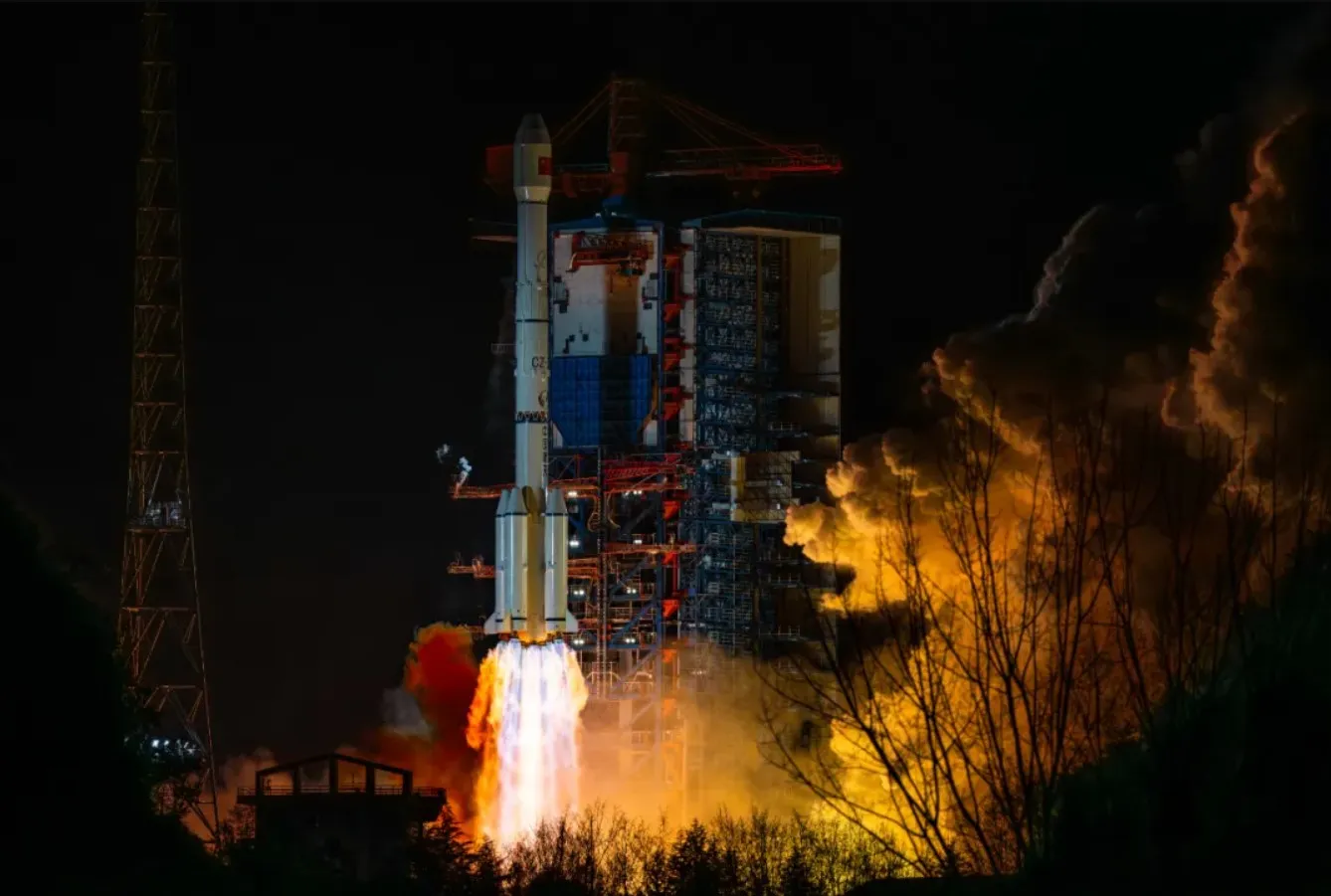
China took another step forward in its space program with the successful launch of two experimental satellites from the Wenchang Space Launch Site in the southern island province of Hainan. The launch took place early Wednesday morning at 6:40 a.m., when a modified Long March 7 rocket lifted off carrying the Shijian 29A and Shijian 29B satellites into their designated orbit.
The mission reflects China’s continued focus on advancing space technology through frequent launches and incremental testing. Rather than a single high profile breakthrough, the launch represents part of a steady and systematic approach to strengthening technical capabilities in orbit.
Purpose of the Shijian 29 Satellites
The Shijian 29 satellites are designed primarily for space technology verification. According to official information, their main task is to conduct tests related to space target detection. Such verification missions are essential in evaluating the performance and reliability of new technologies before they are applied to operational satellite systems.
Technology verification satellites play a quiet but crucial role in space development. They allow engineers to collect real world data, refine systems, and identify limitations that may not be visible during ground testing. Over time, these missions contribute to more accurate sensing, improved monitoring, and enhanced situational awareness in space.
The Role of the Long March 7 Rocket
The launch vehicle used for the mission was a modified Long March 7 rocket. Developed by the China Academy of Launch Vehicle Technology under the China Aerospace Science and Technology Corporation, the Long March 7 is part of China’s new generation of medium sized carrier rockets. It is designed to support high orbit missions and can launch either a single satellite or multiple satellites in one flight.
This flexibility makes the rocket particularly valuable for technology testing missions like Shijian 29. Its ability to deploy dual satellites allows for coordinated experiments and more efficient use of launch opportunities. The successful flight further demonstrates the reliability of the Long March 7 platform.
A Record Breaking Year for Launches
The Shijian 29 mission comes during a record setting period for China’s space sector. In 2025, rockets developed by the China Aerospace Science and Technology Corporation completed 73 launch missions. This represents a significant increase compared with the 51 launches carried out in 2024.
The growing launch frequency highlights improvements in manufacturing, scheduling, and operational coordination. It also reflects rising demand for satellites used in communications, navigation, Earth observation, and technology experimentation.
The Long March Legacy
This launch marked the 623rd flight mission of the Long March carrier rocket series. Since its first flight decades ago, the Long March family has become the backbone of China’s space launch capability. Each additional mission adds to a track record that underpins China’s ambitions in both civilian and scientific space activities.
Reaching more than six hundred missions underscores the maturity of the program. It also signals continuity, as newer variants are introduced while building on established engineering experience.
Wenchang’s Growing Importance
The Wenchang Space Launch Site has become an increasingly important hub for China’s space activities. Its coastal location allows rockets to follow safer trajectories over the sea, enabling the launch of heavier payloads and more advanced spacecraft. As China expands its space objectives, Wenchang is expected to host more complex and high value missions.
The site’s role in launching experimental satellites highlights its contribution to research driven missions rather than only operational deployments.
Incremental Progress in Space Technology
The launch of the Shijian 29 satellites illustrates how China’s space development strategy emphasizes steady progress. Verification missions may attract less public attention than crewed flights or space station milestones, but they form the technical foundation for future advances.
By continuing to test, refine, and validate new technologies in orbit, China is strengthening the reliability and sophistication of its space systems. The Shijian 29 mission fits into this broader pattern of methodical development that prioritizes long term capability over short term spectacle.

