
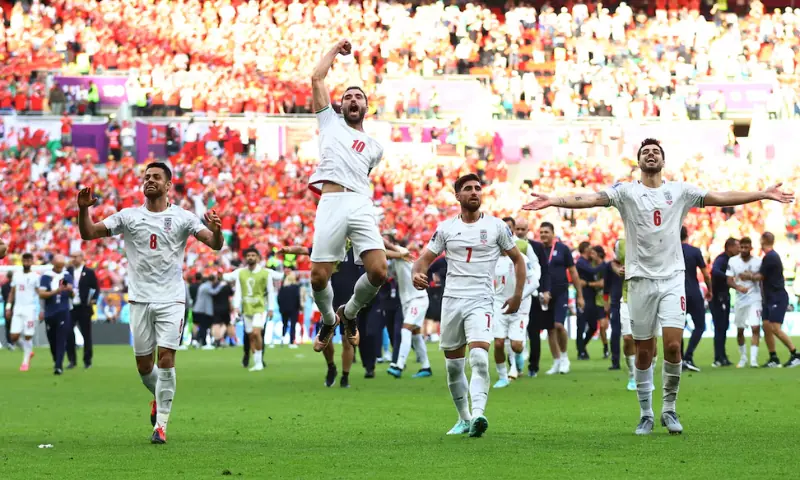
Iran has announced that it will not participate in the 2026 World Cup draw, saying the United States’ refusal to issue visas to several members of its football delegation leaves it with no choice. A spokesperson for Iran’s football federation told state television that FIFA had been informed of the decision and insisted that the situation had nothing to do with sports.
The controversy began earlier in the week when Iranian sports outlet Varzesh 3 reported that the United States had denied visas to several key officials, including federation president Mehdi Taj. The report claimed that only a limited number of Iranian representatives had been cleared to travel for the December 5 draw. According to the outlet, four individuals, including head coach Amir Ghalenoei, received visas, while others faced unexplained rejections.
Mehdi Taj publicly condemned the visa refusals on Thursday, calling the decision political rather than administrative. He said he had personally contacted FIFA president Gianni Infantino to raise the issue, urging the organization to remind the United States of its responsibility as a co-host nation. Taj argued that political considerations should not interfere with international sporting events and that the move contradicts the spirit of global competition.
Iran secured its place in the 2026 World Cup earlier this year, marking the country’s fourth consecutive appearance and seventh overall. The national team has yet to reach the knockout stage, but it has been part of memorable moments in the tournament’s history. One of the most celebrated came in 1998 when Iran defeated the United States 2 1 in a group stage match in France. The United States later returned the favour with a 1 0 win against Iran during the 2022 World Cup.
The latest dispute reflects decades of strained relations between Washington and Tehran. The two countries have had no formal diplomatic ties for more than forty years and have often clashed over nuclear policy, regional conflicts and security issues. Earlier this year, high level nuclear discussions resumed between officials from both sides, but the talks collapsed in mid June following Israel’s unprecedented bombing campaign against Iran. The escalation triggered a 12 day conflict in which the United States briefly joined by targeting several Iranian nuclear facilities.
Against this backdrop, the visa issue has taken on greater symbolic importance. Iranian officials argue that denying visas to sports representatives undermines the principle of separating political disagreements from international cultural and athletic events. They believe the decision sets a concerning precedent for future competitions and could affect the integrity of the World Cup’s organizational process.
With Iran choosing to boycott the draw, attention now turns to FIFA’s response. While the organization has encouraged host nations in the past to ensure fair access to participants, its ability to influence sovereign visa decisions remains limited. For now, Iran’s absence from the event highlights how geopolitical tensions continue to spill over into global sports arenas.

