
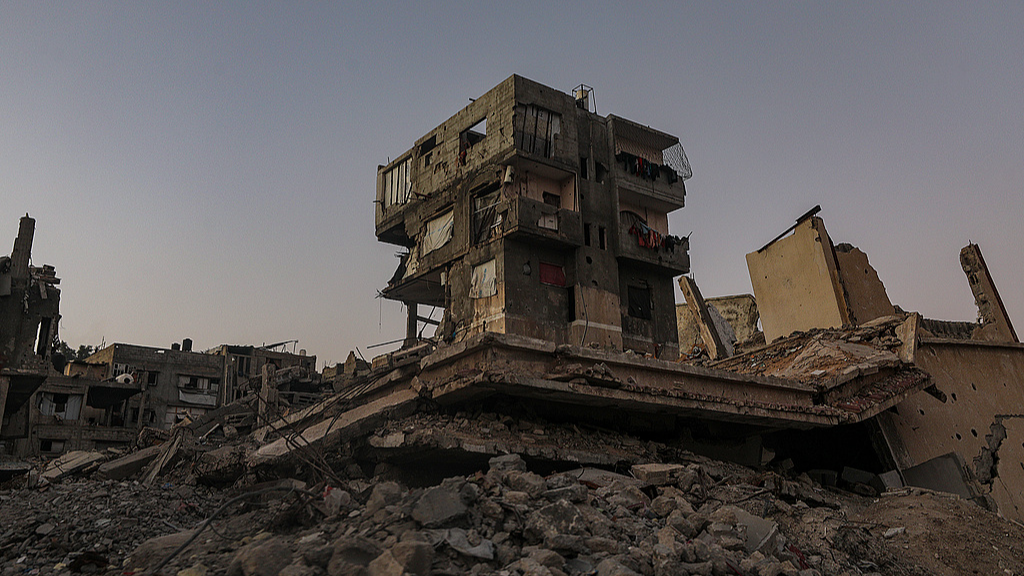
Israeli Prime Minister Benjamin Netanyahu announced on Sunday that he will travel to meet United States President Donald Trump later this month to discuss the next stage of the American backed Gaza ceasefire plan. The move comes as the situation in Gaza remains fragile despite a truce that has reduced large scale violence but has not yet brought comprehensive calm. Both Israel and Hamas continue to accuse each other of breaches, adding uncertainty to the already delicate process.
The truce, brokered by Washington, took effect on October tenth and was designed to follow a step by step roadmap after the Hamas attack on Israel two years ago. The first stage focused mainly on the release of Israeli hostages and the easing of tensions on the ground. Netanyahu said the time has come to prepare for the second phase, which he described as significantly more challenging. He made the comments in Jerusalem during a joint appearance with German Chancellor Friedrich Merz, who also urged both sides to move forward without delay.
Netanyahu stated that he will meet President Trump at the end of December to explore what he described as new opportunities for peace in the region. This anticipated meeting is expected to shape the direction of the upcoming phase, which includes sensitive security and political elements. Chancellor Merz reiterated Germany’s support for a two state solution and stressed that progress is essential to prevent further instability.
During the initial stage of the agreement, Palestinian militants released the remaining Israeli hostages who were either alive or deceased, except for the body of one Israeli police officer that has not yet been returned. This development helped move the process forward but also highlighted how emotionally charged the negotiations remain.
The second phase outlined in the United States proposal aims to address some of the toughest issues. These include plans for the disarmament of Hamas, the gradual withdrawal of Israeli forces from Gaza and the potential arrival of an international stabilization force to oversee security arrangements. Each of these points carries significant political and security implications for all involved parties.
Hamas chief negotiator Khalil al Hayya stated on Saturday that Hamas would be prepared to lay down its weapons if what he described as the Israeli occupation comes to an end. He emphasized that the group’s weapons are directly connected to the presence of Israeli forces and ongoing aggression and that any long term agreement would require clear assurances about Palestinian sovereignty. He added that discussions with mediators are still at an early stage and that many details remain unresolved.
Israel has repeatedly insisted that the disarmament of Hamas and other armed groups in Gaza is a central requirement for moving into the second phase. This has been a consistent point of disagreement, and it remains one of the primary obstacles to reaching a lasting settlement.
Despite the truce, violence has continued. More than three hundred sixty Palestinians have been killed since it began, bringing the overall death toll to seventy thousand three hundred sixty according to local health officials. Israel has also reported the deaths of three soldiers during the same period. The next phase of negotiations will determine whether the ceasefire can evolve into a broader and more durable agreement.

