
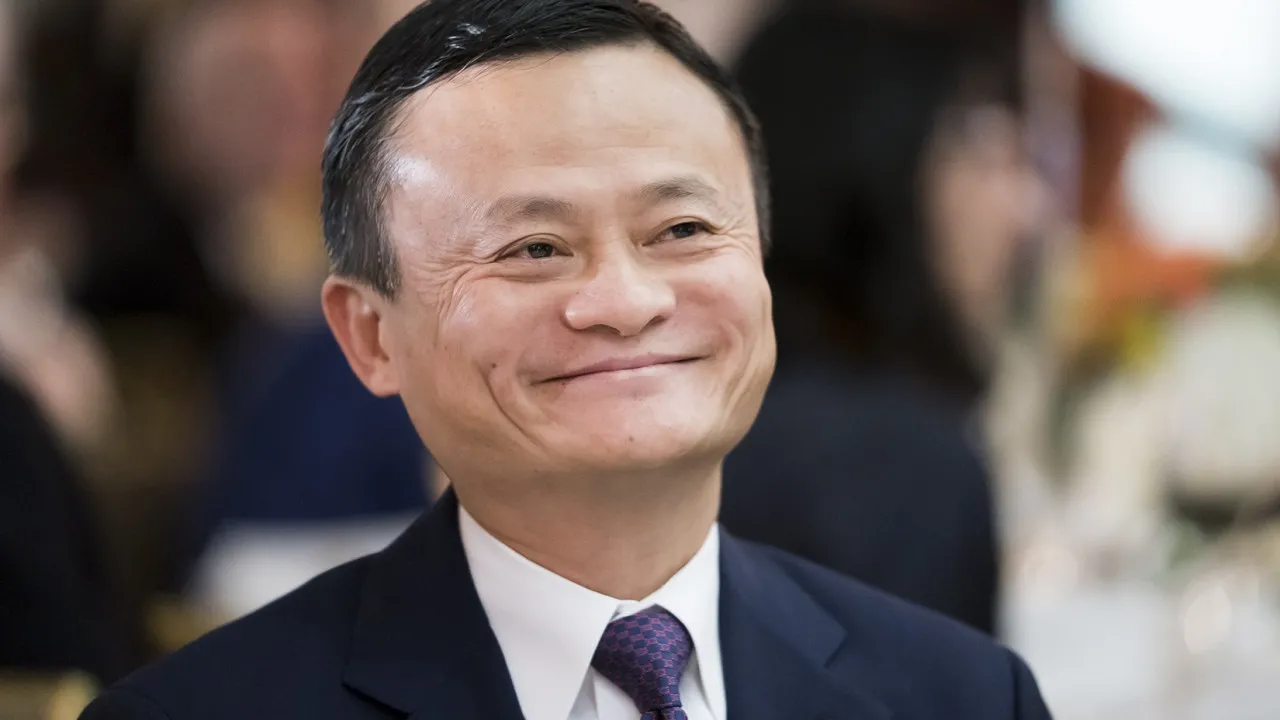
Once the face of Chinese entrepreneurship, his fall reflects the Party’s tightening grip on private power.
The Rise of an Unlikely Entrepreneur
Jack Ma’s story began far from the polished towers of Hangzhou. Born in 1964 to modest parents, Ma failed university entrance exams twice before finally enrolling in Hangzhou Normal University. After stints as an English teacher and translator, he ventured into the new frontier of the internet in the 1990s.
In 1999, Ma co-founded Alibaba from his apartment. What began as a small business-to-business e-commerce platform grew into a digital empire encompassing online retail, payments, logistics, and cloud computing. By the mid-2010s, Alibaba rivaled Amazon in scale, while its affiliate Ant Group pioneered fintech innovation through Alipay.
Ma’s charisma and showmanship made him a global celebrity. He embodied China’s entrepreneurial spirit, telling audiences that anyone could succeed with vision, persistence, and a willingness to embrace failure.
The Face of Chinese Capitalism
At his peak, Jack Ma was more than a businessman. He became a symbol of China’s arrival on the global economic stage. In 2014, Alibaba’s record-breaking IPO on the New York Stock Exchange raised $25 billion, cementing his image as a capitalist hero.
International investors lauded him as China’s answer to Silicon Valley, while at home, millions of small businesses relied on Alibaba’s platforms. His personal fortune soared, making him one of the richest men in Asia.
Crossing the Party’s Red Lines
The turning point came in October 2020, when Ma criticized China’s financial regulators in a high-profile speech. He accused them of stifling innovation and compared outdated rules to an “old people’s club.” Within weeks, Ant Group’s $37 billion IPO set to be the world’s largest was abruptly suspended.
What followed was a cascade of pressure. Ant Group was forced to restructure as a financial holding company under stricter supervision. Alibaba was hit with a record antitrust fine. Jack Ma himself disappeared from public view for months, sparking speculation about his fate.
The episode signaled that no private figure, however powerful, could challenge the Party’s authority. Ma’s fall was not only about business but about politics: a reminder that in China, capital must serve the state, not confront it.
The Aftermath
Since his return to low-profile appearances, Jack Ma has largely withdrawn from the spotlight. He has shifted toward philanthropy and education, supporting rural schools and environmental projects. Yet his influence over China’s tech industry has diminished dramatically.
Meanwhile, Beijing has reshaped the tech landscape. Platforms once celebrated for innovation are now tightly monitored, subject to rules on data, finance, and competition. Ma’s downfall became a cautionary tale for other entrepreneurs: success is tolerated, but defiance is not.
A Symbol of a Changing Era
Jack Ma’s journey mirrors the trajectory of China’s private sector. In the 2000s and 2010s, entrepreneurs thrived under looser regulation, driving growth and innovation. By the 2020s, however, the Party reasserted control, wary of financial risk and ideological independence.
For global audiences, Ma’s story challenges assumptions about China’s embrace of capitalism. He was not destroyed for failing but for succeeding too visibly, too independently, and too politically.
Conclusion: From Icon to Outcast
Jack Ma will be remembered both as a trailblazer and as a warning. He showed that Chinese entrepreneurs could build world-class companies, but he also revealed the limits of private power in a state-dominated system.
His legacy lies not only in Alibaba and Ant Group but in the questions his fall raises: Can China sustain innovation without entrepreneurial freedom? Can visionaries flourish when the Party sets the boundaries?
For now, Jack Ma remains a complex figure celebrated abroad, subdued at home, a symbol of how ambition collides with authority in modern China.

